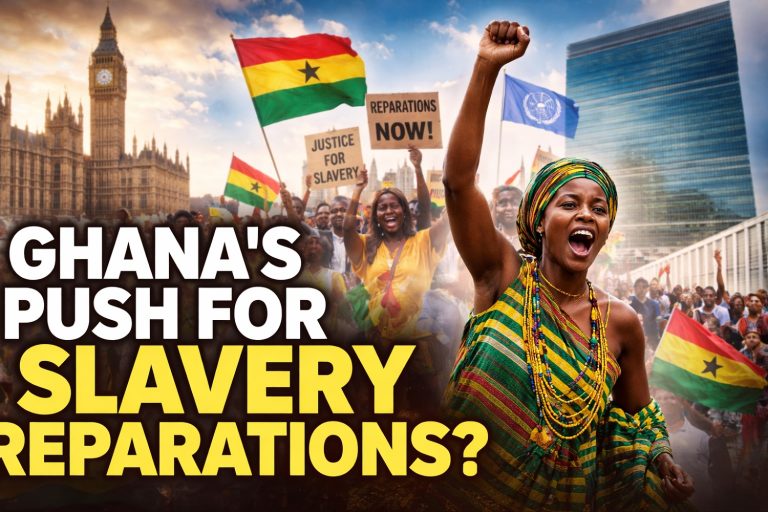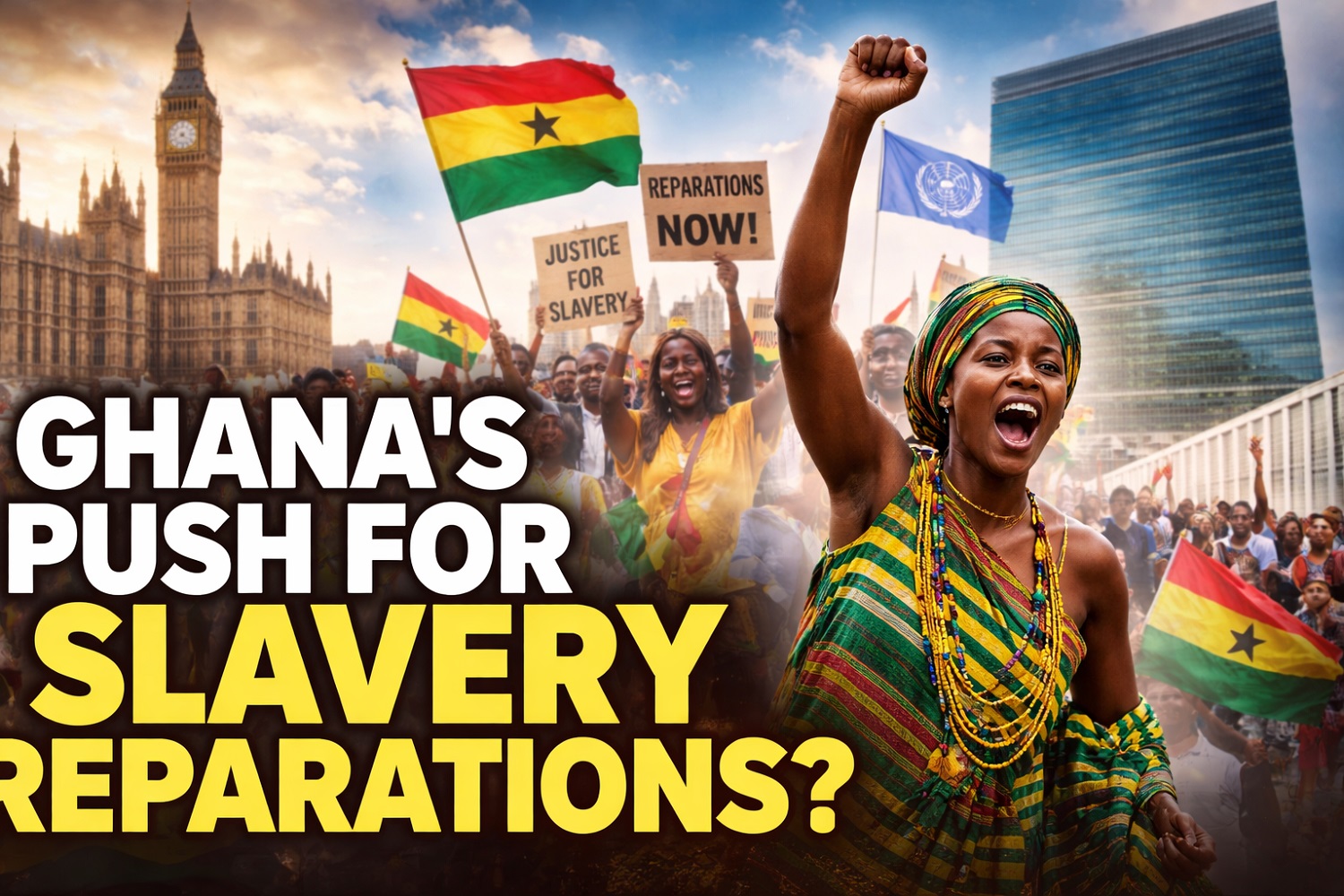
Ghana intensifies its call for slavery reparations at the UN, drawing global attention and sparking debate in the UK Parliament.
Tensions are rising in the Parliament of the United Kingdom following Ghana’s renewed push for slavery reparations at the United Nations. The debate has ignited strong political reactions, with lawmakers divided over historical accountability, financial compensation, and the broader implications for UK-Africa relations. As global attention intensifies, this issue is trending across international media, drawing interest from audiences searching for breaking political news, reparations debate updates, and UK parliamentary tensions.
Background of Ghana’s Reparations Push
The Background of Ghana’s Reparations Push is deeply rooted in the historical legacy of the transatlantic slave trade and its long-lasting impact on African societies. Ghana, once a central hub during the era of slavery, has increasingly taken a leadership role in advocating for justice and compensation on the global stage. This renewed momentum reflects a broader movement among African and Caribbean nations seeking accountability from former colonial powers.
At the forefront of Ghana’s reparations push is its engagement with the United Nations, where Ghanaian representatives have called for structured dialogue, policy frameworks, and tangible commitments toward reparative justice. By elevating the issue at such a high-level international platform, Ghana aims to transform historical grievances into actionable global policy discussions. This strategy aligns with ongoing efforts to address systemic inequalities that can be traced back to slavery and colonial exploitation.
The Background of Ghana’s Reparations Push also reflects the country’s cultural and political initiatives to reconnect with the African diaspora. Campaigns such as heritage tourism and diaspora engagement programmes have reinforced Ghana’s position as a symbolic gateway for descendants of enslaved Africans. These efforts not only promote economic development but also strengthen the moral argument for reparations by highlighting the enduring social and economic consequences of slavery.
Furthermore, Ghana’s stance is supported by a growing coalition of nations and advocacy groups that view reparations as a necessary step toward global justice. Discussions within the United Nations have increasingly acknowledged the need for historical accountability, although consensus on implementation remains complex.
In essence, the background of Ghana’s reparations push underscores a shift from symbolic recognition to concrete demands for justice. It represents a strategic blend of diplomacy, historical awareness, and international advocacy aimed at reshaping how the world addresses one of its most profound historical injustices.
Reaction in the UK Parliament
The issue has sparked intense debate within the Parliament of the United Kingdom, where lawmakers are divided over how to respond to Ghana’s reparations push at the United Nations. Some members of parliament have expressed openness to dialogue, acknowledging the historical role of the United Kingdom in the transatlantic slave trade and the need for constructive engagement.
However, others have raised strong objections, arguing that reparations could set a complex legal and financial precedent. Concerns have been voiced about the potential economic burden, the challenge of determining compensation, and the implications for future international claims. This division highlights the sensitive nature of the issue within the Parliament of the United Kingdom.
The debate has also taken on a political dimension, with different parties framing the issue in ways that align with their broader policy positions. While some emphasise moral responsibility and historical justice, others prioritise economic stability and national interest.
Overall, the reaction within the Parliament of the United Kingdom reflects the broader global tension surrounding reparations, balancing ethical considerations with practical challenges in addressing historical injustices.
Historical Context of Slavery
The transatlantic slave trade remains one of the darkest chapters in global history, with far-reaching consequences that continue to shape societies today. European powers, including the United Kingdom, played a significant role in the capture, transportation, and exploitation of millions of Africans. Ghana, historically known as the Gold Coast, served as a major departure point for enslaved people through coastal forts and trading posts.
The legacy of slavery has left deep economic, social, and cultural scars across Africa and the African diaspora. Many historians argue that the wealth accumulated by European nations during this period contributed to their industrial and economic development, while African societies faced long-term disruption and underdevelopment.
Understanding this historical context is central to current debates about reparations. Calls for justice are grounded in the argument that the effects of slavery did not end with abolition but have persisted through generations, influencing inequality, systemic disadvantage, and global power structures.
Today, the historical role of countries like the United Kingdom is increasingly examined in academic, political, and public discourse. This growing awareness has fuelled movements advocating for acknowledgement, apology, and compensation as part of a broader effort to address historical injustices linked to slavery.
Ghana’s Diplomatic Strategy
Ghana has adopted a strategic and calculated diplomatic approach in advancing its reparations agenda on the global stage. By raising the issue at the United Nations, Ghana is positioning itself as a leading advocate for historical justice while seeking to build broad international consensus.
A key element of Ghana’s strategy is coalition-building. The country is working closely with other African nations and Caribbean states that share similar historical experiences of slavery and colonialism. Through regional blocs and international partnerships, Ghana aims to amplify its voice and strengthen the legitimacy of its demands within the United Nations framework.
Diplomatic engagement also extends to dialogue with former colonial powers, including the United Kingdom. Rather than adopting a purely confrontational stance, Ghana is promoting discussions that focus on acknowledgement, reconciliation, and potential pathways toward reparative measures. This balanced approach allows Ghana to maintain strong bilateral relations while still pursuing its objectives.
Additionally, Ghana is leveraging soft power through cultural diplomacy and diaspora engagement. Initiatives that reconnect people of African descent to their roots have strengthened the moral case for reparations, while also drawing global attention to the long-term impact of slavery.
Overall, Ghana’s diplomatic strategy reflects a blend of advocacy, collaboration, and pragmatic negotiation. By using international platforms like the United Nations, Ghana continues to push for meaningful progress on reparations while navigating the complexities of global politics.
Economic Implications of Reparations
The debate over slavery reparations carries significant economic implications, particularly for countries like the United Kingdom that are historically linked to the transatlantic slave trade. If reparations were to be implemented, they could involve substantial financial commitments, raising questions about funding sources, taxation, and long-term fiscal sustainability.
For governments, the concept of reparations is complex. Determining the scale of compensation, identifying beneficiaries, and establishing fair distribution mechanisms are all major challenges. In the case of Ghana, the focus is not only on direct financial payments but also on broader economic support, including investment in infrastructure, education, and development initiatives.
Critics in the United Kingdom argue that such financial obligations could place a heavy burden on current taxpayers, many of whom feel disconnected from historical events. There are also concerns about setting a global precedent that could lead to similar claims from other nations affected by colonialism and slavery.
On the other hand, proponents of reparations emphasise the potential economic benefits for countries like Ghana. They argue that targeted investments and financial support could help address long-standing inequalities, stimulate economic growth, and promote sustainable development.
Ultimately, the economic implications of reparations highlight the tension between historical accountability and present-day financial realities. As discussions continue at the United Nations, finding a balanced and practical approach remains one of the biggest challenges in advancing the reparations agenda.
Public Opinion in the UK
Public opinion in the United Kingdom remains deeply divided over the issue of slavery reparations, especially in response to Ghana’s push at the United Nations. The debate has sparked widespread discussion across media platforms, academic circles, and political forums, reflecting the complexity of addressing historical injustices in a modern context.
Supporters of reparations argue that the United Kingdom has a moral responsibility to acknowledge and address its historical role in the transatlantic slave trade. Many believe that reparative measures—whether financial or developmental—are necessary steps toward justice and reconciliation. Advocacy groups and some members of the public have called for formal apologies, educational reforms, and increased investment in affected regions such as Ghana.
Conversely, critics question the fairness and practicality of reparations. A significant portion of the population in the United Kingdom argues that present-day citizens should not be held financially responsible for actions that occurred centuries ago. Concerns about economic impact, taxation, and the difficulty of determining eligibility for compensation are frequently raised.
The issue has also been shaped by generational and cultural perspectives. Younger audiences in the United Kingdom tend to be more open to discussions about historical accountability, while others emphasize national identity and economic priorities.
Overall, public opinion in the United Kingdom highlights the broader global divide on reparations. It underscores the challenge policymakers face in balancing ethical responsibility with practical considerations as the debate continues to evolve.
Impact on Ghana–UK Relations
The ongoing debate over slavery reparations is likely to have notable implications for relations between Ghana and the United Kingdom. While both nations share strong historical, economic, and diplomatic ties, the renewed push for reparations at the United Nations introduces a sensitive dimension to their relationship.
On one hand, Ghana’s advocacy for reparations reflects its commitment to addressing historical injustices and promoting global accountability. This stance may resonate with other nations and strengthen Ghana’s leadership role in international diplomacy. However, it could also create tension with the United Kingdom, where concerns about financial liability and political precedent remain significant.
Despite these potential challenges, both countries have a strong incentive to maintain cooperative relations. Trade, education, and cultural exchange continue to be key pillars of engagement between Ghana and the United Kingdom. Universities, businesses, and diplomatic missions on both sides play an important role in sustaining these connections.
Experts suggest that open dialogue and mutual respect will be essential in navigating this issue. Rather than allowing the reparations debate to create long-term division, there is an opportunity for constructive engagement that could lead to innovative solutions, such as development partnerships or joint initiatives.
Ultimately, the impact on relations between Ghana and the United Kingdom will depend on how both sides manage the conversation. The situation underscores the delicate balance between pursuing historical justice and preserving modern diplomatic cooperation.
Global Reactions and Support
Ghana’s push for slavery reparations at the United Nations has generated widespread global reactions, drawing support from multiple regions, particularly across Africa and the Caribbean. Many countries with shared histories of slavery and colonialism have echoed Ghana’s call, emphasizing the need for acknowledgment, justice, and meaningful reparative measures.
Caribbean nations, in particular, have been at the forefront of the reparations movement, advocating for compensation and formal apologies from former colonial powers such as the United Kingdom. These countries argue that the legacy of slavery continues to impact economic development, social structures, and global inequality, reinforcing the urgency of the issue.
In Africa, several governments and regional organizations have expressed solidarity with Ghana, viewing the initiative as a collective effort to address historical injustices. The growing unity among these nations has strengthened the visibility of the reparations debate within the United Nations, increasing pressure on the international community to engage more seriously with the topic.
Beyond governments, global advocacy groups, scholars, and activists have also contributed to the conversation. Many support Ghana’s stance, highlighting the moral and ethical responsibility of addressing the long-term consequences of slavery. At the same time, some international voices urge caution, pointing to the complexity of implementing reparations on a global scale.
Overall, the global reactions to Ghana’s initiative reflect a growing awareness and willingness to confront historical injustices. The expanding support base suggests that the reparations movement is gaining momentum, positioning it as a significant issue in ongoing international policy discussions.
What Happens Next?
The future of Ghana’s reparations push remains uncertain as discussions continue at the United Nations and within the Parliament of the United Kingdom. While the issue has gained significant global attention, translating advocacy into concrete policy action will require sustained diplomatic effort, negotiation, and international cooperation.
One possible next step is the establishment of formal frameworks within the United Nations to guide discussions on reparations. This could include expert panels, historical assessments, and policy recommendations aimed at creating a structured approach to addressing the legacy of slavery. Such initiatives would help move the conversation from rhetoric to actionable outcomes.
For Ghana, maintaining momentum will be crucial. Continued engagement with African and Caribbean allies can strengthen its position and increase pressure on former colonial powers like the United Kingdom to participate in meaningful dialogue. Diplomatic outreach and public advocacy are likely to remain key components of this strategy.
In the United Kingdom, the debate is expected to persist within political and public spheres. Lawmakers may face increasing calls to clarify their stance, explore alternative forms of reparative justice, or engage in bilateral discussions with affected nations.
Ultimately, what happens next will depend on the willingness of all parties to find common ground. Whether through financial compensation, development partnerships, or symbolic gestures such as formal apologies, the path forward will shape not only relations between Ghana and the United Kingdom but also the broader global approach to addressing historical injustices.
Other stories
-
7 Reasons “Juju” Went Viral After Real Madrid Destroyed Man City
-
5 Arrested as DVLA Exposes Fake DV Plate Cartel in Ghana
-
10 Key Facts About Agyemang-Manu Arrest in Ghana’s Sputnik V Vaccine Scandal
-
5 Key Facts About Afenyo-Markin’s Trybenet Allegation
-
What Are Contactless Payments? 10 Powerful Benefits, Security Features & Future Trends (2026 Guide)