
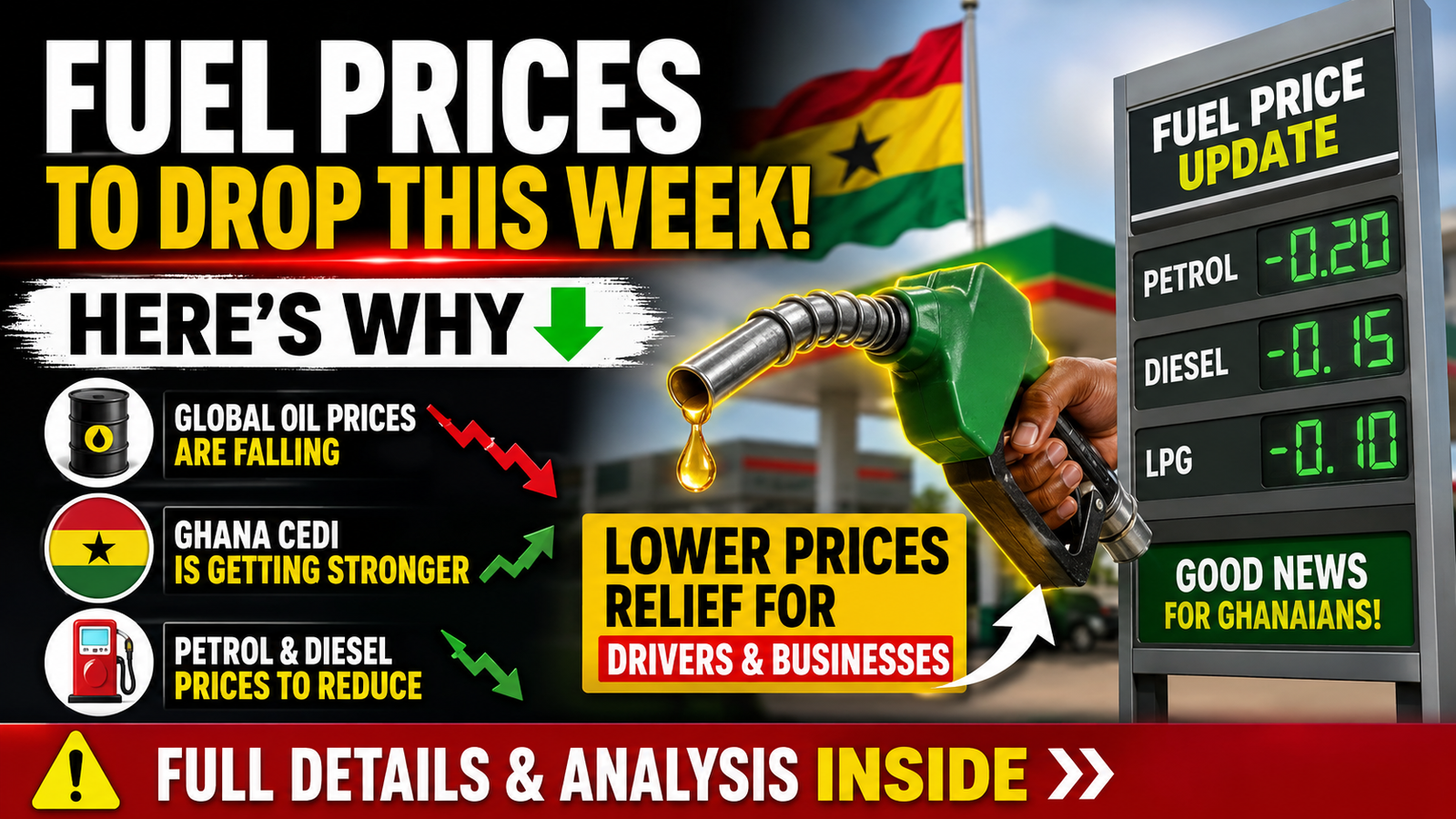
Fuel Prices Expected to Drop in Ghana this week bringing relief to drivers, businesses, and consumers nationwide.
Fuel prices in Ghana are expected to record a slight reduction this week following recent changes in global crude oil prices and improvements in the Ghana cedi against the US dollar. Industry analysts say the anticipated adjustment could bring some relief to motorists, transport operators, businesses, and households struggling with rising transportation and living costs.
According to petroleum market observers, the decrease may affect petrol, diesel, and liquefied petroleum gas (LPG) prices across several oil marketing companies (OMCs) nationwide. The projected decline is linked to lower international fuel prices and reduced import costs for petroleum products.
The development comes at a time when Ghanaians continue to closely monitor fuel price changes due to their impact on transport fares, food prices, electricity generation, and the overall cost of living. Below are 10 important sections explaining why fuel prices are expected to drop slightly in Ghana this week and what it means for consumers and businesses.
Why Fuel Prices Are Expected to Drop in Ghana
Fuel prices in Ghana are expected to drop slightly this week following recent changes in global crude oil prices and improvements in the performance of the Ghana cedi against the US dollar. Industry experts say the expected reduction could bring some relief to consumers, transport operators, and businesses struggling with high operational and transportation costs.
The Why Fuel Prices Are Expected to Drop in Ghana topic has become one of the most discussed economic stories in the country because fuel prices directly affect transportation fares, food prices, electricity generation, and the overall cost of living. Many Ghanaians are hopeful that the anticipated reduction will help ease financial pressure on households and businesses.
One of the major reasons fuel prices are expected to decline is the recent drop in global crude oil prices. Ghana imports a large percentage of its refined petroleum products, meaning changes in international oil prices have a direct effect on local fuel pricing. When crude oil prices fall on the world market, the cost of importing fuel into Ghana also decreases.
Another important factor is the recent appreciation of the Ghana cedi against the US dollar. Since petroleum imports are paid for mainly in foreign currency, a stronger cedi reduces import costs for oil marketing companies (OMCs). Analysts say the improved exchange rate has contributed significantly to the expected fuel price adjustment.
Energy experts also point to stable supply conditions in the international petroleum market as a contributing factor. Increased global oil production and lower demand in some regions have helped moderate fuel prices worldwide. These developments are now beginning to reflect in Ghana’s local petroleum pricing structure.
The National Petroleum Authority (NPA) and oil marketing companies regularly review petroleum prices based on factors such as global crude oil prices, exchange rates, taxes, transportation costs, and operational expenses. Recent market trends suggest that petrol, diesel, and liquefied petroleum gas (LPG) prices may record slight reductions at several filling stations nationwide.
Transport operators and commercial drivers are closely monitoring the expected fuel price reduction because fuel remains one of their biggest operational expenses. Many consumers are also hopeful that lower fuel prices may eventually lead to reduced transport fares and lower prices for goods and services.
Businesses that rely heavily on fuel-powered transportation and generators may also benefit from the expected reduction. Stable fuel prices are important for economic growth because they affect production costs, logistics, and overall business operations.
Although analysts describe the expected decline as relatively small, many believe it is a positive sign for Ghana’s economy. Experts say continued stability in global oil markets and the Ghana cedi could support more stable fuel prices in the coming months.
As Ghanaians continue to monitor developments in the petroleum sector, the Why Fuel Prices Are Expected to Drop in Ghana story remains one of the country’s most important economic discussions today.
Impact of Global Crude Oil Prices
Global crude oil prices play a major role in determining fuel prices in Ghana because the country depends heavily on imported petroleum products. Any increase or decrease in international crude oil prices usually affects the cost of petrol, diesel, and liquefied petroleum gas (LPG) sold at local filling stations across the country.
The impact of global crude oil prices has become one of the biggest economic discussions in Ghana as consumers continue to monitor fuel price changes and their effect on transportation, food prices, and the overall cost of living. Recent declines in international oil prices are among the main reasons fuel prices are expected to drop slightly in Ghana this week.
Crude oil prices on the global market are influenced by several factors, including international demand, geopolitical tensions, production levels by major oil-producing countries, and economic conditions in large economies such as the United States and China. When global demand for oil decreases or supply increases, international crude oil prices often fall.
Industry analysts say recent market trends have shown moderate declines in global crude oil prices due to stable supply conditions and changing international demand patterns. These developments have helped reduce the cost of importing refined petroleum products into Ghana.
Since Ghana imports much of its fuel from international markets, Oil Marketing Companies (OMCs) closely monitor global crude oil prices before adjusting local fuel prices. Lower international petroleum costs can create room for slight reductions in pump prices for consumers.
The Impact of Global Crude Oil Prices extend beyond the petroleum sector because fuel costs affect transportation fares, electricity generation, manufacturing, and food distribution. Any changes in fuel pricing often influence inflation and household spending across the country.
Energy experts say geopolitical events such as conflicts in oil-producing regions, production decisions by OPEC countries, and global economic slowdowns can quickly affect crude oil prices worldwide. This means fuel prices in Ghana may continue to fluctuate depending on international market conditions.
Transport operators and businesses are hopeful that the recent decline in crude oil prices may help stabilise fuel costs and reduce operational expenses. Commercial drivers, delivery services, and manufacturing companies are among the sectors most affected by petroleum price changes.
Economic analysts believe stable international oil prices could support Ghana’s efforts to manage inflation and improve economic stability. However, experts caution that global energy markets remain unpredictable, and future price increases are still possible.
As consumers continue to monitor developments in the petroleum sector, the impact of global crude oil prices remains one of the most important factors influencing fuel pricing and economic conditions in Ghana today.
Ghana Cedi’s Role in Fuel Price Changes
The performance of the Ghana cedi against the US dollar plays a major role in determining fuel prices across the country because Ghana imports a large portion of its petroleum products from the international market. Any appreciation or depreciation of the cedi can directly affect the cost of importing fuel, making exchange rate movements one of the most important factors influencing local fuel prices.
The Ghana Cedi’s Role in Fuel Price Changes has become a major topic of discussion among businesses, transport operators, financial analysts, and consumers as fuel prices continue to impact transportation costs and the general cost of living in Ghana.
Recent improvements in the value of the Ghana cedi against the US dollar are among the key reasons fuel prices are expected to drop slightly this week. Since petroleum imports are paid for mainly in foreign currency, a stronger cedi reduces the amount Oil Marketing Companies (OMCs) spend when purchasing fuel from international suppliers.
Financial experts say exchange rate stability is important for controlling inflation and maintaining affordable fuel prices. When the cedi weakens against the dollar, fuel import costs increase, often leading to higher petrol and diesel prices at filling stations nationwide.
The Ghana Cedi’s Role in Fuel Price Changes also affects transportation fares, food prices, manufacturing costs, and electricity generation because fuel expenses influence many sectors of the economy. Stable fuel prices can help businesses manage operational costs more effectively while reducing economic pressure on households.
Analysts believe recent gains by the cedi have provided some relief for petroleum importers and energy companies operating in Ghana. Lower import costs may create room for slight reductions in fuel prices depending on international crude oil market conditions and operational expenses.
The Bank of Ghana continues to monitor exchange rate developments closely because currency stability is critical for economic growth and investor confidence. Financial experts say stronger foreign reserves and improved investor sentiment can help support the cedi’s performance in the long term.
Commercial drivers and transport operators are particularly interested in exchange rate movements because fuel remains one of their biggest operational expenses. Any reduction in fuel costs may eventually influence transportation fares and business operations nationwide.
Some economists caution that the foreign exchange market remains sensitive to global economic conditions, international trade trends, and government fiscal policies. This means future exchange rate fluctuations could still affect fuel prices despite the current positive outlook.
Businesses involved in manufacturing, logistics, and importation are also hopeful that a stronger cedi may reduce operational expenses and improve economic stability. Lower fuel import costs can support business growth and improve market confidence.
As Ghanaians continue monitoring fuel price trends, the Ghana Cedi’s Role in Fuel Price Changes remains one of the most important economic factors affecting petroleum pricing and household expenses in the country today.
Expected Changes in Petrol and Diesel Prices
Petrol and diesel prices in Ghana are expected to record slight reductions this week following recent improvements in global crude oil prices and the appreciation of the Ghana cedi against the US dollar. Industry analysts say the projected decline could provide some relief to motorists, commercial drivers, businesses, and households dealing with rising transportation and operational costs.
The Expected Changes in Petrol and Diesel Prices have attracted nationwide attention because fuel costs affect almost every sector of Ghana’s economy, including transportation, food distribution, manufacturing, and electricity generation. Many consumers are hopeful the anticipated reduction will help reduce daily expenses and improve economic conditions.
According to petroleum market observers, several Oil Marketing Companies (OMCs) are expected to adjust fuel prices downward by a few pesewas per litre. The exact reductions may vary depending on operational costs, transportation expenses, and regional pricing differences among fuel stations across the country.
The expected decline in petrol and diesel prices is largely linked to lower international crude oil prices and reduced import costs for petroleum products. Since Ghana imports a significant portion of its fuel, any changes in global oil markets often affect local pump prices.
Energy experts say recent gains by the Ghana cedi have also contributed to the anticipated fuel price reduction. A stronger local currency reduces the amount importers spend when purchasing fuel from international suppliers using foreign currency.
The Expected Changes in Petrol and Diesel Prices are especially important for commercial transport operators who depend heavily on fuel for daily business activities. Lower fuel prices may eventually influence transportation fares and reduce operational expenses for drivers and logistics companies.
Businesses that rely on fuel-powered generators and transportation systems are also expected to benefit from the projected reductions. Stable fuel prices are important for improving productivity and reducing business costs across several industries.
Consumers remain cautious despite the positive outlook because fuel price reductions in Ghana are often affected by global market volatility, exchange rate fluctuations, taxes, and operational charges within the petroleum sector.
Some analysts believe sustained improvements in the cedi and stable global oil prices could support further fuel price stability in the coming months. However, international geopolitical tensions and changes in oil production levels remain potential risks that could affect future pricing trends.
Economic experts say even small reductions in petrol and diesel prices can help ease inflationary pressures and improve consumer confidence. Transportation costs influence the prices of goods and services nationwide, making fuel pricing an important economic issue for many households.
As Ghanaians continue monitoring developments in the petroleum sector, the Expected Changes in Petrol and Diesel Prices remain one of the country’s most talked-about economic stories this week.
How Fuel Prices Affect Transport Fares
Fuel prices have a major impact on transport fares in Ghana because commercial transport operators rely heavily on petrol and diesel for daily operations. Any increase or decrease in fuel prices often affects transportation costs, making the issue one of the most important economic concerns for commuters, businesses, and households across the country.
The How Fuel Prices Affect Transport Fares discussion has become increasingly important as Ghanaians continue to deal with rising living expenses and transportation costs. Since public transportation is the main means of travel for millions of people, changes in fuel prices usually have a direct effect on passengers nationwide.
Commercial drivers and transport unions closely monitor fuel price adjustments before deciding whether to increase or reduce transport fares. Fuel remains one of the biggest operational expenses for drivers, alongside vehicle maintenance, spare parts, insurance, and road taxes.
When fuel prices increase, transport operators often raise fares to cover additional operating costs. Higher transport fares can then affect the prices of food, goods, and services because transportation is an important part of supply chain operations throughout the country.
The How Fuel Prices Affect Transport Fares issue also influences inflation and household spending. Rising transportation costs reduce disposable income for many families, especially workers and students who depend on public transport every day.
Recent reports suggesting a slight reduction in fuel prices have created hopes that transport fares could eventually decrease as well. Many commuters believe lower fuel costs should lead to reduced transportation expenses and improved affordability for passengers.
However, transport unions sometimes argue that fare reductions depend on several factors beyond fuel prices alone. Vehicle maintenance costs, spare parts prices, inflation, and road conditions are also considered before transport fares are adjusted.
Businesses involved in food distribution, logistics, delivery services, and manufacturing are also affected by transport costs linked to fuel pricing. Lower fuel prices may help reduce operational expenses and improve economic activity across several industries.
Economic analysts say stable fuel prices are important for maintaining affordable transportation systems and reducing inflationary pressure within the economy. Transportation costs affect the prices of goods sold in markets, supermarkets, and shops nationwide.
Consumers continue to closely monitor developments in the petroleum sector because fuel price changes often influence daily life and economic conditions across Ghana. Many people are hopeful the expected reduction in fuel prices may eventually benefit passengers through lower transport fares.
As discussions continue about transportation costs and petroleum pricing, the How Fuel Prices Affect Transport Fares topic remains one of the most widely discussed economic issues in Ghana today.
Reactions from Drivers and Businesses
Commercial drivers, transport operators, and business owners across Ghana have reacted positively to reports suggesting a possible drop in fuel prices this week. Many believe even a slight reduction in petroleum prices could help reduce operational costs and improve business activities across several sectors of the economy.
The Reactions from Drivers and Businesses story has attracted widespread attention because fuel prices directly affect transportation, logistics, food distribution, manufacturing, and household expenses nationwide. Rising fuel prices over the past months have placed significant pressure on both businesses and consumers.
Commercial drivers say fuel remains one of their biggest operational expenses, alongside vehicle maintenance, spare parts, insurance, and road taxes. Many drivers are hopeful the expected reduction in petrol and diesel prices could eventually improve their daily income and reduce financial pressure.
Transport operators have also indicated that stable fuel prices are important for managing transportation costs and maintaining business sustainability. Several drivers believe lower fuel prices may help reduce tension between transport unions and passengers over transportation fare increases.
The Reactions from Drivers and Businesses discussion has become increasingly important because transportation costs influence the prices of goods and services across Ghana. Delivery companies, food suppliers, and logistics businesses all depend heavily on fuel-powered transportation systems.
Business owners in sectors such as manufacturing, retail, and agriculture say fuel price changes affect operational expenses and profit margins. Many companies rely on fuel-powered generators due to electricity supply challenges, making stable fuel prices critical for daily operations.
Some small business owners believe lower fuel prices could improve consumer spending and market activity if transportation and production costs decrease over time. Reduced operational expenses may also help businesses stabilize prices for goods and services.
Economic analysts say the positive reactions from businesses reflect growing public concern about the rising cost of living in Ghana. Fuel prices have a direct impact on inflation because transportation and energy costs affect supply chains throughout the economy.
Despite the optimism, some transport operators remain cautious because they believe fuel price reductions are often temporary due to global oil market fluctuations and exchange rate instability. Drivers say long-term fuel price stability is more important than short-term reductions.
Industry observers note that sustained improvements in the Ghana cedi and stable global crude oil prices could support better economic conditions for businesses and consumers alike. However, international market uncertainties continue to pose risks for future fuel pricing trends.
As discussions continue about fuel pricing and economic conditions, the Reactions from Drivers and Businesses topic remains one of the most widely followed stories in Ghana’s transportation and business sectors today.
Could Transport Fares Reduce Soon?
Many Ghanaians are asking whether the expected reduction in fuel prices this week could lead to lower transport fares across the country. The discussion has become one of the most talked-about economic topics because transportation costs affect millions of commuters, workers, students, and businesses every day.
The Could Transport Fares Reduce Soon debate has gained momentum following reports that petrol and diesel prices may decline slightly due to lower global crude oil prices and the recent appreciation of the Ghana cedi against the US dollar. Consumers are hopeful that any reduction in fuel costs should eventually reflect in transport fares.
Commercial transport operators and transport unions usually monitor fuel price adjustments closely before making decisions on transportation fares. Fuel remains one of the largest operational expenses for drivers, alongside vehicle maintenance, spare parts, road taxes, and insurance costs.
Many passengers believe transport fares should reduce whenever fuel prices decline, especially after repeated fare increases linked to rising petroleum costs. However, transport operators often argue that fare reductions depend on several economic factors beyond fuel prices alone.
The Could Transport Fares Reduce Soon issue is important because transportation costs influence food prices, business operations, and household spending across Ghana. Higher transport fares increase the cost of moving goods and services, affecting prices in markets, shops, and businesses nationwide.
Transport unions say they may review fares if fuel prices continue to decline consistently over a longer period. Some drivers have explained that short-term reductions in fuel prices may not immediately lead to lower fares because other operational costs remain high.
Economic analysts believe stable fuel prices could help reduce inflationary pressure if transportation costs decrease over time. Lower transport fares may improve consumer spending power and reduce the financial burden on households.
Businesses involved in logistics, delivery services, food distribution, and retail trade are also closely monitoring transport fare discussions because transportation costs directly affect operational expenses and product pricing.
Some experts argue that even small reductions in transport fares could positively impact the economy by reducing the cost of goods and improving affordability for consumers. Public transportation remains the primary mode of travel for many Ghanaians, making fare adjustments an important national issue.
Despite the optimism, analysts caution that global oil market volatility and exchange rate fluctuations may still affect future fuel price trends. This means transport unions may remain cautious before making any immediate fare reduction announcements.
As consumers continue following developments in the petroleum sector, the Could Transport Fares Reduce Soon discussion remains one of the most closely watched economic stories in Ghana today.
Fuel Prices and Inflation in Ghana
Fuel prices are closely connected to inflation in Ghana because transportation and energy costs affect the prices of goods and services across the entire economy. Any increase or decrease in petrol and diesel prices often has a direct impact on food prices, transportation fares, manufacturing costs, and household expenses nationwide.
The Fuel Prices and Inflation in Ghana topic has become one of the country’s most important economic discussions as consumers and businesses continue to struggle with the rising cost of living. Economists say fuel prices remain a major driver of inflation because petroleum products are essential for transportation, electricity generation, and industrial operations.
When fuel prices increase, transport operators often raise fares to cover higher operational costs. Businesses that depend on transportation and fuel-powered equipment may also increase the prices of goods and services to offset rising expenses. These changes contribute to inflation and reduce consumers’ purchasing power.
The Fuel Prices and Inflation in Ghana relationship is especially important for households because transportation and food costs make up a large part of daily living expenses. Rising fuel prices can increase the cost of moving goods from farms, ports, and factories to markets and shops across the country.
Recent reports suggesting a slight reduction in fuel prices have created hopes that inflationary pressure may reduce if transportation and operational costs decline over time. Economists believe stable fuel prices are important for improving economic conditions and supporting consumer confidence.
Financial analysts say the appreciation of the Ghana cedi against the US dollar has helped reduce fuel import costs, contributing to expectations of lower petroleum prices this week. Since Ghana imports a large portion of its refined fuel, exchange rate stability plays a major role in controlling inflation linked to energy costs.
Global crude oil prices also influence inflation trends in Ghana because international petroleum market conditions affect local fuel pricing. Lower global oil prices may reduce transportation and production costs, helping businesses manage operational expenses more effectively.
The Fuel Prices and Inflation in Ghana discussion also affects interest rates, business investment, and economic planning. High inflation can reduce business growth and increase financial pressure on consumers, making stable energy prices important for economic stability.
Businesses involved in manufacturing, logistics, retail, and agriculture are particularly sensitive to fuel price changes because transportation and energy costs directly affect production and supply chain operations.
Economic experts continue to monitor developments in global oil markets, exchange rate movements, and government policies because these factors influence future inflation trends and fuel pricing in Ghana.
As consumers and businesses closely follow developments in the petroleum sector, the Fuel Prices and Inflation in Ghana story remains one of the country’s most widely discussed economic issues today.
What Energy Analysts Are Saying
Energy analysts in Ghana have described the expected reduction in fuel prices as a positive development for consumers, businesses, and the overall economy. According to industry experts, recent improvements in global crude oil prices and the appreciation of the Ghana cedi against the US dollar have contributed significantly to the anticipated decline in petrol and diesel prices this week.
The What Energy Analysts Are Saying discussion has become one of the most closely followed economic conversations in Ghana because fuel prices affect transportation costs, inflation, food prices, and business operations nationwide.
Analysts say the recent drop in international crude oil prices has reduced the cost of importing refined petroleum products into Ghana. Since the country depends heavily on imported fuel, changes in global oil markets usually have a direct impact on local petroleum prices.
Energy experts have also pointed to the stronger performance of the Ghana cedi as another important factor behind the expected fuel price reduction. A stable or appreciating cedi lowers foreign exchange costs for Oil Marketing Companies (OMCs), making fuel imports relatively cheaper.
The What Energy Analysts Are Saying topic highlights the importance of exchange rate stability and international energy market conditions in managing fuel prices and inflation in Ghana. Financial experts say maintaining currency stability is critical for improving economic confidence and reducing pressure on consumers.
Some analysts believe the expected fuel price reduction could help ease transportation costs and reduce inflationary pressure if businesses and transport operators eventually pass the benefits on to consumers. Lower operational expenses may also support business growth and improve consumer spending.
However, energy experts caution that global oil markets remain highly unpredictable due to geopolitical tensions, production decisions by oil-producing countries, and changing international demand patterns. Future increases in crude oil prices could still affect fuel prices in Ghana despite the current positive outlook.
Industry observers say long-term fuel price stability will depend on several factors, including exchange rate performance, government policies, global energy supply conditions, and improvements in local energy infrastructure.
The Institute for Energy Security (IES) and other petroleum market analysts continue to monitor developments in international oil markets and domestic pricing trends. Experts say consumers should expect continued fluctuations in fuel prices depending on changes in the global energy sector.
Transport operators, manufacturers, and logistics companies are also paying close attention to fuel market developments because petroleum prices directly affect operational expenses and profitability across several industries.
Economic analysts believe stable fuel prices are important for controlling inflation and supporting economic recovery in Ghana. Lower fuel costs may improve business confidence and reduce pressure on household spending if current market conditions remain favorable.
As Ghanaians continue monitoring petroleum price trends, the What Energy Analysts Are Saying discussion remains one of the country’s most important economic topics this week.
Future Outlook for Fuel Prices in Ghana
The future outlook for fuel prices in Ghana remains one of the most closely watched economic topics as consumers, businesses, and transport operators continue to monitor developments in global oil markets and the local economy. Energy experts say future fuel price trends will depend largely on international crude oil prices, exchange rate stability, government policies, and global energy market conditions.
The Future Outlook for Fuel Prices in Ghana has become increasingly important because petroleum prices directly affect transportation costs, food prices, inflation, electricity generation, and business operations across the country. Any major increase or decrease in fuel prices can have a significant impact on household spending and economic activity nationwide.
Industry analysts believe Ghana could experience more stable fuel prices in the coming months if the Ghana cedi continues to perform strongly against the US dollar. Since petroleum imports are paid for mainly in foreign currency, exchange rate stability remains critical for controlling fuel import costs and maintaining affordable pump prices.
Global crude oil prices will also continue to play a major role in determining future fuel prices in Ghana. International oil markets are influenced by factors such as geopolitical tensions, production decisions by major oil-producing countries, global economic growth, and energy demand trends.
The Future Outlook for Fuel Prices in Ghana discussion has attracted widespread attention because many consumers are hoping for long-term reductions in transportation and living costs. Stable petroleum prices could help reduce inflationary pressure and improve business confidence across several industries.
Energy experts say government policies and regulatory decisions by the National Petroleum Authority (NPA) will also influence future fuel pricing trends. Taxes, levies, transportation costs, and operational expenses remain important factors affecting local petroleum prices.
Some analysts believe investments in local energy infrastructure, fuel storage systems, and renewable energy projects could help improve Ghana’s long-term energy security and reduce dependence on external market shocks. Improved infrastructure may support more stable fuel supply and pricing conditions in the future.
Businesses involved in logistics, transportation, manufacturing, and agriculture continue to closely monitor petroleum market trends because fuel expenses significantly affect operational costs and profitability. Lower fuel prices could support economic growth and improve market activity.
Transport operators and commuters are also hopeful that stable fuel prices may eventually lead to more affordable transport fares and reduced financial pressure on households. Transportation remains one of the biggest daily expenses for many Ghanaians.
Despite the current positive outlook, analysts caution that global energy markets remain unpredictable. International conflicts, supply disruptions, and sudden changes in crude oil prices could still affect fuel prices in Ghana at any time.
Economic observers say maintaining exchange rate stability, improving energy infrastructure, and strengthening local economic conditions will be important for achieving long-term fuel price stability in Ghana.
As consumers continue to follow developments in the petroleum sector, the Future Outlook for Fuel Prices in Ghana remains one of the country’s most important economic stories and a key issue affecting daily life nationwide.
Other stories
-
10 Powerful Healthy Habits for Better Living in Ghana
-
7 Powerful Benefits of Drinking Turmeric Water for Health
-
10 Shocking Reactions to Black Stars Squad Announcement (2026 Update)
-
WhatsApp Most Popular Messaging App Worldwide – 7 Powerful Benefits in 2026
-
Shocking: 7 Causes of the Power Outage in Accra and Other Regions