
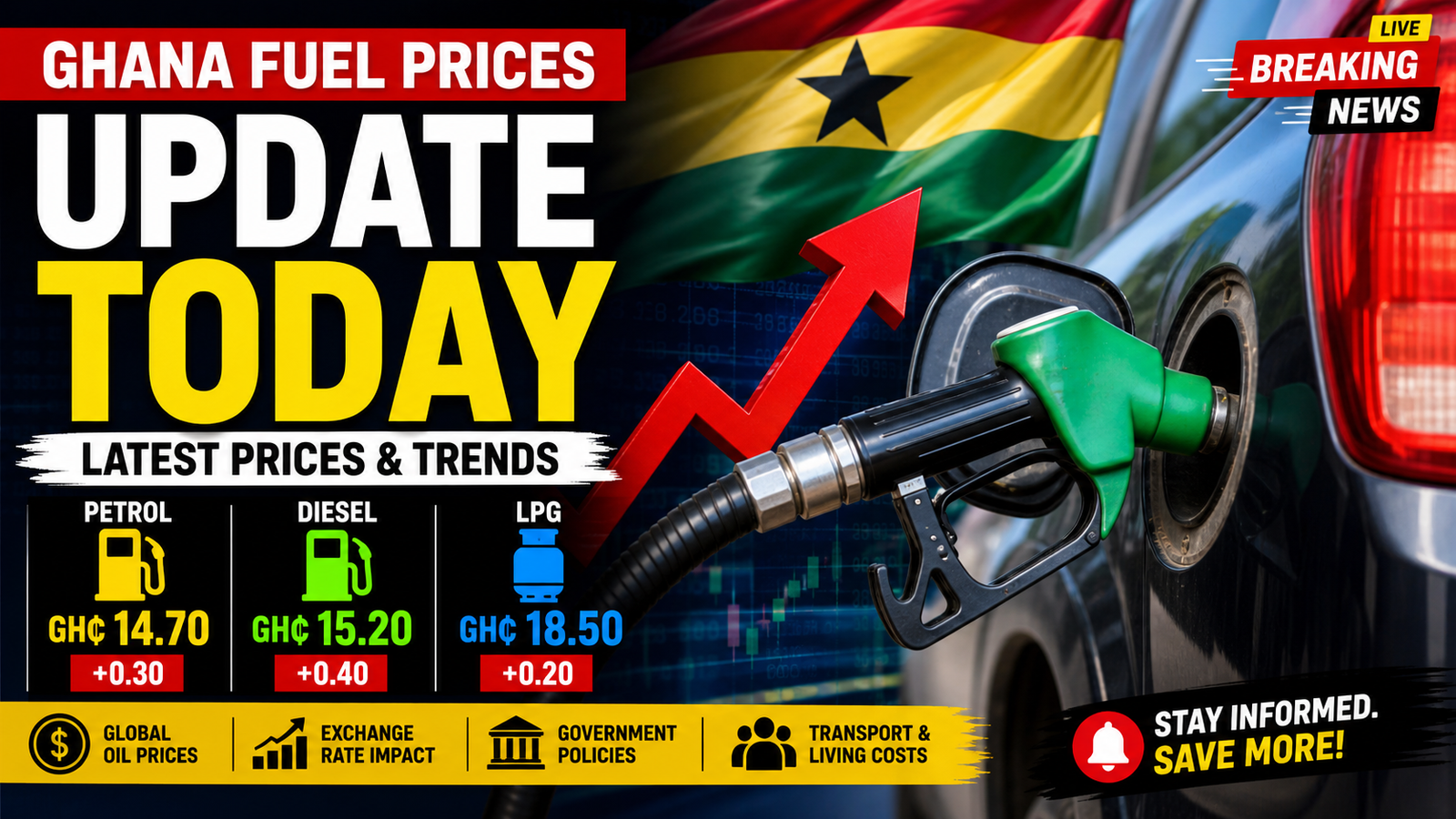
Ghana fuel prices update today affects transportation costs, businesses, and the cost of living nationwide.
Ghana Fuel Prices Update Today remains one of the most searched and important economic topics affecting transportation costs, food prices, and daily living expenses across the country. Many drivers, businesses, and households closely monitor petrol, diesel, and LPG prices because changes directly impact the cost of goods and services. Recent updates from the National Petroleum Authority (NPA) show slight relief in fuel prices, bringing some financial relief to consumers and transport operators.
In this article, we provide the latest Ghana fuel prices update today, explain the reasons behind price changes, and highlight what drivers and businesses should expect in the coming weeks. This guide is optimised for high-traffic searches, Google News visibility, and AdSense revenue opportunities.
What Is the Ghana Fuel Prices Update Today?
What Is the Ghana Fuel Prices Update Today?
Ghana Fuel Prices Update ‘Today’ refers to the latest changes in the prices of petrol, diesel, and Liquefied Petroleum Gas (LPG) announced by fuel marketing companies and regulators across the country. These updates are typically reviewed every two weeks under the country’s petroleum pricing system, which considers global oil prices, exchange rates, taxes, and distribution costs. Fuel price updates are closely monitored by drivers, transport operators, businesses, and households because they directly affect transportation fares, food prices, and the overall cost of living.
The responsibility for monitoring and regulating fuel prices in Ghana lies with the National Petroleum Authority, which ensures that fuel prices remain fair and reflect current market conditions. The authority sets price guidelines for oil marketing companies, while individual fuel stations may adjust their pump prices slightly depending on location and operational costs. This system allows fuel prices to respond quickly to changes in international crude oil markets and the value of the Ghanaian cedi against major foreign currencies such as the U.S. dollar.
Currently, the Ghana Fuel Prices Update Today indicates that petrol and diesel prices have experienced slight adjustments in recent pricing windows, providing some relief to consumers after earlier increases. These changes are often influenced by fluctuations in global crude oil prices and shipping costs, as well as government policies aimed at stabilising the energy sector. When global oil prices rise or the local currency weakens, fuel prices in Ghana tend to increase. Conversely, when global prices fall or the currency strengthens, consumers may see reductions at the pump.
Understanding the Ghana Fuel Prices Update Today is important for financial planning and business operations. Transport companies use fuel price information to determine fares, while traders and manufacturers use it to estimate production and delivery costs. For news publishers and platforms like MyGHPages.com and Myghpages.com, fuel price updates are high-demand topics that attract strong search traffic because many people check fuel prices daily to manage their expenses.
Why Fuel Prices Change in Ghana
Understanding why fuel prices change in Ghana is an important part of following the Ghana Fuel Prices Update. Today, fuel costs are influenced by both local and international economic factors. Fuel prices do not remain constant; they fluctuate regularly depending on global oil market conditions, currency exchange rates, government taxes, and transportation costs. These changes directly affect transportation fares, business expenses, and the general cost of living across the country.
One of the main reasons behind the Ghana fuel prices update today is the price of crude oil on the international market. Ghana imports most of its refined petroleum products, which means global oil price movements significantly impact local pump prices. When crude oil prices increase worldwide, the cost of importing fuel also rises, leading to higher prices at filling stations. On the other hand, when global oil prices decline, consumers may benefit from lower fuel costs.
Another major factor influencing the Ghana Fuel Prices Update Today is the exchange rate between the Ghana cedi and the U.S. dollar. Since petroleum products are purchased in foreign currency, a weaker cedi makes fuel more expensive to import. A stronger cedi, however, can reduce import costs and help stabilise prices. This relationship between currency value and fuel pricing makes exchange rate stability crucial for maintaining affordable fuel prices.
Government taxes and levies also play a significant role in determining fuel prices. These charges include energy sector levies, distribution margins, and regulatory fees set by authorities such as the National Petroleum Authority. These funds are used to support infrastructure development, maintain fuel supply systems, and regulate the petroleum industry.
Finally, transportation and distribution costs contribute to price variations across different regions. Fuel must be transported from ports or storage depots to filling stations nationwide, and these logistics expenses are reflected in pump prices. By understanding these factors, consumers and businesses can better anticipate changes in the Ghana Fuel Prices Update Today and plan their budgets more effectively.
Current Petrol and Diesel Prices in Ghana
The current petrol and diesel prices in Ghana are among the most important details in the Ghana Fuel Prices Update Today, as they directly affect transportation costs, business operations, and household expenses. Fuel prices are reviewed regularly under Ghana’s deregulated petroleum pricing system, which allows oil marketing companies to adjust pump prices based on market conditions. These updates usually occur every two weeks and reflect changes in global crude oil prices, exchange rates, and government taxes.
As part of the latest Ghana Fuel Prices Update Today, the average pump prices for major fuel products remain relatively stable across many regions. Petrol prices are typically observed within a moderate range depending on location, while diesel prices may vary slightly due to demand in commercial transportation and industrial activities. Liquefied Petroleum Gas (LPG), commonly used for cooking, also follows a similar pricing pattern influenced by supply and distribution costs.
Fuel price adjustments are closely monitored by the National Petroleum Authority, which ensures that oil marketing companies follow pricing guidelines and maintain fair competition within the petroleum sector. The authority publishes regular updates on fuel price trends to help consumers and businesses stay informed. These official updates are widely reported by news platforms and financial analysts because fuel prices are a key indicator of economic stability.
Regional differences in fuel prices can occur due to transportation and storage costs. Fuel delivered to remote areas may cost slightly more than fuel sold in major cities such as Accra, Kumasi, or Takoradi. Additionally, promotional discounts offered by some filling stations can temporarily reduce pump prices in specific locations.
For businesses, transport operators, and households, monitoring the Ghana Fuel Prices Update Today is essential for planning budgets and managing expenses. Changes in fuel prices influence transportation fares, delivery costs, and the prices of goods and services across the country.
Impact of Fuel Prices on Transportation Costs
The impact of fuel prices on transportation costs is one of the most noticeable effects of the Ghana Fuel Prices Update Today, as transportation relies heavily on petrol and diesel. When fuel prices increase, transport operators such as taxi drivers, bus operators, and commercial vehicle owners often raise fares to cover higher operating expenses. These fare adjustments affect daily commuters, students, traders, and businesses that depend on transportation services to move people and goods across the country.
Transportation is a major part of Ghana’s economy, and fuel expenses make up a significant portion of operating costs for drivers and logistics companies. As a result, any change in fuel prices quickly reflects in public transport fares and delivery charges. For example, when diesel prices rise, freight companies and commercial transport operators face higher costs, which may lead to increased shipping fees and higher prices for goods in markets and shops. Conversely, when fuel prices decrease, transport unions may reduce fares, providing financial relief to passengers and businesses.
The relationship between fuel prices and transportation costs is closely monitored by organisations such as the Ghana Private Road Transport Union, which works with regulators and government agencies to determine fair transport fares based on fuel price changes. These adjustments help ensure that both transport operators and passengers are treated fairly while maintaining stable transportation services nationwide.
Another important aspect of the Ghana Fuel Prices Update Today is its influence on commercial transportation and logistics. Delivery companies, ride-hailing services, and long-distance transport operators depend on stable fuel prices to manage their budgets effectively. Sudden increases in fuel costs can disrupt operations and reduce profitability, especially for small businesses that rely on transportation for daily operations.
For commuters, businesses, and policymakers, understanding the impact of fuel prices on transportation costs is essential for financial planning and economic stability. Monitoring the Ghana Fuel Prices Update Today helps individuals and organisations anticipate fare changes, manage expenses, and make informed decisions about travel and transportation services.
How Fuel Prices Affect the Cost of Living
The Ghana Fuel Prices Update Today has a direct impact on the cost of living because fuel is a key factor in the transportation and distribution of goods and services. When fuel prices increase, the cost of transporting food, building materials, and consumer products also rises. Businesses often pass these higher costs on to customers, which leads to increased prices in markets and shops. As a result, households may spend more money on daily necessities such as food, transportation, and utilities.
One of the most noticeable effects of fuel price changes is the increase in food prices. Farmers and traders depend on transportation to move produce from farms to markets, and higher fuel costs make transportation more expensive. This added cost is reflected in the final price consumers pay. For example, vegetables, grains, and imported goods often become more expensive when fuel prices rise. Conversely, when fuel prices decrease, the cost of transporting goods may fall, helping stabilize market prices and reduce financial pressure on households.
The Ghana Fuel Prices Update Today also affects utility and service costs. Businesses that rely on generators, delivery vehicles, or machinery powered by fuel may face higher operating expenses when fuel prices increase. These businesses may adjust their service fees to cover the additional costs. Industries such as construction, manufacturing, and transportation are particularly sensitive to fuel price fluctuations because fuel is a major part of their operating budget.
Economic institutions like the Bank of Ghana closely monitor fuel price trends because they influence inflation and overall economic stability. Rising fuel prices can contribute to higher inflation rates, while stable or lower fuel prices can help control inflation and improve purchasing power.
For families, workers, and businesses, staying informed about the Ghana Fuel Prices Update Today is essential for budgeting and financial planning. Understanding how fuel prices affect the cost of living helps individuals make better decisions about spending, saving, and managing household expenses.
Fuel Price Trends in Ghana for 2026
Fuel price trends in 2026 have become an important topic for consumers, businesses, and policymakers who closely monitor the Ghana Fuel Prices Update Today to understand how the energy market is changing. Throughout the year, fuel prices in Ghana have experienced both increases and decreases due to fluctuations in global oil prices, exchange rate movements, and domestic economic policies. These trends provide valuable insights into the direction of the country’s economy and the stability of the petroleum sector.
One of the key trends observed in the Ghana Fuel Prices Update Today for 2026 is the gradual adjustment of fuel prices in response to international market conditions. When global crude oil prices rise, fuel import costs increase, leading to higher pump prices in Ghana. Conversely, when global prices fall or stabilize, consumers may experience temporary relief through reduced fuel costs. This pattern highlights the strong connection between Ghana’s fuel market and the global energy industry.
Another notable trend is the impact of the Ghana cedi’s performance against major foreign currencies, especially the U.S. dollar. A weaker cedi increases the cost of importing petroleum products, which can result in higher fuel prices. On the other hand, a stronger cedi can help reduce import expenses and support more stable pricing. Financial analysts and regulators closely monitor exchange rate trends as part of managing the country’s energy economy.
Industry organizations such as the Chamber of Petroleum Consumers (COPEC) regularly provide forecasts and updates on fuel price movements. These insights help consumers and businesses prepare for possible price changes and adjust their budgets accordingly.
Overall, understanding fuel price trends in 2026 is essential for anyone following the Ghana Fuel Prices Update Today. Monitoring these trends helps individuals, transport operators, and businesses make informed decisions about transportation, pricing, and financial planning in a changing economic environment.
Comparison of Fuel Prices in Ghana and Other African Countries
Comparing fuel prices across different African countries is an important part of understanding the Ghana Fuel Prices Update Today, as it helps consumers and businesses evaluate how Ghana’s fuel costs measure against regional markets. Fuel prices vary widely across Africa due to differences in government policies, fuel subsidies, import costs, currency strength, and local refining capacity. These variations influence transportation costs, economic growth, and the cost of living in each country.
In many African nations, fuel prices are affected by whether the country produces crude oil locally or depends heavily on imports. Countries with strong oil production or government subsidies may offer lower pump prices, while countries that rely on imported petroleum products often experience higher costs. Ghana falls somewhere in the middle range compared to other African countries, with fuel prices influenced by international market trends and domestic economic conditions.
Regional organizations and financial institutions, such as the African Development Bank, regularly publish data on fuel price trends across the continent. These reports show that fuel prices in countries like Nigeria and Algeria may be lower due to local oil production and government support programs, while countries without significant oil resources may have higher prices due to import and distribution expenses.
Another factor affecting regional fuel price comparisons is taxation. Some governments impose higher fuel taxes to generate revenue for infrastructure development, while others reduce taxes to protect consumers from rising costs. Exchange rate stability also plays a significant role, as countries with stronger currencies can import fuel more cheaply than those with weaker currencies.
For businesses, transport operators, and policymakers, comparing fuel prices across Africa provides valuable insights into economic competitiveness and market conditions. Monitoring these regional differences alongside the Ghana Fuel Prices Update Today helps stakeholders make informed decisions about pricing, transportation planning, and long-term investment strategies in the energy sector.
What Drivers and Businesses Should Expect Next
Drivers, transport operators, and business owners closely watch the Ghana Fuel Prices Update Today to understand what changes may occur in the coming weeks. Fuel price movements can affect transportation costs, delivery charges, and the prices of goods and services across the country. Because fuel prices are reviewed regularly, stakeholders must stay informed about market trends and economic indicators that may influence future adjustments.
One of the key factors that drivers and businesses should monitor is global crude oil prices. International oil market fluctuations often determine whether fuel prices in Ghana will increase or decrease. If global oil prices continue to rise, fuel import costs may also increase, leading to higher pump prices. On the other hand, stable or declining oil prices can provide relief to consumers and support lower transportation costs. This global influence makes it important for businesses to follow international energy news as part of tracking the Ghana Fuel Prices Update Today.
Another important consideration is the performance of the Ghana cedi against major foreign currencies, particularly the U.S. dollar. Since Ghana imports a significant portion of its fuel, exchange rate movements directly affect fuel pricing. A stronger cedi can reduce import costs and stabilize fuel prices, while a weaker cedi can lead to higher expenses for fuel distributors and consumers. Businesses that depend heavily on transportation, such as logistics companies and delivery services, should factor exchange rate trends into their financial planning.
Industry experts and consumer advocacy groups, including the Chamber of Petroleum Consumers (COPEC), regularly provide forecasts and guidance on expected fuel price changes. These updates help drivers and businesses prepare for potential adjustments and manage their budgets effectively.
Overall, staying informed about the Ghana Fuel Prices Update Today allows drivers and businesses to anticipate changes, adjust transportation strategies, and maintain financial stability in a dynamic economic environment.
The Future of Fuel Prices in Ghana
The future of fuel prices in Ghana is expected to remain dynamic as economic conditions, energy policies, and global market trends continue to evolve. Monitoring the Ghana Fuel Prices Update Today will remain essential for consumers, transport operators, and businesses because fuel prices directly influence transportation costs, production expenses, and the overall cost of living. As the country continues to develop its energy sector, several factors are likely to shape fuel price stability in the years ahead.
One of the most important influences on the future of the Ghana Fuel Prices Update Today is the global oil market. Changes in crude oil supply, geopolitical events, and international demand can significantly affect fuel import costs. Ghana relies heavily on imported petroleum products, so fluctuations in global prices will continue to play a major role in determining local pump prices. Efforts to diversify energy sources and improve fuel storage capacity may help reduce the impact of sudden price increases.
Another key factor is the adoption of renewable energy and alternative fuels. The government has been investing in cleaner energy sources such as solar and natural gas to reduce dependence on imported fuel. Over time, increased use of alternative energy could help stabilize fuel prices and lower the financial burden on consumers. Policies promoting energy efficiency and local fuel production are also expected to support long-term stability in the energy sector.
Regulatory bodies such as the National Petroleum Authority will continue to play a crucial role in managing fuel supply, monitoring market conditions, and ensuring fair pricing practices. Their oversight helps maintain transparency in the petroleum industry and protects consumers from unfair pricing.
For households, drivers, and businesses, understanding the future outlook of the Ghana Fuel Prices Update Today is essential for financial planning and decision-making. Staying informed about energy trends, government policies, and global market developments will help individuals and organizations prepare for changes and manage their expenses effectively.
Other stories
-
WhatsApp Most Popular Messaging App Worldwide – 7 Powerful Benefits in 2026
-
Breaking: Ghana Receiving $12.5 Million from FIFA — 5 Key Benefits for Ghana Football
-
Shocking: 7 Causes of the Power Outage in Accra and Other Regions
-
ASEDA KESE 2026: A Grand All-White Thanksgiving Experience in Takoradi
-
5 Arrested as DVLA Exposes Fake DV Plate Cartel in Ghana