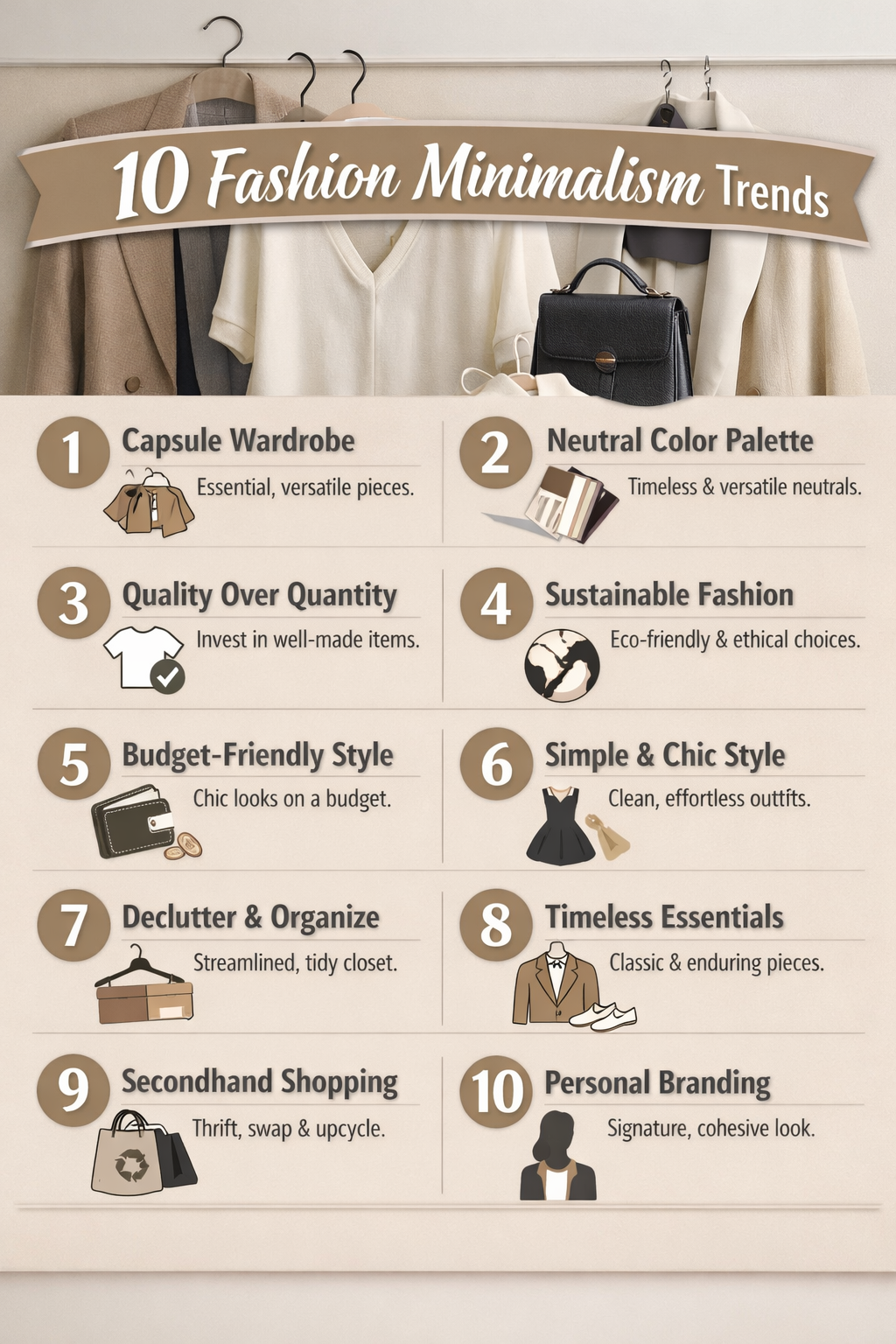
10 Fashion Minimalism Trends for a Timeless Wardrobe
Minimalism & Wardrobe Microtrends are reshaping the fashion industry by combining simplicity with smart, trend-focused styling. Instead of fast fashion overload, modern consumers are embracing capsule wardrobes, sustainable fashion, and timeless essentials while selectively adopting viral microtrends seen on TikTok and Instagram. This balanced approach promotes intentional shopping, budget-friendly fashion choices, and long-term wardrobe value.
With rising interest in sustainable clothing, minimalist fashion, and affordable style upgrades, minimalism & wardrobe microtrends have become high-search topics in lifestyle, fashion finance, and personal branding. The focus is no longer on owning more clothes but on owning better, versatile pieces that maximise outfit combinations while staying current with trending aesthetics.
What Is Fashion Minimalism?
Focus Keyword: Fashion Minimalism
SEO Description: Discover what fashion minimalism is, its benefits, capsule wardrobe essentials, sustainable fashion tips, and how minimalist style can save money while elevating your personal brand.
What Is Fashion Minimalism?
Fashion minimalism is a lifestyle-driven approach to clothing that focuses on simplicity, quality, and intentional purchasing. Instead of filling closets with fast fashion and short-lived trends, fashion minimalism encourages owning fewer, versatile, and timeless pieces that can be styled in multiple ways. The goal is to reduce clutter, increase outfit efficiency, and create a polished, effortless personal style.
At its core, fashion minimalism revolves around building a capsule wardrobe—a carefully selected collection of essential clothing items such as neutral blazers, tailored trousers, classic white shirts, structured coats, and quality denim. These pieces are chosen for durability, neutral colour palettes, and long-term wearability. By prioritising high-quality fabrics and timeless designs, individuals can reduce unnecessary spending and minimise environmental impact.
One major benefit of fashion minimalism is financial savings. Investing in fewer premium pieces often leads to lower cost-per-wear compared to constantly buying inexpensive, trend-driven clothing. This approach supports smarter shopping habits and aligns with sustainable fashion principles.
Fashion minimalism also enhances personal branding. A streamlined wardrobe filled with neutral tones like black, white, beige, navy, and grey creates a sophisticated and professional appearance. Many entrepreneurs, executives, and content creators adopt minimalist fashion to project confidence and consistency.
In today’s digital era, fashion minimalism pairs well with selective wardrobe microtrends. Instead of following every viral trend, minimalist dressers may incorporate subtle accessories—such as structured handbags or statement shoes—to refresh their look without overconsumption.
Ultimately, fashion minimalism promotes intentional living. It simplifies daily outfit decisions, reduces fashion waste, and supports sustainable clothing practices while maintaining a modern, elegant style that never goes out of trend.
Understanding Wardrobe Microtrends
Fashion minimalism does not completely reject trends—it simply approaches them differently. This is where wardrobe microtrends come into play. Wardrobe microtrends are short-term fashion styles that quickly gain popularity through social media platforms like TikTok, Instagram, and Pinterest. Unlike traditional fashion cycles that last for seasons or years, microtrends often rise and fade within a few months.
Examples of wardrobe microtrends include specific aesthetics such as “quiet luxury” or the “clean girl look”, oversized blazers, ballet flats, statement belts, or trending colour palettes like monochrome neutrals. These styles spread rapidly due to influencer marketing and viral content, making them highly visible and desirable.
For followers of fashion minimalism, the key is selective adoption. Instead of rebuilding an entire wardrobe around every trending style, minimalists incorporate microtrends through small, affordable updates. For example, adding a trending handbag, sunglasses, or shoes can refresh an outfit without compromising a capsule wardrobe’s simplicity.
Understanding wardrobe microtrends also helps consumers avoid impulse buying. Since these trends are temporary, mindful shoppers evaluate whether a piece aligns with their long-term style before purchasing. This prevents waste and reduces unnecessary spending.
By balancing Fashion Minimalism with carefully chosen microtrends, individuals can maintain a timeless wardrobe while staying current. This strategic approach allows for style evolution without sacrificing sustainability, financial discipline, or personal identity.
Capsule Wardrobes & Smart Styling
A key principle of fashion minimalism is building a capsule wardrobe—a curated collection of essential clothing pieces designed to mix and match effortlessly. A capsule wardrobe typically includes 20 to 40 high-quality items such as neutral tops, tailored trousers, classic denim, structured blazers, versatile dresses, and comfortable footwear. These pieces are selected for their timeless design, durability, and adaptability across seasons.
The purpose of a capsule wardrobe is to simplify daily outfit decisions while maximising styling options. With carefully chosen staples in neutral tones like black, white, beige, navy, and grey, creating coordinated outfits becomes easy and efficient. This streamlined approach reduces wardrobe clutter and eliminates the stress of having “nothing to wear”.
Smart styling plays a major role in making fashion minimalism practical and modern. Layering techniques, thoughtful accessorising, and fabric combinations can transform basic pieces into polished looks suitable for work, casual outings, or formal events. For example, pairing a white shirt with tailored trousers creates a professional appearance, while switching to denim and sneakers offers a relaxed style.
Another benefit of capsule wardrobes is financial efficiency. Investing in fewer, premium-quality pieces often results in better cost-per-wear value compared to frequently purchasing low-cost fast fashion items. Over time, this approach saves money and supports sustainable shopping habits.
By combining versatility, quality, and intentional purchasing, capsule wardrobes reflect the true essence of fashion minimalism—owning less while achieving more with every outfit.
Sustainable Fashion & Ethical Shopping
Fashion minimalism strongly aligns with sustainable fashion and ethical shopping practices. Instead of supporting fast fashion cycles that promote overproduction and waste, minimalist fashion encourages intentional purchasing and long-term wardrobe planning. This approach reduces environmental impact while promoting responsible consumer habits.
Sustainable fashion focuses on high-quality materials, ethical labour practices, and eco-friendly production methods. Many minimalist shoppers prioritise organic cotton, recycled fabrics, linen, wool, and other durable textiles that last longer and reduce the need for frequent replacements. By investing in well-made garments, individuals decrease clothing waste and lower their overall fashion footprint.
Ethical shopping also involves supporting brands that value fair wages, transparent supply chains, and environmentally responsible manufacturing. Researching brand policies and choosing quality over quantity reflect the core principles of fashion minimalism.
Another key aspect of sustainability within fashion minimalism is the concept of “buy less, choose well.” Instead of purchasing multiple trendy items each season, minimalists focus on timeless wardrobe staples that remain stylish year after year. This reduces impulse buying and encourages thoughtful decision-making.
Second-hand shopping, clothing swaps, and upcycling are also popular within minimalist communities. These practices extend the life cycle of garments and promote circular fashion.
By combining sustainable materials, ethical purchasing decisions, and intentional wardrobe management, fashion minimalism supports both personal financial savings and long-term environmental responsibility.
Budget-Friendly Style Upgrades
Fashion Minimalism proves that looking stylish does not require constant shopping or expensive designer purchases. Instead of overhauling an entire wardrobe, minimalist fashion focuses on small, strategic upgrades that refresh your look without overspending.
One of the easiest ways to embrace budget-friendly style within fashion minimalism is through accessories. Adding a structured handbag, classic leather belt, statement sunglasses, or minimal jewellery can instantly elevate basic outfits. These subtle additions keep your wardrobe modern while maintaining simplicity.
Another smart strategy is tailoring. Adjusting the fit of existing clothing—such as hemming trousers or refining blazer sleeves—can dramatically improve overall appearance. Well-fitted clothing often looks more luxurious and polished, even if the pieces are affordable.
Neutral layering pieces also offer high value. A quality blazer, trench coat, or cardigan can transform multiple outfits across seasons. Because Fashion Minimalism emphasises timeless staples, these investment items provide long-term cost-per-wear benefits.
Shopping during seasonal sales and focusing on versatile items instead of trend-driven purchases also supports financial efficiency. Before buying, minimalists often ask whether the piece can be styled in at least three different ways. This prevents impulse purchases and ensures practicality.
By prioritising versatility, fit, and intentional accessories, Fashion Minimalism allows individuals to upgrade their style without increasing clutter or exceeding their budget. The result is a refined wardrobe that feels modern, cohesive, and financially sustainable.
Neutral Color Palettes & Timeless Pieces
A defining feature of Fashion Minimalism is the use of neutral color palettes and timeless wardrobe staples. Neutral tones such as black, white, beige, grey, navy, and earth shades create a cohesive and versatile foundation that makes outfit coordination effortless. These colors rarely go out of style, which supports long-term wearability and reduces the need for frequent replacements.
Neutral pieces allow for easy mixing and matching, helping individuals create multiple outfits from a limited number of items. For example, a classic white shirt can be paired with tailored trousers for a professional look or styled with denim for a casual appearance. This flexibility is central to Fashion Minimalism, as it maximizes functionality while minimizing clutter.
Timeless pieces also play a critical role. Structured blazers, trench coats, quality denim, leather shoes, and simple knitwear remain relevant across fashion seasons. Unlike trend-driven clothing, these staples maintain their appeal year after year, offering better cost-per-wear value.
Another advantage of neutral color palettes is the ability to incorporate subtle wardrobe microtrends without overwhelming the overall aesthetic. A trending accessory or seasonal color accent can complement neutral basics while preserving a minimalist identity.
By focusing on classic silhouettes, durable fabrics, and neutral tones, Fashion Minimalism creates a wardrobe that feels refined, adaptable, and sustainable. This approach simplifies daily styling decisions while maintaining a modern and polished appearance.
Decluttering & Closet Organization
An essential part of Fashion Minimalism is decluttering and organizing your closet to reflect intentional living. A minimalist wardrobe is not just about buying fewer clothes—it also involves removing items that no longer serve a purpose. Decluttering creates space, improves visibility, and helps individuals clearly identify what they truly wear and value.
The first step in closet organization is evaluating each item based on fit, condition, versatility, and frequency of use. If a piece hasn’t been worn in a year or no longer aligns with your personal style, it may be time to donate, sell, or recycle it. This process supports both sustainable fashion and mindful consumption.
Fashion Minimalism encourages keeping only high-quality, timeless essentials that can be mixed and matched easily. Organizing clothes by category—such as tops, trousers, outerwear, and accessories—makes daily outfit selection faster and less stressful. Many minimalists also arrange clothing by neutral color palettes to maintain a clean, cohesive look.
Storage solutions such as uniform hangers, clear storage boxes, and seasonal rotation systems further enhance organization. A tidy closet promotes clarity and reduces decision fatigue, allowing individuals to focus on styling rather than searching.
Decluttering also has mental benefits. A simplified wardrobe can reduce overwhelm and create a sense of control and calm. By maintaining an organized closet, Fashion Minimalism becomes easier to sustain, supporting both practical efficiency and long-term lifestyle balance.
Personal Branding Through Minimal Style
Fashion Minimalism plays a powerful role in shaping personal branding and professional image. A consistent, refined wardrobe helps individuals project confidence, credibility, and authenticity. In both corporate and entrepreneurial settings, minimalist fashion communicates clarity and intentionality.
Neutral color palettes, clean silhouettes, and tailored pieces create a polished appearance that works across multiple environments. For example, structured blazers, classic shirts, and well-fitted trousers present a professional image suitable for meetings, networking events, or public appearances. This consistency strengthens personal identity and makes a lasting impression.
Fashion Minimalism also simplifies decision-making, allowing individuals to focus on productivity rather than outfit stress. When clothing choices align with a clear personal aesthetic, daily dressing becomes efficient and purposeful.
Many professionals adopt minimalist wardrobes to support a “signature style.” Wearing cohesive colors and timeless pieces builds recognition and reinforces personal branding. This approach is especially valuable for business owners, content creators, and public figures who rely on visual consistency.
Accessories in minimalist fashion are carefully selected rather than excessive. A quality watch, structured handbag, or simple jewelry can enhance sophistication without overwhelming the look. These details add personality while maintaining elegance.
By aligning wardrobe choices with long-term goals and personal values, Fashion Minimalism becomes more than a style preference—it becomes a strategic tool for self-presentation and professional growth.
Sustainable Fashion & Ethical Choices
A major advantage of Fashion Minimalism is its strong connection to sustainable fashion and ethical consumer habits. By focusing on quality over quantity, minimalist wardrobes naturally reduce overconsumption, textile waste, and environmental impact. Instead of frequently purchasing fast fashion items, minimalists invest in durable pieces designed to last for years.
Sustainability within Fashion Minimalism begins with mindful shopping. Choosing ethically produced garments, eco-friendly fabrics, and reputable brands supports responsible manufacturing practices. Materials such as organic cotton, linen, recycled fabrics, and responsibly sourced wool align with minimalist values of longevity and environmental awareness.
Another key aspect is reducing impulse buying. Minimalist shoppers prioritize versatility and timeless design, ensuring each purchase serves multiple styling purposes. This approach decreases unnecessary spending while promoting long-term wardrobe efficiency.
Secondhand shopping, clothing swaps, and resale platforms also complement Fashion Minimalism. Extending the life cycle of garments reduces landfill waste and supports circular fashion systems. Repairing and maintaining clothing—such as replacing buttons or fixing seams—further reinforces sustainable habits.
Ethical fashion choices also include fair labor considerations. Supporting brands that promote transparent supply chains and fair wages contributes to positive social impact. Fashion Minimalism encourages consumers to think beyond trends and consider the broader consequences of their purchasing decisions.
By integrating sustainability and ethical responsibility, Fashion Minimalism becomes a lifestyle that benefits not only personal style but also the environment and global communities.
The Future of Fashion Minimalism & Microtrends
The future of Fashion Minimalism is closely tied to evolving wardrobe microtrends and digital influence. As consumers become more conscious of sustainability, affordability, and personal branding, minimalist fashion continues to gain popularity across global markets. Rather than chasing every trend, modern shoppers are blending timeless essentials with carefully selected microtrends.
Wardrobe microtrends—such as oversized blazers, monochrome outfits, capsule wardrobes, and neutral athleisure—fit naturally within Fashion Minimalism. These trends enhance basic staples without overwhelming the overall aesthetic. The focus remains on versatility, clean silhouettes, and high-quality materials.
Social media platforms and fashion influencers are also reshaping how minimalism is presented. Instead of promoting excessive hauls, many creators now emphasize “outfit repeating,” sustainable styling, and cost-per-wear value. This shift reflects a broader cultural movement toward mindful consumption.
Technology further supports minimalist fashion choices. Online resale marketplaces, sustainable brand directories, and virtual wardrobe planning tools make it easier for consumers to shop responsibly. Data-driven fashion insights also help individuals make smarter purchasing decisions based on durability and long-term value.
Looking ahead, Fashion Minimalism is expected to remain a strong lifestyle trend due to its financial efficiency, environmental awareness, and timeless appeal. As fast fashion faces increasing scrutiny, minimalist wardrobes offer a practical solution that balances style, sustainability, and simplicity for the modern consumer.
Other stories
-
10 Viral Health & Beauty Hacks That Actually Work
-
Digital Wallets: A Convenient and Secure Way to Make Transactions
-
Ghana Gold Board Policy: Expert Warns on Royalty Reforms and Mining Sector Impact
-
10 Facts About the $17 Million Gold Scam
-
Cristiano Ronaldo is “warned” by the Saudi Pro League about strike action.