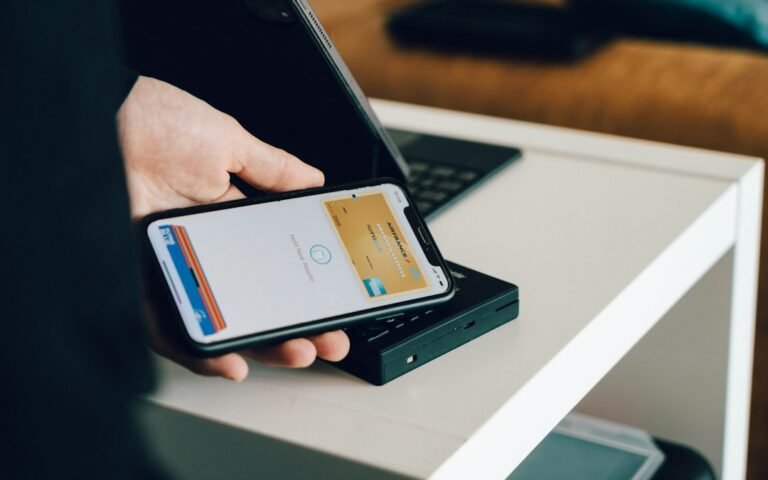
The Bank of Ghana is testing how digital payment systems could connect across African markets.
Bank of Ghana Tests Digital Cross-Border Payments: What Ghanaian Businesses and Mobile Money Users Should Know
The Bank of Ghana is testing new ways to make cross-border payments work across different financial systems, including traditional bank accounts, mobile money wallets, central bank digital currencies and stablecoins. The initiative could help shape how individuals and businesses transfer money between participating African countries in the future.
According to the Ghana News Agency report published on October 13, 2026, Bank of Ghana Governor Dr Johnson Pandit Asiama discussed the initiative during the IMF and World Bank meetings in Bangkok. The broader objective is to explore how different forms of digital money can work together more efficiently, potentially reducing the need for complicated payment routes involving financial institutions outside Africa.
For Ghana, the development is important because mobile money has become a major part of everyday financial activity. Consumers use digital wallets to pay for goods and services, while traders and small businesses rely on electronic transfers to receive payments, settle bills and manage working capital.
However, the announcement should be understood as a pilot and policy development rather than confirmation that every Ghanaian can already make instant, low-cost transfers to any African country. The practical benefits will depend on implementation, participating providers, regulatory approval, pricing and the safeguards introduced to protect customers.
What Is the Bank of Ghana Testing?
The central bank is exploring interoperability between different payment systems. In simple terms, interoperability means that separate financial platforms can communicate and process transactions between one another without requiring customers to use exactly the same bank, wallet or payment technology.
Consider a Ghanaian trader who purchases goods from a supplier in Nigeria. The buyer may hold money in a Ghanaian mobile wallet, while the supplier receives payments through a Nigerian bank account or mobile payment service. If the systems are not connected effectively, the transaction may require additional intermediaries, currency conversion and separate settlement arrangements.
A more interoperable system could allow participating services to exchange the necessary payment information and complete the transaction through agreed technical and financial arrangements.
The pilot is significant because it considers several types of digital money rather than assuming that one platform or technology will meet every need. Different payment methods have different operating rules, risks and regulatory requirements. Testing how they interact can help authorities identify technical weaknesses before any wider rollout.
The important question is not simply whether money can move digitally. It is whether the payment can be completed reliably, securely and at a reasonable total cost.
Why Cross-Border Payments Matter to Ghana
Cross-border payments support more than personal remittances. They are essential to trade, travel, education, professional services and commercial relationships between African countries.
Ghanaian businesses that buy products from neighbouring markets need dependable ways to pay suppliers. Importers may need to settle invoices, while exporters need to receive funds from customers. Freelancers and service providers may also receive payments from clients operating in other countries.
When international transfers are expensive or slow, businesses can face cash-flow difficulties. A trader who cannot pay a supplier promptly may experience delivery delays or miss an opportunity to purchase goods at a favourable price. A small business receiving money late may struggle to pay workers, replace stock or meet other operating expenses.
More efficient payment arrangements could help reduce some of these obstacles. Nevertheless, the outcome will depend on the actual service offered. A new payment connection will not automatically eliminate exchange-rate costs, compliance requirements or every delay associated with international transactions.
For customers, the most useful measures will be the total amount paid in fees, the exchange rate applied, the time taken for the recipient to receive usable funds and the process available when a transaction goes wrong.
Ghana–Nigeria Payments and the Role of PAPSS
The Ghana–Nigeria corridor is particularly relevant because both countries have active digital-payment markets and significant commercial links. Consumers, traders and businesses may need to transfer money between the two countries for purchases, services and other legitimate transactions.
The Pan-African Payment and Settlement System, commonly known as PAPSS, is one of the initiatives designed to support cross-border payments within Africa. It aims to facilitate payments between participating African markets through its network of financial institutions and settlement arrangements.
The Ghana News Agency report also describes the extension of PAPSS to mobile wallets in the Ghana–Nigeria corridor. Connecting wallet services with cross-border payment arrangements could make digital payments more accessible to users who do not routinely conduct transactions through conventional bank accounts.
However, customers should distinguish between a payment system’s overall capabilities and the services their own provider actually supports. A system may operate across participating institutions without being available through every bank, mobile money operator or wallet application.
Before making a transfer, customers should confirm whether their provider supports the destination country, the recipient’s payment method, the applicable currency and the full transaction cost.
Could the Pilot Reduce Transfer Fees?
Reducing the cost of cross-border payments is one of the potential benefits of better-connected financial systems. Every intermediary involved in a transaction may introduce additional processes, charges or settlement requirements. A more direct and efficient arrangement could help participating providers reduce some of these costs.
For small businesses, even a modest reduction in transfer expenses can matter. A company making frequent supplier payments may accumulate significant charges over a month or year. Lower costs could leave more money available for inventory, transport, staff and business expansion.
Yet customers should not assume that a new payment system will automatically make every transfer free. Providers may still charge service fees, while foreign-exchange conversion can affect the amount ultimately received. Other costs may arise from the receiving institution or the payment method selected.
The best way to compare services is to examine the total cost of a transaction. Customers should check the amount deducted from the sender, the exchange rate, any receiving fee and the exact amount the recipient is expected to receive.
They should also check whether a quoted delivery time is guaranteed or only an estimate. A transfer advertised as inexpensive may not be the best option if it involves an unfavourable exchange rate or does not meet the customer’s timing requirements.
What Could It Mean for Traders and Small Businesses?
If the pilot leads to dependable services at competitive prices, Ghanaian businesses could benefit in several practical ways.
Improved cash-flow management: Faster settlement, where supported, could help businesses receive money and pay suppliers with fewer delays. This may be particularly useful for traders who need to replenish stock regularly.
Simpler supplier payments: Businesses dealing with partners in participating countries could have more convenient ways to pay invoices without navigating unnecessarily complicated payment routes.
Better access for smaller enterprises: Microbusinesses and small companies may benefit from digital services that do not require the same level of administrative effort as some traditional international payment arrangements.
More opportunities for regional trade: Easier payments could support commercial relationships between Ghana and other African markets, particularly when combined with reliable delivery services, transparent pricing and clear business rules.
More convenient digital transactions: Customers who already use mobile wallets may eventually be able to access supported cross-border services through familiar platforms, depending on which providers participate.
These are potential benefits, not guaranteed outcomes. Businesses should continue to use established, regulated payment services until a new option is officially launched and its terms have been confirmed.
Why Stablecoins and Central Bank Digital Currencies Need Careful Testing
The pilot’s reference to stablecoins and central bank digital currencies makes the initiative particularly relevant to the future of digital finance.
A central bank digital currency is a digital form of central bank money. A stablecoin is a digital token designed to maintain a relatively stable value, often by referencing a currency or another asset. Despite this apparent similarity in their intended use as digital payment instruments, the two are not the same.
Their legal status, issuer, backing arrangements, redemption processes and risks can differ considerably. A stablecoin’s name or claim of maintaining a fixed value does not, by itself, guarantee that holders can always redeem it at the expected price. Risks can include failures involving the issuer, reserve assets, technology, intermediaries or access to redemption.
Central bank digital currencies also require careful consideration of privacy, security, operational resilience and how they interact with existing banking and payment infrastructure.
Testing different forms of digital money can help authorities examine whether transactions can be completed across systems without weakening consumer protection or financial stability. It does not necessarily mean that the Bank of Ghana has selected one particular digital currency for universal adoption.
The Governor’s reported position that the future should not be determined by a single technology reflects the importance of evaluating systems according to their usefulness, safety and suitability.
Consumer Protection: What Mobile Money Users Should Do
As digital payment services develop, fraudsters may attempt to exploit public interest by claiming to offer early access to a new cross-border product. Customers should remain cautious about unsolicited messages, social media advertisements and links promising special access or guaranteed financial returns.
The following precautions remain important:
- Protect your PIN and verification codes. Never disclose your mobile money PIN, password or one-time verification code to a caller or social media account claiming to represent a provider.
- Verify the recipient. Check the recipient’s name, account or wallet details, destination country and transfer amount before authorising payment.
- Use official channels. Confirm new services through your bank, licensed payment provider or the relevant institution’s official communication channels.
- Understand the charges. Review the exchange rate, transaction fee and final amount the recipient will receive before confirming a transfer.
- Keep transaction records. Save receipts, reference numbers and relevant messages so that you can provide evidence if a payment is delayed or disputed.
- Check complaint procedures. Know how to report an incorrect transfer, suspected fraud or an unauthorised transaction through your provider’s official customer-support process.
Customers should also understand that reversing a completed transfer may not always be possible. Reporting a problem promptly can help the provider investigate, but recovery is not guaranteed.
What Regulatory Cooperation Could Mean for Fintech Companies
The announcement also raises questions about regulatory cooperation between African countries. The Ghana News Agency report refers to discussions involving regulatory cooperation and licence passporting with Rwanda and other countries.
In financial services, licence passporting generally refers to arrangements that allow an appropriately authorised firm to operate across participating jurisdictions under agreed rules or recognition procedures. The precise legal effect depends on the countries involved and the framework they adopt.
For fintech companies, more consistent rules could eventually make it easier to expand services across borders. Companies may be able to reduce duplicated processes where regulators agree on common standards or recognise specified authorisations.
However, licence passporting should not be interpreted as automatic permission for every fintech business to operate throughout Africa. Companies must comply with the relevant legal framework, licensing conditions, anti-money-laundering requirements, consumer-protection obligations and any other rules applicable in each market.
For customers, effective cooperation between regulators could help establish clearer expectations for providers and improve coordination when cross-border transactions involve complaints or suspected financial crime.
What Happens Next?
The next important developments will be whether the pilot progresses towards live services, which financial institutions and payment providers participate, which transaction types are supported and how customers will access the system.
Pricing will also matter. Customers and businesses will need clear information about transaction charges, exchange rates, settlement times, eligibility requirements and complaint procedures. Regulators and providers will need to address cybersecurity, fraud prevention, operational failures and the handling of disputes that cross national borders.
For Ghanaian businesses, the sensible approach is to monitor official announcements while continuing to compare existing regulated services. A new system should be judged by its real-world performance, not simply by the technology it uses or the promises made during its development.
For consumers, the key question is whether the eventual service provides a demonstrable improvement in convenience, affordability, reliability and safety.
The Bank of Ghana’s pilot could contribute to a more connected African payment environment. Its long-term value, however, will depend on whether the system moves beyond testing and delivers practical benefits to people and businesses using it.
Source: Ghana News Agency: Bank of Ghana pilots digital cross-border payments with Rwanda and Nigeria.
Further reading: Bank of Ghana | Pan-African Payment and Settlement System.
Visit MyGHPages.com for more Ghanaian business, banking, technology and national news.
Frequently Asked Questions
1. Has the Bank of Ghana launched instant cross-border payments for everyone?
The reported development concerns a pilot. Customers should wait for official service announcements and confirm availability with their own financial provider.
2. Will transfers between Ghana and Nigeria become free?
That has not been established by the announcement. Actual costs will depend on provider charges, currency conversion, receiving fees and the final service arrangements.
3. What is PAPSS?
PAPSS stands for the Pan-African Payment and Settlement System. It is designed to facilitate cross-border payments between participating African markets through connected financial institutions and settlement arrangements.
4. Will every mobile money wallet support the new service?
Not necessarily. Availability will depend on participating providers, technical connections, regulatory requirements and the services each institution chooses to offer.
5. Is a stablecoin the same as a central bank digital currency?
No. A central bank digital currency is issued by a central bank, while a stablecoin is a digital token designed to maintain a relatively stable value under its own issuance and backing arrangements.
6. How can customers avoid cross-border payment scams?
Use official providers, verify recipient details, check fees before authorising transfers and never disclose PINs or one-time verification codes. Confirm any newly announced service through official channels.