Ghana’s plan to seek BRICS partner-country status has renewed discussion about the country’s trade options, investment prospects and place in a changing global economy. The Government announced Cabinet approval for an application earlier in October, but Foreign Affairs Minister Samuel Okudzeto Ablakwa later clarified that Ghana intends to begin as a partner country rather than seek immediate full membership.
The distinction matters. Partner-country status is not the same as becoming a full member of the bloc, and Ghana’s application should not be treated as already approved. The Government’s stated objective is to broaden international cooperation while maintaining relationships with existing partners.
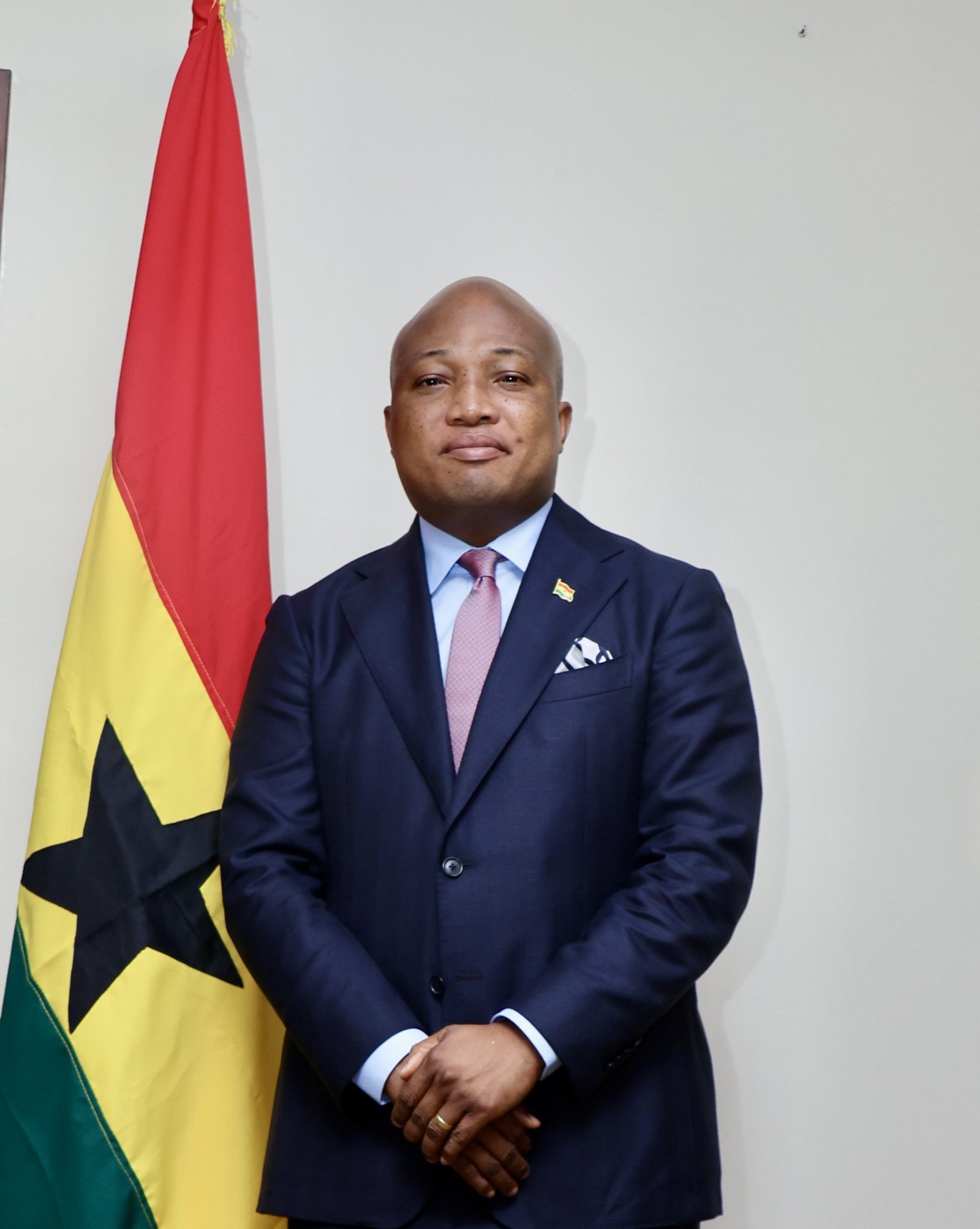
Photo: Official portrait of Foreign Affairs Minister Samuel Okudzeto Ablakwa from Ghana’s Ministry of Foreign Affairs.
Why Ghana is pursuing BRICS partner status
BRICS brings together major emerging and developing economies and provides a forum for consultation on economic cooperation and global governance. Ghana’s government has described the proposed engagement as a way to diversify partnerships, expand development options and strengthen cooperation with countries in the Global South.
For a country seeking investment, export markets and industrial growth, the value of international partnerships depends on the practical opportunities they create. Potential areas of interest include manufacturing, agro-processing, infrastructure, energy, education, technology and trade facilitation. However, each opportunity depends on negotiations, financing, commercial conditions and the ability of Ghanaian institutions and businesses to compete.
Partner status would provide a formal channel for engagement if the application succeeds. It would not automatically guarantee new loans, investment projects, tariff-free access or a rise in exports. Businesses and investors should look for specific agreements and funded projects rather than assume that a diplomatic announcement will produce immediate economic gains.
Why the partner-country distinction matters
On October 12, the Information Services Department reported the Foreign Affairs Minister’s clarification that Ghana intends to apply for partner-country status, not full membership. The category has its own framework and is distinct from full membership in BRICS. The final outcome depends on the bloc’s processes and the decisions of its existing members.
Accurate wording is important because the terms “membership” and “partner status” can create different expectations. Ghana has announced its intention and is preparing the application; that is not the same as confirmation that it has been accepted into either category.
The distinction also matters for investors assessing the implications for Ghana’s foreign policy. The Government has said the plan is intended to complement existing relationships rather than replace them. Any long-term impact will depend on how Ghana balances engagement with BRICS countries alongside its relations with traditional development partners, regional institutions and multilateral lenders.
Potential benefits for Ghanaian businesses
One possible benefit is a broader range of commercial relationships. Companies could explore partnerships with firms in member countries, seek new suppliers or customers, and identify investment opportunities in sectors where Ghana has competitive strengths. Greater market diversification can also reduce dependence on a narrow group of trading partners.
Manufacturers and agro-processors may be particularly interested in whether deeper cooperation can support technology transfer, access to equipment, reliable inputs and export development. Ghanaian businesses will still need to meet product standards, secure the required permits and compete on price, quality and delivery. Diplomatic ties alone do not guarantee a sale.
Consumers could benefit if trade partnerships increase competition or improve the availability of goods. Yet imported products can also put pressure on domestic producers if local firms cannot compete with the scale, financing or pricing of foreign suppliers. The Government will need to consider how trade opportunities can support local production and jobs, rather than only increase imports.
What about the cedi, jobs and investment?
The effect on the cedi would depend on the actual trade and payment arrangements that emerge. More export earnings, productive investment and locally manufactured goods sold abroad could support foreign-currency inflows over time. On the other hand, a rise in imports without a corresponding increase in export receipts could increase demand for foreign exchange.
Employment gains are also possible if investment results in new factories, services or export-oriented production. But the scale of any benefit depends on projects reaching implementation, hiring workers and creating sustainable demand. Announced intentions should not be counted as jobs already created.
For the same reason, businesses should avoid changing their plans solely on the assumption that Ghana’s BRICS application will reduce costs or produce a particular exchange-rate outcome. They should assess contracts, financing terms, logistics, product standards and demand in each market.
Risks and questions the Government must address
Any new partnership should be assessed against Ghana’s national interests. That includes transparency in agreements, the terms of financing, the potential effect on local industry, environmental and labour standards, and the ability of Ghanaian companies to benefit from the relationship.
Government should also explain how new arrangements fit with existing trade commitments and how businesses can access practical support. A clear public explanation of the application process and any subsequent agreements would help citizens distinguish between policy objectives and confirmed outcomes.
Maintaining diversified relationships requires diplomacy and careful negotiation. Ghana can pursue new options while continuing to work with established partners, but each arrangement should be judged by its measurable contribution to jobs, productivity, export capacity and living standards.
What happens next?
The next milestones are the formal application, engagement with existing BRICS members and any decision on Ghana’s proposed partner status. After that, the public should look for concrete cooperation plans, signed agreements, financing details and measurable timelines.
For businesses, the useful question is not only whether Ghana gains a new diplomatic platform, but whether it creates practical routes to investment, technology, export markets and competitive production. For consumers, the key issue is whether these developments lead to better opportunities and fair competition without weakening local enterprises.
Sources and further reading
Read the Information Services Department’s clarification on partner-country status and the Ghana News Agency report on Ghana’s application plan. MyGHPages covers Ghanaian business, national policy and public-interest developments. Visit MyGHPages.com for more business and national news.
Frequently asked questions
Is Ghana already a full BRICS member?
No. The latest clarification says Ghana intends to apply for partner-country status rather than immediate full membership.
Will the application automatically attract investment?
No. Investment depends on specific projects, financing, commercial conditions and implementation.
Could BRICS engagement affect the cedi?
Any effect would depend on the resulting trade, investment and payment flows, not the application announcement alone.