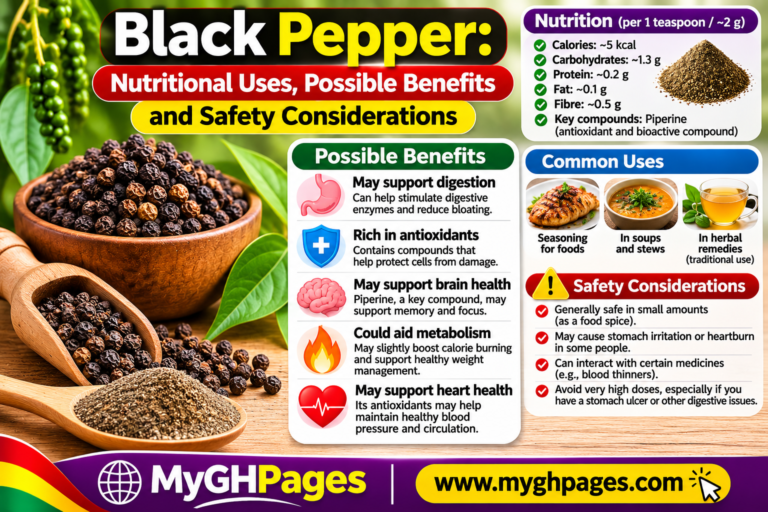
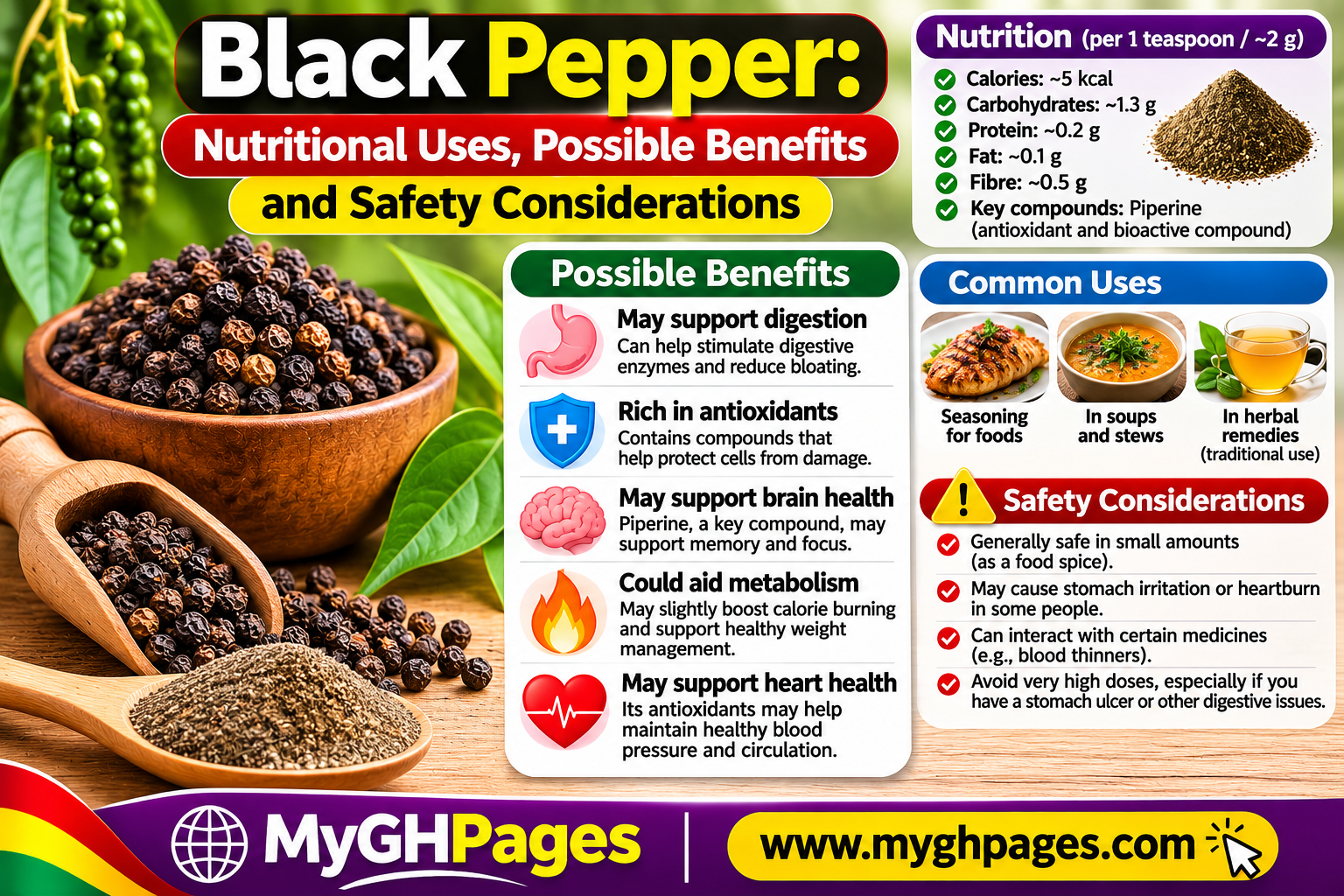
Black pepper is more than a popular kitchen spice. Discover its nutritional properties, potential health benefits, everyday uses and important safety considerations on MyGHPages.
Black Pepper: Nutritional Uses, Possible Benefits and Safety Considerations
Black pepper is one of the most widely used spices in the world. It is added to soups, stews, sauces, meat dishes and vegetables to provide a distinctive warm and slightly spicy flavour.
In Ghana, black pepper is commonly used alongside other seasonings to improve the taste of everyday meals. Beyond its culinary importance, researchers have also studied compounds found in black pepper and their possible effects on the human body.
One of its best-known active compounds is piperine, which gives black pepper much of its characteristic pungency.
But what does scientific research actually say about black pepper? Can it prevent diseases, improve digestion or help the body absorb nutrients? This guide examines the evidence and explains how to use black pepper sensibly.
1. Black Pepper Contains Piperine
Black pepper comes from the dried fruit of the plant Piper nigrum. Its distinctive taste is largely associated with piperine, a naturally occurring compound.
Researchers have investigated piperine for several possible biological effects, including antioxidant activity and its influence on the absorption and metabolism of certain substances.
However, findings from laboratory experiments and animal studies do not automatically prove that eating black pepper produces the same effects in humans.
A scientific review published in Critical Reviews in Food Science and Nutrition discusses the different physiological effects investigated in black pepper and piperine research.
Read the research: Black Pepper and Its Pungent Principle, Piperine: A Review of Diverse Physiological Effects.
2. It Adds Flavour to Meals Without Requiring Much Salt
One practical benefit of black pepper is its ability to improve the flavour of food.
It can be added to soups, grilled fish, chicken, vegetables and sauces. Its strong flavour may help people enjoy meals without relying entirely on salt for seasoning.
Reducing excessive salt consumption is important because high sodium intake is associated with increased blood pressure and cardiovascular health risks.
Black pepper is not a treatment for high blood pressure, but using herbs and spices to flavour meals can be one part of a broader effort to reduce excess salt.
The World Health Organization provides guidance on reducing sodium intake through its salt reduction fact sheet.
10 Powerful Healthy Habits for Better Living in Ghana
3. Piperine Has Been Studied for Antioxidant Properties
Antioxidants are substances that can help protect cells from damage associated with unstable molecules known as free radicals.
Laboratory studies have investigated piperine for antioxidant activity. Some experimental research has reported effects on oxidative processes.
However, this does not establish that consuming black pepper prevents cancer, reverses ageing or protects people from particular diseases.
More human research is needed before such health claims can be made confidently.
4. Can Black Pepper Help Digestion?
Black pepper has traditionally been used in different food cultures to season meals and support digestion.
Some experimental studies have investigated piperine and digestive processes. Nevertheless, evidence is not strong enough to recommend black pepper as a treatment for indigestion, stomach ulcers or other digestive disorders.
People who experience frequent heartburn, stomach pain or persistent digestive discomfort should seek medical advice rather than relying on spices or home remedies.
For most people, using ordinary amounts of black pepper in food is primarily a culinary choice.
5. Piperine May Affect the Absorption of Certain Substances
One area of particular scientific interest is piperine’s ability to influence how the body absorbs and processes some substances.
Researchers have studied piperine as a possible bioavailability enhancer. This means it may increase the amount of certain compounds that enter the bloodstream.
For example, piperine is sometimes added to turmeric or curcumin supplements to influence curcumin absorption.
However, increasing absorption is not always beneficial. It may also affect the way some medicines are processed.
A review published in 2011 examined the effects of black pepper and piperine on intestinal absorption and the metabolism of medicines.
Read: The Effects of Black Pepper on the Intestinal Absorption and Hepatic Metabolism of Drugs.
6. Black Pepper Supplements Are Not the Same as Using Pepper in Food
There is an important difference between seasoning a meal with black pepper and taking concentrated piperine supplements.
Ordinary culinary use generally involves much smaller amounts than concentrated supplement products.
A 2021 scientific review examined the safety of isolated piperine used in concentrated doses. It identified potential interactions with medicines and advised caution when using high-dose piperine supplements.
People taking regular medication should speak with a doctor or pharmacist before starting concentrated black pepper extracts or piperine supplements.
Read the review: Safety Aspects of the Use of Isolated Piperine Ingested as a Bolus.
7. How to Use Black Pepper in Everyday Cooking
Black pepper can be included in a variety of meals without turning it into a medicine or taking excessive quantities.
In Ghanaian cooking, it can be used in:
- Light soup and groundnut soup.
- Grilled fish and chicken.
- Vegetable stews.
- Rice dishes.
- Egg preparations.
- Homemade sauces and marinades.
People can use freshly ground or commercially prepared black pepper according to their taste.
There is no established need to consume large amounts of black pepper every day to obtain a special health benefit.
8. Who Should Be Careful With Black Pepper Products?
Most people can use ordinary culinary amounts of black pepper as part of their meals.
However, concentrated piperine supplements deserve additional caution.
People who should seek professional advice before using these products include:
- Individuals taking prescription medicines regularly.
- People using several supplements at the same time.
- Pregnant or breastfeeding individuals considering concentrated extracts.
- Anyone with a medical condition requiring regular medication.
Do not stop prescribed medicines or change their doses because of claims about black pepper.
If you experience an unexpected reaction after taking a supplement, stop using it and seek appropriate medical advice.
Conclusion
Black pepper is a useful everyday spice that adds flavour to meals and contains naturally occurring compounds such as piperine.
Scientific research has investigated its antioxidant properties, digestive effects and ability to influence the absorption of certain substances. However, many proposed health benefits remain insufficiently established in human studies.
The most practical way to enjoy black pepper is to use it as part of a varied and balanced diet. Concentrated piperine supplements should be approached more carefully, particularly by people taking medicines.
Health information notice: This article is for general educational purposes. It does not provide medical diagnosis or treatment. Consult a qualified healthcare professional before using concentrated supplements or changing prescribed medication.