
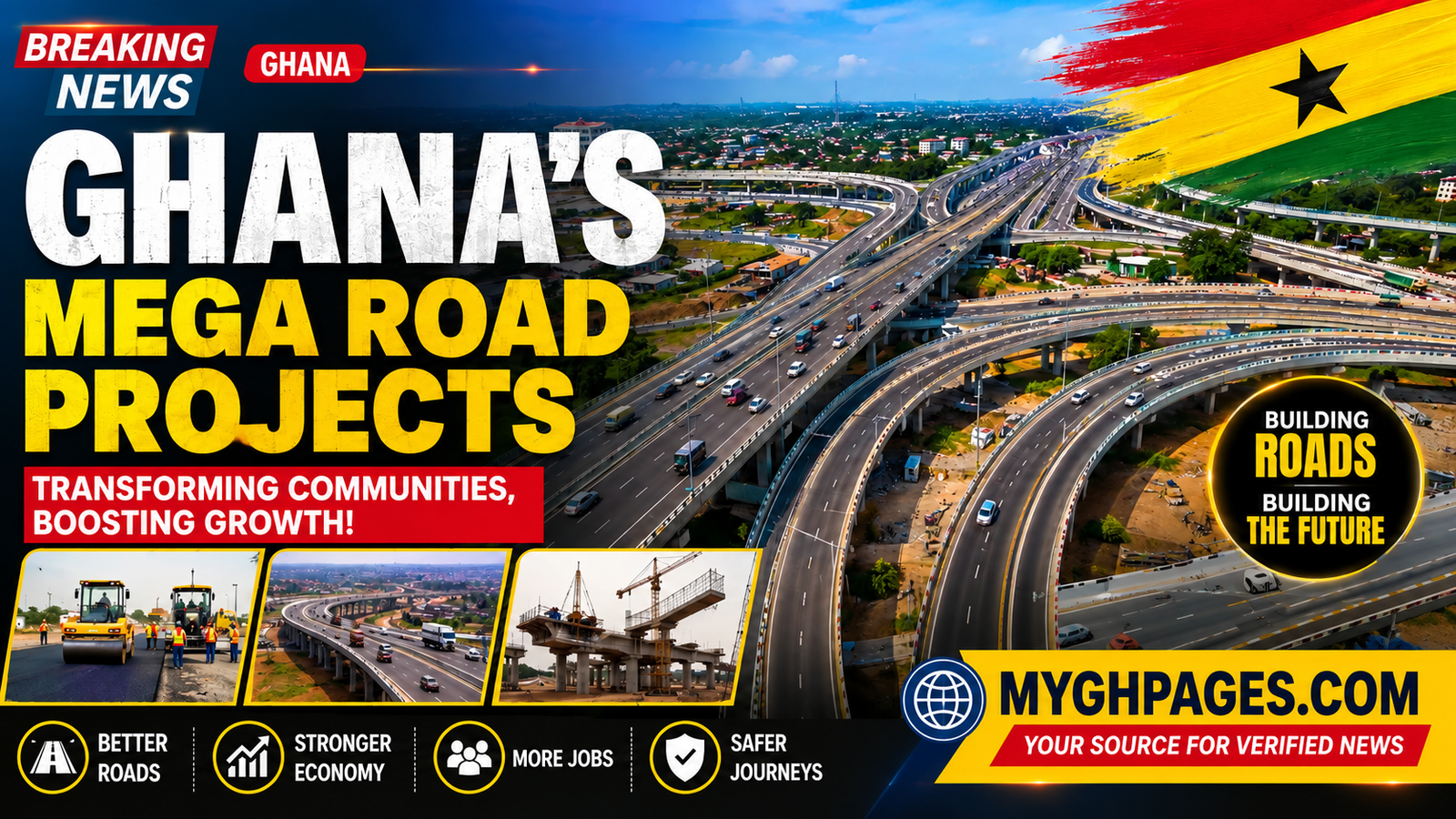
Major road projects in Ghana are transforming transportation, trade, and urban development in 2026
7 Major Road Projects Set to Transform Transportation in Ghana
Ghana is currently witnessing major investments in road infrastructure as the government and private sector continue expanding transportation networks across the country. Several large-scale road construction projects are expected to improve traffic flow, reduce travel time, support economic growth, and enhance regional connectivity. These projects are also creating thousands of jobs while boosting trade, tourism, and real estate development in many parts of Ghana.
Road transportation remains the backbone of Ghana’s economy because millions of people depend on roads daily for business, commuting, and commercial activities. As urban populations continue growing in cities like Accra, Kumasi, Takoradi, and Tamale, the demand for better highways, interchanges, and modern road systems has increased significantly.
The latest road projects include major highway expansions, interchange developments, dualisation projects, bypass roads, and regional corridor improvements. These infrastructure projects are expected to reduce traffic congestion, improve safety, and support long-term economic development across Ghana.
Accra-Tema Motorway Expansion Project
The Accra-Tema Motorway Expansion Project is one of the most important transportation infrastructure developments currently shaping Ghana’s road network. The motorway serves as a major highway connecting Accra and Tema, two of the country’s busiest commercial and industrial centres. As traffic congestion continues increasing because of population growth, industrial expansion, and rising vehicle usage, the motorway expansion project has become a critical solution for improving transportation efficiency in Ghana.
One major reason why the Accra-Tema Motorway Expansion Project is attracting national attention is its potential to reduce heavy traffic congestion along one of Ghana’s busiest road corridors. Thousands of commuters, cargo trucks, public transport vehicles, and private cars use the motorway daily, especially for business activities linked to Tema Port and surrounding industrial areas. Frequent traffic jams on the motorway have caused delays, increased fuel consumption, and affected productivity for businesses and commuters over the years.
The motorway expansion project is expected to modernise the existing road infrastructure by adding more lanes, improving drainage systems, constructing interchanges, and enhancing road safety measures. These improvements are aimed at increasing traffic flow and reducing travel time between Accra and Tema. Better road conditions are also expected to lower transportation costs and improve the movement of goods across the country.
The Accra-Tema Motorway Expansion Project is also important for Ghana’s economic growth because Tema remains one of West Africa’s major ports and industrial hubs. Improved transportation access to Tema Port could help boost trade activities, logistics operations, and foreign investment opportunities. Businesses that depend on efficient cargo transportation may benefit significantly from the upgraded motorway infrastructure.
Real estate and commercial development around the motorway corridor are also expected to increase because improved roads often attract businesses, housing projects, shopping centres, and industrial investments. Areas near the motorway may experience rising property values and increased economic activity in the coming years.
In addition to economic benefits, the project is expected to improve road safety by reducing accidents caused by overcrowded traffic conditions and poor road infrastructure. Modern traffic management systems and expanded road capacity may help improve the overall driving experience for motorists.
Experts believe the Accra-Tema Motorway Expansion Project could become one of Ghana’s most impactful transportation developments because it supports long-term urban growth, regional connectivity, and economic modernisation across the country.
Pokuase Interchange and Highway Development
The Pokuase Interchange has become one of the most significant road infrastructure projects in Ghana and one of the largest interchanges in West Africa. The project was developed to reduce heavy traffic congestion within Accra and improve transportation connections between major highways leading to different parts of the country. Since its completion, the interchange has transformed traffic movement and improved travel efficiency for thousands of commuters daily.
One major reason why the Pokuase Interchange and Highway Development project is important is its role in easing transportation challenges in the greater Accra region. Before the interchange was constructed, drivers experienced severe traffic congestion around Pokuase and nearby communities, especially during rush hours. The interchange now allows vehicles to move more smoothly between Accra, Kumasi, Nsawam, and other important routes.
The project includes multiple bridges, flyovers, drainage systems, pedestrian walkways, and expanded road networks designed to improve safety and traffic flow. The modern road design has reduced travel time significantly and improved connectivity between different transportation corridors in Accra.
The Pokuase Interchange and Highway Development project is also supporting economic growth by improving access to businesses, markets, and residential areas. Better roads have increased commercial activities around Pokuase and surrounding communities, attracting investors and boosting property development. Real estate prices in nearby areas have also increased because improved transportation infrastructure makes the location more attractive for housing and commercial projects.
Road safety has improved because the interchange reduces traffic bottlenecks and minimises dangerous road crossings. Pedestrian bridges and organised traffic systems help improve the overall transportation experience for both drivers and pedestrians.
The project also created employment opportunities during construction while supporting Ghana’s long-term urban development plans. Transportation experts believe infrastructure projects like the Pokuase Interchange are essential for managing the rapid growth of Accra’s population and vehicle numbers.
In addition to improving local transportation, the interchange strengthens regional connectivity because it links major highways used for trade and travel across Ghana. Businesses that rely on transportation and logistics may continue benefiting from the improved road network in the future.
The Pokuase Interchange remains one of Ghana’s most visible examples of modern infrastructure development and demonstrates the country’s commitment to improving transportation systems and supporting economic expansion.
Tema Motorway Interchange Project
The Tema Motorway Interchange Project is one of Ghana’s most important transportation infrastructure developments aimed at improving traffic movement and reducing congestion around the busy Tema industrial and port area. The project forms part of Ghana’s broader effort to modernise road networks, improve logistics efficiency, and support economic growth through better transportation systems.
One major reason why the Tema Motorway Interchange Project is highly important is its strategic location near Tema Port, one of the largest and busiest ports in West Africa. Thousands of cargo trucks, commercial vehicles, buses, and private cars use the motorway corridor daily, creating severe traffic congestion that affects trade and transportation activities. The interchange project is expected to improve traffic flow and reduce travel delays for businesses and commuters.
The project includes flyovers, expanded road lanes, improved drainage systems, and upgraded traffic management infrastructure designed to support heavy transportation demands. These developments are expected to reduce travel time significantly and improve road safety around the Tema motorway corridor.
The Tema Motorway Interchange Project is also expected to boost Ghana’s logistics and industrial sectors because smoother transportation systems are essential for cargo movement and business operations. Tema remains a major commercial hub that handles imports, exports, manufacturing activities, and regional trade connections. Better road infrastructure could help improve the efficiency of transportation services linked to the port and surrounding industrial zones.
Businesses operating around Tema are likely to benefit from lower transportation costs and faster delivery times because traffic congestion often affects productivity and supply chain operations. Improved roads may also attract new investments and support industrial expansion in nearby communities.
In addition to economic benefits, the project is expected to improve safety for motorists and pedestrians by reducing accident risks associated with overcrowded roads and poor traffic conditions. Modern interchange systems and better road designs may help create a more organised transportation environment.
Real estate and commercial development around the motorway area are also expected to increase because improved transportation networks often attract businesses, shopping centres, warehouses, and residential projects. Property values near major infrastructure projects frequently rise because of improved accessibility and economic activity.
Experts believe the Tema Motorway Interchange Project could become one of Ghana’s most impactful transportation developments because it supports long-term trade growth, regional connectivity, and industrial development across the country.
Copied Links:
Kumasi Inner Ring Road Project
The Kumasi Inner Ring Road Project is one of the major transportation infrastructure developments aimed at improving traffic movement and urban mobility within Kumasi. Kumasi is one of Ghana’s busiest commercial cities and serves as an important business hub connecting several regions across the country. As the city continues growing rapidly, traffic congestion and transportation challenges have increased significantly, making road expansion projects extremely important.
One major reason why the Kumasi Inner Ring Road Project is attracting attention is its potential to reduce traffic congestion in key parts of the city. Thousands of commercial vehicles, buses, taxis, motorcycles, and private cars use Kumasi’s roads daily, especially around major markets, business districts, and residential communities. The project aims to improve traffic flow and reduce long travel delays for commuters and businesses.
The Kumasi Inner Ring Road Project includes road widening, drainage improvements, bridge construction, traffic signal systems, pedestrian walkways, and better road safety infrastructure. These upgrades are expected to improve driving conditions while reducing accidents and transportation difficulties within the city.
The project is also expected to boost economic activities because better transportation systems improve access to markets, shopping centres, industrial areas, and commercial zones. Kumasi is known for major trading activities, especially around places like the Kejetia Market area, where thousands of people conduct business daily. Improved roads may help traders and transport operators move goods more efficiently.
The Kumasi Inner Ring Road Project could also support tourism and real estate development within the Ashanti Region. Improved roads often attract investors, housing projects, hotels, restaurants, and new businesses to surrounding communities. Property values near upgraded roads and transportation corridors may continue rising because of better accessibility.
Road safety remains another important benefit of the project. Organised traffic systems, better drainage networks, and modern road designs are expected to reduce flooding and traffic-related accidents, especially during heavy rainfall seasons.
The project has also created jobs for engineers, construction workers, transport operators, and local businesses involved in infrastructure development. Experts believe continued investment in urban road projects will help Kumasi manage future population growth and transportation demands more effectively.
As Ghana continues modernising its transportation infrastructure, the Kumasi Inner Ring Road Project is expected to play a major role in improving urban mobility, supporting business growth, and strengthening regional economic development in the Ashanti Region.
Copied Links:
Eastern Corridor Road Development
The Eastern Corridor Road Development Project is one of Ghana’s largest transportation infrastructure initiatives aimed at improving connectivity between several regions across the country. The road network stretches through major communities in eastern Ghana and plays an important role in supporting trade, agriculture, transportation, and regional economic growth. As road infrastructure continues improving nationwide, the Eastern Corridor project has become a key part of Ghana’s long-term development strategy.
One major reason why the Eastern Corridor Road Development project is highly important is its ability to improve transportation access for rural communities, farmers, traders, and businesses operating along the corridor. Many parts of eastern Ghana depend heavily on road transportation for moving agricultural products, raw materials, and commercial goods to larger markets and urban centres.
The project includes road reconstruction, highway expansions, bridge construction, drainage systems, and improved road safety infrastructure. These upgrades are expected to reduce travel time significantly while improving transportation efficiency for passengers and commercial vehicles. Better road conditions may also reduce vehicle maintenance costs and transportation delays for businesses.
The Eastern Corridor Road Development project is expected to boost agricultural activities because many farming communities rely on transportation networks to move crops and livestock products to markets. Improved roads could help farmers access larger commercial centres more easily, increasing economic opportunities and reducing post-harvest losses caused by poor transportation conditions.
Regional trade and tourism are also expected to benefit from the upgraded road network. Improved highways may attract businesses, hotels, restaurants, fuel stations, and commercial investments along the corridor. Transportation improvements often stimulate economic activities in communities located near major road projects.
Road safety remains another important focus of the Eastern Corridor development. Improved road designs, traffic management systems, and drainage infrastructure may help reduce accidents and improve driving conditions during rainy seasons.
The project has also created employment opportunities for engineers, construction workers, transport operators, and local suppliers involved in infrastructure development. Government agencies and development partners continue supporting the project because of its long-term economic importance for Ghana.
Experts believe the Eastern Corridor Road Development Project could transform transportation and economic activities in eastern Ghana by improving regional connectivity, supporting trade expansion, and enhancing access to markets and services across several communities.
Copied Links:
Takoradi-Tarkwa Highway Improvement
The Takoradi-Tarkwa Highway Improvement Project is one of Ghana’s major road infrastructure developments aimed at improving transportation between important commercial, mining, and industrial communities in the Western Region. The highway serves as a critical transportation route connecting Sekondi-Takoradi and Tarkwa, areas known for mining activities, trade, and industrial operations. As economic activities continue growing in western Ghana, improving transportation infrastructure has become increasingly important.
One major reason why the Takoradi-Tarkwa Highway Improvement Project is attracting national attention is its importance to Ghana’s mining and logistics industries. Tarkwa remains one of the country’s major mining towns, with several gold mining companies operating in the area. Thousands of cargo trucks, commercial vehicles, and transport operators use the highway daily to move goods, mining equipment, and workers between mining communities and port facilities.
The project includes road reconstruction, lane expansions, drainage improvements, bridge repairs, and upgraded traffic systems designed to improve road safety and transportation efficiency. Better road conditions are expected to reduce travel time significantly while lowering transportation and vehicle maintenance costs for businesses and commuters.
The Takoradi-Tarkwa Highway Improvement project is also expected to support trade and investment opportunities within the western region. Improved highways often attract businesses, hotels, shopping centres, fuel stations, and housing developments to nearby communities. Better transportation infrastructure may also encourage tourism growth because western Ghana continues attracting visitors interested in beaches, mining history, and commercial activities.
Road safety remains another major benefit of the highway improvement project. Poor road conditions and heavy truck traffic previously contributed to frequent accidents and transportation challenges along the route. Modern road infrastructure, better drainage systems, and improved traffic management may help reduce accident risks and improve the overall driving experience.
The project has also created employment opportunities for engineers, construction workers, suppliers, and local businesses involved in road development activities. Infrastructure projects of this scale often contribute to regional economic growth by increasing business activities and improving access to markets and services.
Experts believe the Takoradi-Tarkwa Highway Improvement Project could become one of the Western Region’s most impactful transportation developments because it supports mining operations, industrial expansion, trade growth, and long-term economic development in Ghana.
Copied Links:
Tamale Interchange and Northern Roads Expansion
The Tamale Interchange and Northern Roads Expansion Project are some of the most important transportation infrastructure developments aimed at improving road connectivity and economic growth in northern Ghana. The project focuses on upgrading major highways, constructing modern interchanges, improving urban roads, and expanding transportation networks around Tamale and nearby communities. As northern Ghana continues experiencing population growth and commercial expansion, better road infrastructure has become increasingly necessary.
One major reason why the Tamale Interchange and Northern Roads expansion project is highly important is its role in improving transportation access across the northern region. Many communities in northern Ghana rely heavily on road transportation for trade, agriculture, education, healthcare, and business activities. Poor road conditions and limited transportation infrastructure previously created delays and increased transportation costs for residents and businesses.
The project includes highway reconstruction, bridge development, drainage systems, traffic management improvements, and urban road expansions designed to improve traffic flow and reduce congestion. Better roads are expected to improve travel times significantly for passengers, cargo transporters, and commercial drivers operating within the region.
The Tamale Interchange and Northern Roads Expansion project is also expected to support agriculture and regional trade because northern Ghana remains an important farming zone. Improved transportation systems could help farmers move crops, livestock, and agricultural products more efficiently to markets in other parts of the country. Better roads may also reduce post-harvest losses caused by transportation delays and poor accessibility.
Tourism and business activities in Tamale are also expected to benefit from the upgraded road infrastructure. Improved highways and urban roads may attract investors, hotels, restaurants, shopping centres, and housing developments to growing communities within the region. Transportation improvements often stimulate economic growth and create new opportunities for local businesses.
Road safety remains another major focus of the project. Improved road designs, organised traffic systems, pedestrian facilities, and better drainage networks may help reduce accidents and improve driving conditions, especially during heavy rainfall periods.
The project has also created employment opportunities for engineers, construction workers, suppliers, and transport operators involved in infrastructure development. Government agencies and development partners continue supporting transportation projects in northern Ghana because of their long-term economic importance.
Experts believe the Tamale Interchange and Northern Roads Expansion Project could transform transportation, trade, and regional development in northern Ghana by improving connectivity, boosting investment opportunities, and supporting future economic growth.
Copied Links:
Bypass Roads to Reduce Urban Traffic
Bypass road projects are becoming an important part of Ghana’s transportation infrastructure strategy as the country works to reduce heavy traffic congestion in major cities and commercial towns. Several bypass roads are currently being developed or expanded to help improve traffic flow, reduce travel delays, and support economic activities across the country. These projects are especially important in fast-growing urban areas where increasing vehicle numbers continue putting pressure on existing road networks.
One major reason why bypass roads to reduce urban traffic are highly important is their ability to divert heavy commercial vehicles away from crowded city centres. In many parts of Ghana, trucks, buses, cargo vehicles, and long-distance transport services contribute significantly to urban traffic congestion. Bypass roads help redirect these vehicles, allowing smaller vehicles and commuters to move more freely within towns and cities.
The bypass road projects include highway expansions, bridge construction, drainage systems, traffic management improvements, and road safety upgrades designed to improve transportation efficiency. Better bypass routes are expected to reduce travel time significantly for motorists while lowering fuel consumption and transportation costs for businesses.
The Bypass Roads to Reduce Urban Traffic initiative is also expected to improve economic activities because faster transportation systems support trade, logistics, and commercial operations. Businesses that rely on road transportation may benefit from improved delivery times and smoother cargo movement across different regions of Ghana.
Road safety is another major advantage of bypass road developments. Heavy congestion often increases the risk of road accidents, especially in busy commercial areas and market centres. Bypass roads may help reduce overcrowding and improve driving conditions for both commercial and private vehicles.
Environmental benefits are also expected because reduced traffic congestion may lower fuel consumption and decrease air pollution in urban areas. Vehicles stuck in traffic for long periods contribute significantly to carbon emissions and poor air quality in busy cities.
Real estate and business development around bypass routes are also increasing because improved transportation infrastructure attracts investors, fuel stations, shopping centres, warehouses, and residential projects. Communities located near bypass roads often experience rising land values and commercial growth.
The bypass road projects have also created jobs for engineers, construction workers, transport operators, and suppliers involved in infrastructure development. Government agencies and development partners continue investing in road expansion projects because transportation improvements are critical for Ghana’s long-term economic growth.
Experts believe bypass roads will continue playing a major role in improving urban transportation systems and reducing congestion challenges as Ghana’s cities continue expanding rapidly.
Copied Links:
Road Projects Supporting Real Estate Growth
Major road infrastructure projects across Ghana are playing a significant role in supporting real estate growth and property development in many parts of the country. Improved highways, interchanges, bypass roads, and urban transportation systems are increasing the value of land and attracting both local and foreign investors to emerging communities. As transportation infrastructure improves, areas that were previously less developed are now becoming major residential and commercial zones.
One major reason why road projects supporting real estate growth are highly important is the direct connection between transportation accessibility and property demand. People prefer living and investing in areas with good road networks because better roads reduce travel time, improve convenience, and support easier access to workplaces, schools, shopping centres, and business districts.
Major road projects such as the Accra-Tema Motorway Expansion, Pokuase Interchange, Eastern Corridor Road, and bypass developments have already contributed to increased property values in surrounding communities. Land prices near newly constructed highways and interchanges continue rising because developers and businesses expect future economic growth in these areas.
The road projects supporting the real estate growth trend are also encouraging the construction of new housing estates, apartment complexes, shopping malls, office buildings, and industrial parks. Real estate companies are increasingly targeting locations near modern transportation corridors because infrastructure development often attracts population growth and commercial activities.
Improved transportation systems also benefit businesses operating within the real estate sector. Construction companies can move materials more efficiently, while buyers and investors gain easier access to newly developed communities. Better roads may also encourage tourism development, hotel construction, and commercial expansion in strategic locations.
Urban expansion in cities such as Accra, Kumasi, and Tamale has further increased demand for improved transportation infrastructure and residential housing. As populations continue growing, road projects may remain critical for supporting future urban planning and real estate investments.
The relationship between transportation and real estate development is also creating employment opportunities for engineers, architects, contractors, surveyors, and property developers. Infrastructure investments often stimulate economic growth by encouraging private sector participation in housing and commercial projects.
Experts believe continued road expansion and modernisation projects could significantly transform Ghana’s real estate market over the next decade. Areas connected to major highways and transportation hubs may continue experiencing rapid commercial and residential growth as infrastructure development expands nationwide.
Copied Links:
Future Road Infrastructure Plans in Ghana
Ghana’s future road infrastructure plans are expected to play a major role in transforming transportation, trade, tourism, industrialisation, and economic growth across the country. The government and development partners continue investing heavily in modern highways, interchanges, bypass roads, bridges, and urban transportation systems to support Ghana’s growing population and expanding economy. As cities and commercial activities continue developing rapidly, transportation infrastructure remains one of the country’s top development priorities.
One major reason why future road infrastructure plans in Ghana are highly important is the increasing demand for efficient transportation networks. Growing urbanisation in cities such as Accra, Kumasi, Takoradi, and Tamale has created pressure on existing roads and highways. Improved transportation systems are needed to reduce congestion, improve safety, and support business activities nationwide.
Future road projects are expected to focus on highway dualisation, smart traffic management systems, bridge construction, interchange expansion, and improved regional connectivity. These projects may help reduce travel time significantly while improving logistics, cargo transportation, and commercial operations throughout Ghana.
The future road infrastructure plans in Ghana are also expected to support industrial growth and foreign investment opportunities. Better roads improve access to ports, industrial zones, airports, and commercial centres, making transportation more efficient for businesses and investors. Improved infrastructure often attracts factories, shopping centres, warehouses, and residential developments to growing communities.
Tourism and real estate sectors are also expected to benefit from future transportation developments. Better highways and bypass roads may improve access to tourist destinations, hotels, beaches, and cultural sites across Ghana. Property values near major transportation corridors may continue increasing as infrastructure projects expand nationwide.
Road safety and environmental sustainability are expected to remain important priorities in future road planning. Modern highways may include better drainage systems, pedestrian facilities, organised traffic management, and eco-friendly infrastructure designs aimed at improving transportation safety and reducing urban congestion.
The continued development of transportation infrastructure is also expected to create thousands of jobs for engineers, contractors, transport operators, architects, and construction workers. Infrastructure investments often stimulate broader economic activities by supporting business growth and improving access to markets and services.
Experts believe Ghana’s future road infrastructure projects could significantly transform the country’s transportation systems and strengthen long-term economic development. Improved road networks may help position Ghana as one of West Africa’s leading transportation and logistics hubs in the future.
Top Direct Website Links for Road Infrastructure and Transportation News
- Ministry of Roads and Highways Ghana
- Ghana Highway Authority
- Ministry of Transport, Ghana
- Ghana Infrastructure Investment Fund
- World Bank Ghana
- African Development Bank
- Ghana Ports and Harbours Authority
- Tema Port
- Ghana News Agency
- Graphic Online Ghana
- Daily Guide Network
- Modern Ghana
- Ghana Investment Promotion Centre
- Kumasi Metropolitan Assembly
- Northern Regional Coordinating Council
- Western Regional Coordinating Council
- Senco Properties
- Ghana Real Estate Developers Association
- JICA Ghana
- Ministry of Finance, Ghana
FAQ
What are the biggest road projects in Ghana?
Some of the biggest road projects in Ghana include the Accra-Tema Motorway Expansion, Pokuase Interchange, Eastern Corridor Road, and Tema Motorway Interchange projects.
Why are road projects important in Ghana?
Road projects help improve transportation, reduce traffic congestion, support trade, boost real estate growth, and strengthen economic development.
Which city has the most road developments in Ghana?
Accra currently has some of the largest road and interchange projects because of rapid urban growth and increasing traffic congestion.
How do road projects affect real estate in Ghana?
Improved road infrastructure often increases property values, attracts investors, and supports residential and commercial development near transportation corridors.
Which government agency manages roads in Ghana?
The Ministry of Roads and Highways Ghana and the Ghana Highway Authority oversee many road construction and highway development projects in Ghana.