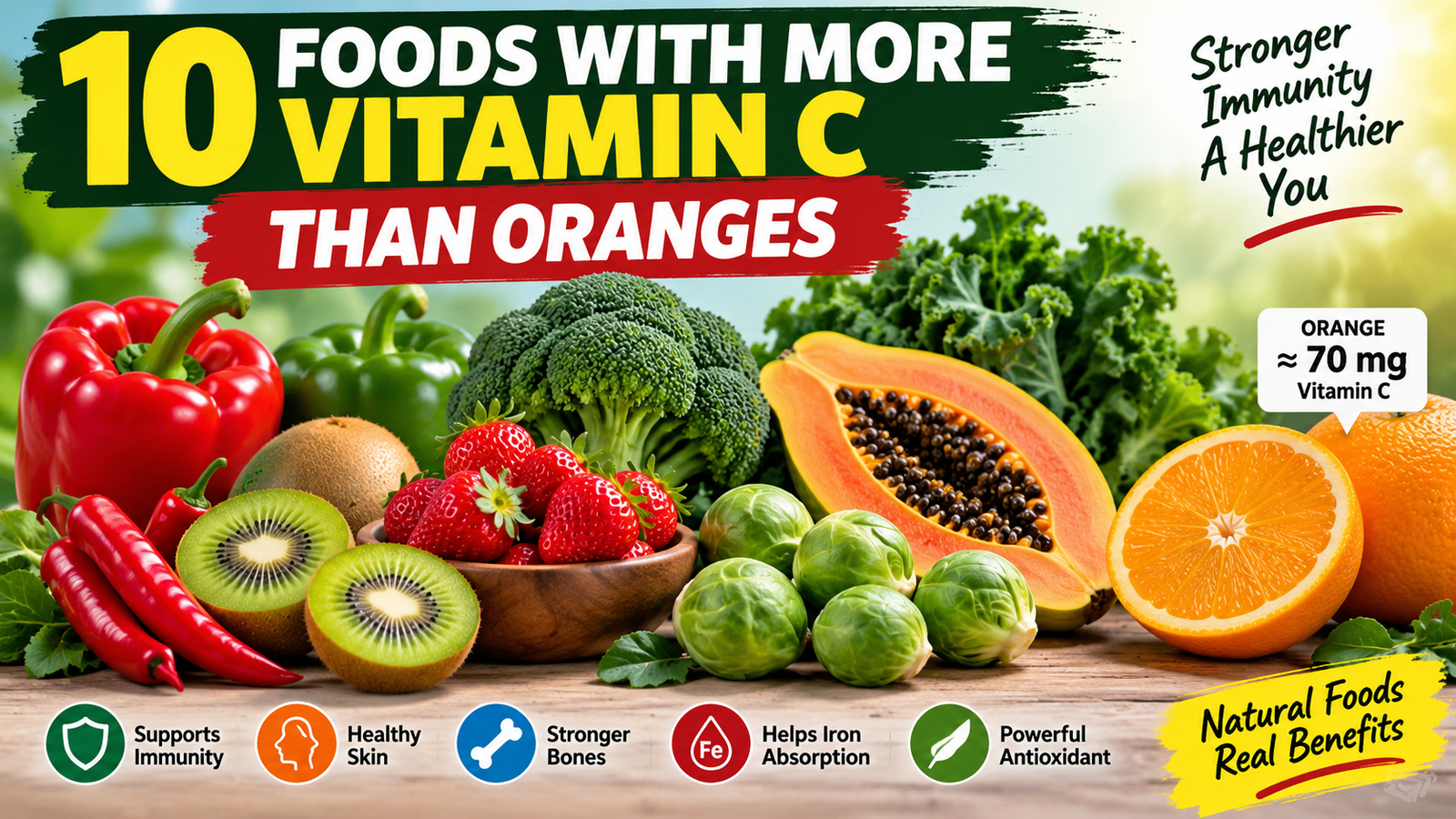
Foods with more vitamin C than oranges can add variety and nutrients to your daily diet.
Foods That Can Have More Vitamin C Than Oranges
Oranges are well known for vitamin C, but they are not the only food that can provide a substantial amount of this essential nutrient. Several fruits and vegetables can provide as much or more vitamin C than a medium orange, depending on the serving size and preparation method. For example, NIH data lists about 70 mg of vitamin C in one medium orange, compared with 95 mg in ½ cup of raw red sweet pepper. Guava is also particularly rich in vitamin C.
Vitamin C is important for collagen production, normal immune function, antioxidant protection and absorption of iron from plant foods. This makes vitamin-C-rich foods useful additions to a varied diet.
Below are 10 foods worth knowing about when you’re looking beyond oranges for vitamin C
More Vitamin C Sources to Add to Your Diet
When looking for foods with more vitamin C than oranges, it is useful to consider both fruits and vegetables. Foods with more vitamin C than oranges can include certain peppers, kiwi, strawberries and other nutrient-rich produce, depending on the serving size and preparation method. Including different foods with more vitamin C than oranges can make your diet more varied while helping you obtain vitamin C from natural food sources.
Some foods with more vitamin C than oranges may provide a higher amount of vitamin C when measured by weight or when a larger serving is consumed. Red bell peppers are one well-known example, while kiwi, strawberries and some types of chilli peppers can also contribute significant amounts. Choosing a variety of foods with more vitamin C than oranges is therefore a practical way to increase the range of fruits and vegetables in your meals.
For the best nutritional balance, do not focus only on foods with more vitamin C than oranges. Include a mixture of fruits, vegetables, whole grains, beans, eggs, fish and other nutritious foods. This gives your body a wider range of vitamins, minerals, fibre and other nutrients.
1. Guava: A Powerful Vitamin C-Rich Fruit
If you are looking for foods with more vitamin C than oranges, guava deserves a place near the top of the list. Oranges are widely recognised as a vitamin C source, but guava can provide considerably more vitamin C depending on the variety and serving size. USDA research has identified guava as particularly rich in vitamin C, while broader food-composition research also shows guava can contain substantially more vitamin C per 100 grams than oranges.
Why Guava Is High in Vitamin C
The foods with more vitamin C than oranges in the category include several fruits and vegetables, but guava stands out because of its naturally high vitamin C content. Vitamin C, also known as ascorbic acid, is a water-soluble nutrient that the body needs for collagen production, normal immune function, antioxidant activity and improved absorption of iron from plant foods.
This makes guava more than just a sweet tropical fruit. Adding guava to your diet can help increase your intake of an essential nutrient while also contributing dietary variety.
You can explore more healthy lifestyle and nutrition information for additional ideas about incorporating nutrient-rich foods into everyday meals.
Guava Compared With Oranges
When comparing foods with more vitamin C than oranges, serving size is important. Vitamin C values can vary depending on the variety of fruit, maturity, growing conditions and preparation.
USDA research on tropical fruits found that guava varieties had substantial amounts of vitamin C, while research reviewed in the scientific literature has reported guava values considerably higher than those commonly reported for oranges.
This does not mean oranges are unhealthy or that guava should completely replace them. Oranges remain a nutritious fruit and can contribute vitamin C, fibre and other nutrients to a balanced diet.
The key point is that you have many choices when trying to increase vitamin C intake.
Guava and Immune Health
One reason people pay attention to vitamin C-rich foods is their connection with normal immune function. Vitamin C contributes to normal immune-system activity, but eating a particular fruit does not guarantee protection from infections.
The National Institutes of Health explains that vitamin C is required for normal immune function and also acts as an antioxidant.
Guava can therefore be included as part of an overall nutritious eating pattern. Other vitamin C-rich foods, including peppers, broccoli, kiwi and strawberries, can also contribute to daily intake.
For another example of nutritious foods that can be combined into balanced meals, you can read about the nutritional power of boiled eggs.
Guava and Iron Absorption
The foods with more vitamin C than oranges are also interesting because vitamin C helps the body absorb non-heme iron, which is the type of iron found mainly in plant foods.
This means adding a vitamin C-rich fruit such as guava to a meal containing beans, lentils or other plant sources of iron may help increase iron absorption.
For people who eat a lot of plant-based foods, including vitamin C-rich fruits and vegetables can therefore be a useful part of a balanced diet.
However, vitamin C should not be viewed as a treatment for iron-deficiency anaemia. Anyone concerned about anaemia or persistent symptoms should seek appropriate medical evaluation.
Guava Contains More Than Vitamin C
Although the food with more vitamin C than oranges topic focuses on vitamin C, guava provides more than one nutrient.
Guava can contribute dietary fibre and other plant compounds. USDA research on tropical fruits has also examined guava for vitamin C, fibre and antioxidant-related compounds.
This makes whole guava different from simply consuming a vitamin C supplement. Whole fruit provides a combination of nutrients and other food components.
You can also explore healthy food and lifestyle ideas for more ways to build a varied diet around nutritious foods.
Fresh Guava or Guava Juice?
Fresh guava is generally a better choice for obtaining the broader nutritional benefits of whole fruit than relying heavily on sweetened guava drinks.
Juicing can change the nutritional profile of fruit and may remove some of the fibre depending on how the juice is produced. Some commercial beverages can also contain added sugar.
When possible, eating whole guava allows you to enjoy its natural texture and fibre while obtaining vitamin C.
If you prefer guava in smoothies, blending whole fruit rather than straining it can help retain more of the fruit’s natural components.
How to Add Guava to Your Diet
There are several easy ways to include guava in your meals. Fresh guava can be eaten on its own, sliced into fruit salads or blended into a smoothie.
It can also be combined with other fruits such as pineapple, papaya or berries. For a simple snack, fresh guava can be paired with a balanced meal or another nutritious food.
Because vitamin C can be affected by prolonged storage and cooking, eating vitamin C-rich fruits fresh is one practical way to preserve more of the nutrient. The NIH notes that prolonged storage and cooking can reduce vitamin C, while methods such as steaming or microwaving may reduce cooking losses in vegetables.
Is Guava Better Than Orange?
There is no need to declare one fruit universally “better”. Guava can provide considerably more vitamin C than oranges in some serving-size comparisons, but both fruits can contribute to a healthy eating pattern.
The broader lesson from foods with more vitamin C than oranges is that nutrition does not have to depend on one familiar food.
Guava, peppers, kiwi, broccoli, strawberries and other fruits and vegetables can all contribute vitamin C. Eating a variety of these foods can make it easier to obtain nutrients while keeping meals interesting.
The Bottom Line
Guava is one of the most notable foods with more vitamin C than oranges, with USDA research and nutrition literature showing that guava can contain substantially higher concentrations of vitamin C than oranges, depending on variety and serving size.
Its vitamin C contributes to collagen production, antioxidant protection, normal immune function and the absorption of iron from plant foods.
However, guava is not a medicine or cure for disease. The best approach is to include it as part of a varied diet containing different fruits, vegetables, legumes, whole grains and other nutritious foods.
2. Red Bell Peppers: A Powerful Source of Vitamin C
If you are searching for foods with more vitamin C than oranges, red bell peppers are an excellent vegetable to consider. Although oranges are famous for their vitamin C content, certain servings of red bell peppers can provide more vitamin C than a medium orange. According to the National Institutes of Health, ½ cup of raw red sweet pepper provides about 95 mg of vitamin C, compared with approximately 70 mg in one medium orange.
Red Bell Peppers and Vitamin C
The foods with more vitamin C than oranges in the category are not limited to fruits. Vegetables such as red bell peppers can provide substantial amounts of this essential nutrient while also adding colour, flavour and variety to meals.
Vitamin C supports several important functions in the body. It is required for collagen production, contributes to normal immune function, helps the body absorb iron from plant foods and acts as an antioxidant.
Red bell peppers can therefore be a useful addition to meals for people who want to increase their intake of vitamin C through whole foods.
For more nutrition and healthy eating ideas, you can explore healthy lifestyle and nutrition topics.
Why Red Peppers Can Have More Vitamin C Than Oranges
When comparing foods with more vitamin C than oranges, serving size matters. A medium orange and half a cup of chopped red pepper are not identical weights, so comparisons should always specify the amount of food being measured.
The NIH food table provides a useful comparison: half a cup of raw red sweet pepper contains about 95 mg of vitamin C, while a medium orange contains about 70 mg.
This does not make oranges unhealthy. Oranges remain a nutritious fruit and provide vitamin C, fibre and other nutrients. The important point is that red peppers offer another convenient way to obtain vitamin C.
Red Peppers and Immune Health
Vitamin C is often associated with immune health because it contributes to the normal function of the immune system. Getting enough vitamin C through a varied diet is important for normal body functions.
However, eating red peppers or other vitamin C-rich foods does not guarantee protection against infections. Nutritional health depends on many nutrients and lifestyle factors.
The foods with more vitamin C than oranges can therefore be viewed as useful sources of an essential nutrient rather than as special treatments for illness.
You can also read about the nutritional power of boiled eggs for another example of how different nutritious foods can contribute to a balanced diet.
Red Bell Peppers Provide More Than Vitamin C
Another reason red bell peppers are worth including in a varied diet is that they provide more than vitamin C.
They contain plant compounds and other nutrients that contribute to overall vegetable intake. Their bright red colour is also associated with naturally occurring carotenoid compounds.
Eating vegetables with different colours can help increase dietary variety because different plant foods contain different combinations of nutrients and phytochemicals.
Instead of relying exclusively on citrus fruits for vitamin C, you can include peppers alongside tomatoes, leafy vegetables, broccoli, carrots and other vegetables.
Raw Red Peppers May Preserve More Vitamin C
The way food is prepared can affect vitamin C levels. Vitamin C is sensitive to heat and can be lost during prolonged cooking.
Because red peppers can be eaten raw, they are particularly convenient for adding vitamin C to salads, sandwiches and vegetable snacks.
They can also be lightly cooked in stir-fries, stews and sauces. Cooking does not make peppers unhealthy, but shorter cooking times can help preserve more vitamin C than prolonged heating.
For additional ideas about using nutritious ingredients, you can explore healthy food and lifestyle information.
Easy Ways to Eat Red Bell Peppers
There are many simple ways to include red bell peppers in your daily meals.
You can slice them into salads, chop them into sauces or add them to soups and stews. They can also be combined with onions, tomatoes and leafy vegetables to create colourful meals.
Red peppers can be eaten alongside fish, eggs, beans, rice and other foods. This makes them particularly useful for people who want to increase vegetable consumption without making major changes to familiar meals.
For people looking for vitamin C-rich foods, adding red peppers to meals can be an easy dietary strategy.
Red Peppers and Iron Absorption
Vitamin C has another important nutritional role: it helps improve the absorption of non-heme iron, the form of iron found primarily in plant-based foods.
This means that adding vitamin C-rich vegetables such as red peppers to meals containing beans, lentils, peas or other plant sources of iron can be useful.
For example, chopped red peppers can be combined with beans or lentils in a salad or stew. This provides a combination of plant-based nutrients in one meal.
People with diagnosed iron deficiency should still follow appropriate medical advice rather than relying solely on dietary changes.
Are Red Peppers Better Than Oranges?
There is no need to label one food as universally better than another.
Red peppers can provide more vitamin C than a medium orange in the specific serving comparison provided by NIH, but oranges remain a nutritious fruit with their own nutritional advantages.
The bigger lesson is that foods with more vitamin C than oranges are available across different food groups.
Guava, peppers, kiwi, broccoli and several other fruits and vegetables can all contribute meaningful amounts of vitamin C.
The Bottom Line
Red bell peppers are one of the notable foods with more vitamin C than oranges when comparing the NIH-listed serving sizes. Half a cup of raw red sweet pepper provides about 95 mg of vitamin C, compared with approximately 70 mg in a medium orange.
They can be eaten raw or lightly cooked and added to salads, soups, sauces, stews and other meals.
The best approach is not to replace oranges completely but to include a variety of fruits and vegetables throughout the diet. Red peppers can make an especially useful contribution because they combine vitamin C with vegetable variety and flavour.
3. Kiwi: A Nutrient-Rich Alternative to Oranges
If you are looking for foods with more vitamin C than oranges, kiwi is another fruit worth adding to your diet. Kiwi is widely recognised as a vitamin C-rich fruit and can provide a substantial amount of this essential nutrient. According to the National Institutes of Health, one medium kiwifruit provides about 64 mg of vitamin C, compared with approximately 70 mg in one medium orange. However, when comparing equal weights or larger servings, kiwi can provide more vitamin C than oranges.
This makes kiwi a useful choice for people who want to increase their intake of vitamin C while also adding variety to their fruit choices.
Kiwi Is Naturally High in Vitamin C
The foods with more vitamin C than oranges in the category include fruits and vegetables with different nutritional profiles. Kiwi stands out because it provides vitamin C together with dietary fibre and other nutrients.
Vitamin C is an essential nutrient that the body cannot produce on its own. It is involved in collagen production, antioxidant activity, normal immune function and the absorption of iron from plant-based foods.
USDA research also describes kiwifruit as a source of vitamin C, dietary fibre and potassium.
For more nutrition and healthy eating information, you can explore healthy lifestyle and nutrition topics.
Kiwi Compared With Oranges
When comparing foods with more vitamin C than oranges, it is important to consider the serving size.
The NIH lists approximately 64 mg of vitamin C in one medium kiwifruit and 70 mg in one medium orange. So, based strictly on those individual serving sizes, a medium orange contains slightly more vitamin C. However, USDA nutrient data shows that a cup of sliced green kiwifruit contains about 167 mg of vitamin C.
This demonstrates why nutrition comparisons should specify the quantity being compared.
The important point is that kiwi is a strong natural source of vitamin C and can make a valuable contribution to daily intake.
Kiwi and Immune Health
Vitamin C is often associated with immune health because it contributes to normal immune-system function. Getting adequate vitamin C from a varied diet can help the body maintain normal physiological processes.
However, eating kiwi does not guarantee protection from infections, and it should not be considered a treatment for illness.
The topic ‘thefoods with more vitamin C than oranges’ is best understood as a way of discovering different nutritious foods rather than searching for a single food that provides a special health effect.
You can also read about the nutritional power of boiled eggs to learn how different nutrient-rich foods can complement one another in a balanced diet.
Kiwi Provides Dietary Fibre
Another reason to include kiwi is its dietary fibre content. Fibre is an important part of a healthy eating pattern and contributes to normal digestive function.
Eating a whole kiwi rather than relying on processed fruit drinks allows you to enjoy the fruit’s natural fibre along with its vitamin C and other nutrients.
Fibre intake is best achieved through a variety of foods, including fruits, vegetables, beans, lentils and whole grains.
For people trying to improve their overall dietary quality, adding different fruits such as kiwi can make meals and snacks more varied.
Kiwi Also Provides Potassium
The foods with more vitamin C than oranges can offer nutrients beyond vitamin C, and kiwi is a good example.
USDA notes that kiwifruit provides potassium in addition to vitamin C and dietary fibre.
Potassium is an essential mineral and electrolyte involved in normal nerve function, muscle contraction and fluid balance.
Eating a varied diet containing fruits and vegetables can help provide potassium alongside other essential nutrients.
You can also explore healthy food and lifestyle ideas for more ways to incorporate nutrient-rich foods into everyday meals.
Fresh Kiwi Is an Easy Snack
One advantage of kiwi is that it can be eaten without complicated preparation. It can be sliced into breakfast dishes, added to fruit salads or eaten as a snack.
Kiwi can also be blended into smoothies. If you want to retain the fibre found naturally in the fruit, using the whole fruit rather than straining the smoothie can be preferable.
Fresh fruit is also useful because vitamin C can be affected by prolonged storage and cooking. The NIH notes that vitamin C is sensitive to heat and that prolonged storage can reduce the amount available in foods.
Kiwi and Iron Absorption
Another important benefit of vitamin C is its ability to improve the absorption of non-heme iron from plant foods.
This means kiwi can complement meals containing beans, lentils, peas and other plant-based sources of iron.
For example, kiwi could be eaten as part of a varied meal pattern that includes legumes and vegetables. Vitamin C does not replace iron-rich foods, but it can help the body absorb non-heme iron more efficiently.
People who have diagnosed iron deficiency should follow advice from a qualified healthcare professional rather than relying on fruit alone.
Green Kiwi and Gold Kiwi
There are different varieties of kiwifruit, including green and gold varieties. Their nutritional composition can differ.
USDA nutrient data has documented substantial vitamin C content in both types. Some gold kiwifruit varieties can contain particularly high amounts of vitamin C per fruit.
This means consumers can enjoy different kiwi varieties while still obtaining vitamin C and other nutrients.
Choosing between varieties can therefore come down to taste, availability and personal preference.
Does Cooking Reduce Kiwi’s Vitamin C?
Kiwi is usually eaten fresh, which is useful because vitamin C is sensitive to heat.
The NIH explains that cooking can reduce vitamin C content, while steaming or microwaving may help reduce losses in foods that require cooking.
Because kiwi is normally consumed raw, it can be an easy way to obtain vitamin C without the nutrient losses associated with prolonged cooking.
The Bottom Line
Kiwi is an excellent vitamin C-rich food and an important addition to any discussion about foods with more vitamin C than oranges. A medium kiwi provides about 64 mg of vitamin C, while larger or equal-weight servings can provide more vitamin C than comparable amounts of orange.
Kiwi also provides dietary fibre and potassium, making it a nutritious whole-fruit choice.
The best approach is to eat a variety of fruits and vegetables rather than depending on one food for a particular nutrient. Adding kiwi alongside oranges, guava, peppers, broccoli, strawberries and other vitamin C-rich foods can help create a more diverse and nutritious diet.
6. Brussels Sprouts: A Small Vegetable With Plenty of Vitamin C
When people think about foods with more vitamin C than oranges, they often think about tropical fruits, citrus fruits and colourful peppers. But some vegetables can also provide impressive amounts of vitamin C. Brussels sprouts are one example.
According to the National Institutes of Health, ½ cup of cooked Brussels sprouts provides about 48 mg of vitamin C. A medium orange provides approximately 70 mg, so Brussels sprouts do not contain more vitamin C than an orange in that exact serving comparison. However, they remain an excellent vegetable source of this essential nutrient. NIH Office of Dietary Supplements
Brussels Sprouts Are a Vitamin C-Rich Vegetable
Brussels sprouts belong to the cruciferous vegetable family, along with broccoli, cabbage and cauliflower. They are packed with nutrients and can be included in a wide range of meals.
Vitamin C is required for collagen production, normal immune function, antioxidant activity and the absorption of iron from plant-based foods.
This makes Brussels sprouts useful for people who want to increase their intake of vitamin-C-rich foods without relying only on fruit.
For more healthy food and lifestyle information, visit MyGHPages Lifestyle.
Brussels Sprouts Compared With Oranges
The phrase ‘foods with more vitamin C than oranges’ can sometimes be misleading because nutrient comparisons depend heavily on serving size.
The NIH lists about 48 mg of vitamin C in ½ cup of cooked Brussels sprouts compared with approximately 70 mg in one medium orange.
However, Brussels sprouts can be eaten in larger portions. USDA nutrient data also shows that a cup of raw Brussels sprouts can provide a substantial amount of vitamin C, demonstrating why portion size and preparation need to be considered when comparing foods.
Rather than focusing only on whether Brussels sprouts beat oranges, it is more useful to recognise them as one of several nutritious sources of vitamin C.
Why Vitamin C Is Important
Vitamin C is a water-soluble nutrient that the body cannot produce on its own. It must therefore come from food or other dietary sources.
The NIH Vitamin C Consumer Fact Sheet explains that vitamin C helps the body make collagen, supports normal immune function and improves the absorption of iron from plant-based foods.
It also functions as an antioxidant, helping protect cells from oxidative damage.
A varied diet containing vegetables, fruits and other nutrient-rich foods can help provide the vitamin C the body needs.
Brussels Sprouts Can Support Iron Absorption
One interesting role of vitamin C is its ability to improve the absorption of non-heme iron.
Non-heme iron is primarily found in plant foods such as beans, lentils, peas and leafy vegetables.
Including Brussels sprouts with meals containing these foods can therefore provide vitamin C alongside plant-based iron.
For example, Brussels sprouts can be served with beans, fish, eggs or other foods to create a more varied meal. You can also explore the nutritional power of boiled eggs for another nutritious food option.
Cooking Brussels Sprouts Properly
How you prepare Brussels sprouts can affect their vitamin C content. Vitamin C is sensitive to heat and can be lost during prolonged cooking.
The NIH notes that cooking can reduce vitamin C levels and that steaming or microwaving may help reduce some nutrient losses.
Instead of boiling Brussels sprouts for a long period, consider steaming, roasting or lightly cooking them until they become tender.
This can also help preserve their texture and flavour.
Easy Ways to Eat Brussels Sprouts
Brussels sprouts can be prepared in several simple ways. They can be steamed and served as a side dish, roasted with a small amount of oil and seasoning, or added to soups and vegetable dishes.
They can also be combined with other vegetables such as onions, peppers, carrots and tomatoes.
Some simple meal ideas include:
- Roasted Brussels sprouts with fish
- Steamed Brussels sprouts with eggs
- Brussels sprouts added to vegetable rice
- Roasted Brussels sprouts with onions
- Brussels sprouts mixed into a vegetable stir-fry
- Shredded Brussels sprouts in a fresh salad
These options make it easier to include more vegetables in everyday meals.
Brussels Sprouts Offer More Than Vitamin C
The nutritional value of Brussels sprouts extends beyond vitamin C. They are also a source of dietary fibre and other vitamins and minerals.
This is important because healthy eating is not simply about finding foods with the highest amount of one nutrient.
A food can contribute to overall nutrition through several nutrients at the same time.
That is why Brussels sprouts can be a useful addition to a balanced diet even though a standard serving does not contain more vitamin C than a medium orange.
Fresh and Cooked Brussels Sprouts
Brussels sprouts can be consumed both raw and cooked. Raw Brussels sprouts can be shredded and added to salads, while cooked Brussels sprouts are commonly steamed, roasted or sautéed.
The vitamin C content can vary depending on whether the vegetable is raw, cooked, frozen or stored for a long period.
The NIH explains that prolonged storage and cooking can reduce vitamin C because the nutrient is sensitive to heat and water.
Using fresh vegetables and avoiding unnecessarily long cooking can help retain more of the nutrients.
How Much Vitamin C Do Adults Need?
For adults, the recommended dietary allowance is generally 90 mg per day for men and 75 mg per day for women. People who smoke require an additional 35 mg of vitamin C per day.
A serving of Brussels sprouts can therefore make a meaningful contribution to daily vitamin C intake.
Eating Brussels sprouts together with other vitamin-C-containing foods can make it easier to obtain enough vitamin C through a varied diet.
The Bottom Line
Brussels sprouts are a nutritious vegetable and an important source of vitamin C. While ½ cup of cooked Brussels sprouts provides about 48 mg of vitamin C, compared with approximately 70 mg in a medium orange, larger servings can provide considerably more.
They also provide fibre and other nutrients, making them a useful part of a varied eating pattern.
If you are exploring foods with more vitamin C than oranges, remember that comparisons depend on serving size and preparation. Brussels sprouts may not beat an orange in every standard serving comparison, but they are still an excellent vitamin C-rich vegetable worth including in regular meals.