Ghana's cocoa farmers face weather challenges as hopes for a March 2027 production recovery remain uncertain
Ghana Cocoa Farmers Face Difficult Season as Weather Disrupts Production; March Recovery Remains Uncertain
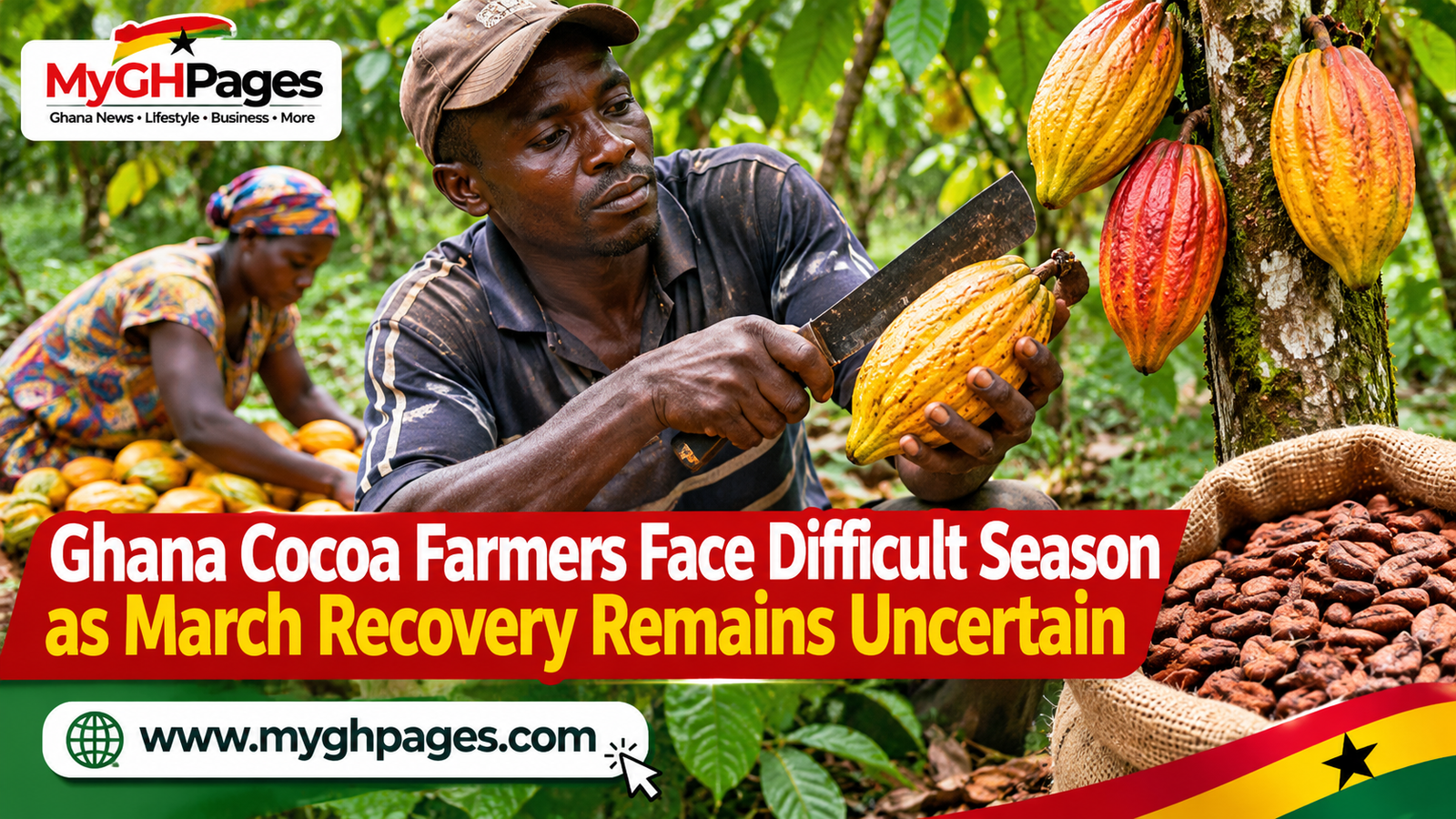
Ghana’s cocoa farmers are facing a challenging start to the 2026/2027 cocoa season, with unusual rainfall patterns, prolonged dry conditions and delays in fertiliser distribution affecting production in several growing areas.
Although some farmers are hopeful that improved rainfall could support a stronger harvest by March 2027, uncertainty remains over how much cocoa the country will produce during the season.
The situation matters beyond farming communities. Cocoa is one of Ghana’s important agricultural export commodities, supporting rural livelihoods, providing employment and contributing to foreign exchange earnings.
A difficult season could therefore have consequences for farmers, cocoa buyers, transport operators, processors and businesses connected to the agricultural supply chain.
Unusual Weather Conditions Affect Cocoa Farms
Cocoa production depends heavily on suitable weather conditions. Farmers need adequate rainfall, healthy trees and favourable conditions for flowers to develop into cocoa pods.
However, conditions have varied across some cocoa-growing communities.
A Reuters report published on November 3, 2026, described farmers experiencing two different weather problems. In some locations, unusually heavy rainfall affected flowering, while other areas experienced insufficient rainfall and prolonged heat.
Both conditions can interfere with the development of cocoa pods.
One farmer, Joseph Agbeko, told Reuters that he had harvested only five bags since the season began, compared with 31 bags during the previous year.
His experience illustrates the production difficulties some farmers are reporting, although individual farm results should not be treated as a complete picture of national output.
The Ghana Cooperative Cocoa Farmers and Marketing Association has also indicated that conditions differ across farming regions, making it too early to predict a definite recovery.
March 2027 Harvest Offers Hope, but Recovery Is Not Guaranteed
Some farmers are looking towards March 2027 with cautious optimism.
The return of rainfall in certain locations has raised hopes that cocoa trees could produce more flowers and pods in the coming months.
However, the timing and amount of rainfall will be important.
According to Moses Djan Asiedu, administrator of the Ghana Cooperative Cocoa Farmers and Marketing Association, the outlook remains uncertain. The association’s observations from four cocoa-growing regions showed different effects from excessive rain and dry weather.
The approaching harmattan season is another factor farmers will have to monitor.
Harmattan conditions typically bring dry air and lower moisture levels. If the dry period becomes severe, it could create additional pressure on cocoa farms that are already experiencing unfavourable weather.
A stronger harvest will therefore depend on how conditions develop over the coming months.
Fertiliser Distribution Delays Add to Farmers’ Concerns
Weather is not the only challenge facing cocoa producers.
The Reuters report also highlighted concerns about delayed fertiliser distribution.
Farmers would normally expect fertiliser to arrive earlier in the agricultural calendar, but supplies reportedly arrived in August, several months later than the usual March-to-May period. Some farmers were still waiting to receive supplies at the time of reporting.
Timely access to agricultural inputs matters because farmers need to plan farm maintenance and apply inputs when they are most useful.
Delays can make it harder for farmers to manage their farms effectively, particularly when weather conditions are already unpredictable.
The situation raises questions about the planning, distribution and monitoring of agricultural support programmes.
For farmers, receiving inputs late can reduce their ability to respond quickly to changing conditions.
Ghana’s Cocoa Production Outlook Faces Pressure
Ghana produced approximately 771,000 metric tonnes of cocoa during the previous season, exceeding the target of 650,000 metric tonnes.
However, the Cocoa Board had earlier projected that output for the current season could fall by at least 16 per cent, citing weather-related challenges including the effects of El Niño and excessive rainfall.
An updated production forecast had not been provided at the time of Reuters’ November 3 report.
It is important to distinguish between an earlier projection and a final production figure. The 16 per cent estimate should not be presented as a confirmed outcome.
Actual production will depend on rainfall, farm conditions, disease management, input availability and the performance of cocoa trees throughout the season.
Why Cocoa Production Matters to Ghana’s Economy
Cocoa has economic importance that extends well beyond the farms where it is cultivated.
The industry supports farmers, farm labourers, transport businesses, purchasing clerks, warehouse operators, processors and exporters.
A reduction in production can affect the volume of beans moving through the supply chain.
It may also influence the availability of raw materials for local cocoa-processing companies and businesses involved in chocolate and other cocoa-based products.
For rural communities, lower farm output can mean reduced household income. This may affect spending on food, education, healthcare, farm labour and other essential needs.
The wider economic impact depends on several factors, including international cocoa prices, the domestic producer price, export arrangements and the ability of businesses to maintain their operations.
What Farmers and Agricultural Authorities Need to Prioritise
The current situation highlights the importance of stronger agricultural planning and support for cocoa-growing communities.
Several areas deserve attention.
1. Timely distribution of farm inputs
Fertilisers and other approved agricultural inputs need to reach farmers within useful farming periods. Distribution delays can undermine the effectiveness of support programmes.
2. Reliable weather information
Farmers need accessible and understandable weather forecasts to help them make decisions about farm maintenance and seasonal activities.
3. Farm monitoring and technical support
Agricultural extension officers can help farmers identify problems early, adopt suitable farm-management practices and respond to changing conditions.
4. Improved climate resilience
Long-term agricultural planning should consider changing rainfall patterns, dry spells and other climate-related risks. Research, suitable planting materials and responsible farm-management practices can help strengthen resilience.
5. Clear production information
Regular updates from relevant agricultural institutions would help farmers, buyers, processors and investors understand the state of the cocoa season.
What to Watch Between Now and March 2027
The next several months will be important for Ghana’s cocoa industry.
Farmers will be watching rainfall patterns, flowering and pod development, fertiliser availability and the arrival of harmattan conditions.
Agricultural authorities will also need to monitor production trends before issuing updated forecasts.
A recovery remains possible in some growing areas, but it should not be assumed until better farm and production data become available.
For now, the priority is to support farmers, improve the delivery of agricultural inputs and strengthen the industry’s ability to respond to unpredictable weather.
Conclusion
Ghana’s cocoa sector is entering an uncertain period as unusual weather conditions and delayed agricultural inputs place pressure on farmers.
Although improved rainfall has raised hopes of stronger harvests by March 2027, the outlook remains difficult to predict.
The coming months will show whether cocoa trees recover sufficiently to improve production.
For Ghana, protecting cocoa production means protecting rural livelihoods, supporting agricultural businesses and strengthening an important part of the national export economy.
Source: Reuters — Ghana cocoa farmers hope for March recovery after the season starts poorly.