Making healthy food choices in Ghana does not always require expensive products, complicated diets or major lifestyle changes. One of the simplest places to start is by becoming more careful about what goes into the shopping basket, especially when buying packaged foods.
Recent public-health discussions in Ghana have placed renewed attention on clearer food labelling. The Ghana News Agency reported that stakeholders are campaigning for front-of-pack nutrition labels that would help shoppers identify products high in sugar, salt and unhealthy fats more easily. The campaign is being supported by SEND Ghana, the Ghana Academy of Nutrition and Dietetics and VAST Ghana, with support from the Ministry of Health and the Food and Drugs Authority. Read the Ghana News Agency report.
Why healthy food choices in Ghana matter
Food is part of everyday life in Ghana, from breakfast at home to meals bought on the way to work, school or business. Packaged drinks, biscuits, cereals, sauces, snacks and other convenience foods can make busy days easier, but their nutritional content can vary considerably.
GNA reported that stakeholders want consumers to have clearer information about products containing excessive amounts of sugar, salt and saturated fats. The goal is to make it easier for shoppers to understand a product quickly instead of relying only on small and technical nutrition tables printed on the back of packaging.
This does not mean every packaged food is unhealthy. Rather, it means consumers can benefit from paying closer attention to what they are buying and how frequently they consume it.
Start by checking the food label.
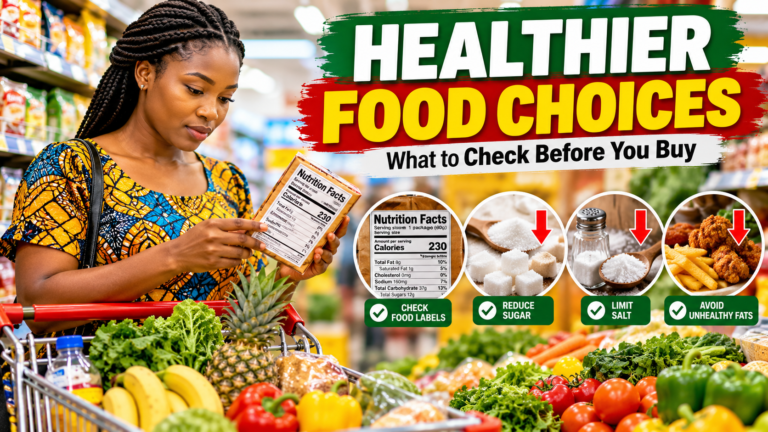
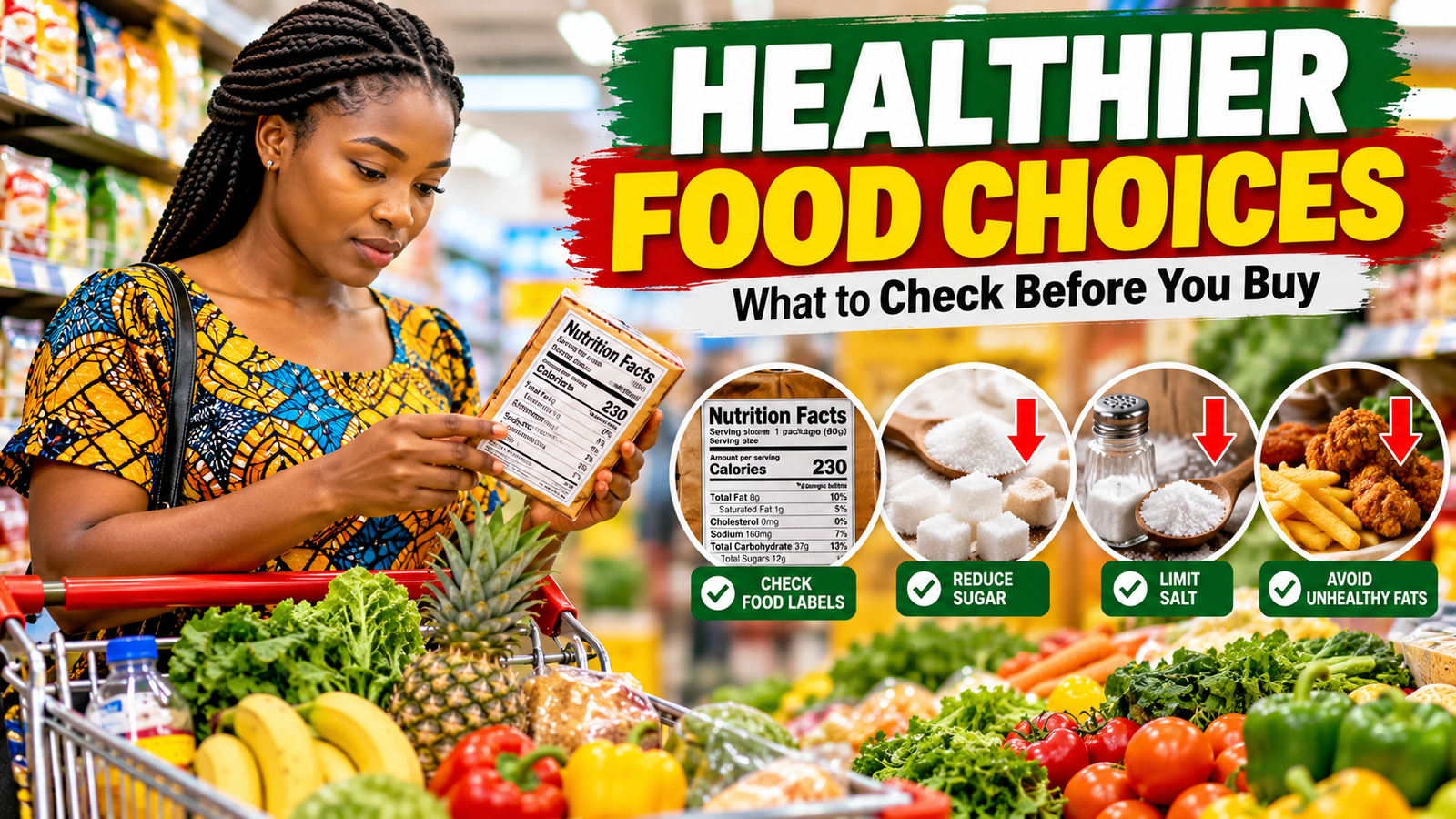
Before buying a packaged food, take a moment to look at its nutrition information and ingredient list. Check the serving size first because the numbers on a label may refer to a portion that is smaller than the amount you normally eat.
Next, look at the amounts of sugar, sodium or salt, saturated fat and total calories where the information is available. Comparing similar products can also help you choose an option with less added sugar, salt or saturated fat.
Ingredients are listed in order of quantity, so the first few ingredients can give you a useful idea of what makes up much of the product. If sugar or another ingredient you are trying to limit appears very early in the list, that is useful information to consider before buying.
Choose more whole and minimally processed foods.
A practical approach to healthy eating is to make fresh and minimally processed foods a regular part of meals. Ghana has many familiar foods that can fit into a balanced eating pattern, including vegetables, fruits, beans, fish, eggs, whole grains and other locally available foods.
For example, adding vegetables to rice dishes, soups, stews and other meals can make the plate more varied. Fruits can also provide an alternative to highly sweetened snacks when you want something between meals.
The aim is not perfection. Small, consistent changes can make healthy eating easier to maintain over time.
Be careful with sugary drinks and snacks.
Sweetened drinks can contribute significant amounts of added sugar to the diet, particularly when consumed frequently. Water can be a simple everyday option, while unsweetened drinks may also help reduce the amount of added sugar consumed.
The same principle applies to snacks. Instead of automatically choosing the most heavily advertised product, compare labels and consider options that contain less added sugar, salt and unhealthy fats.
Healthy shopping starts before you reach the checkout.
Planning meals before shopping can make it easier to avoid impulse purchases. A simple shopping list can help you focus on the foods you actually need for the week.
It can also help to compare different brands rather than choosing a product based only on packaging, price promotions or advertising. If two similar products are available, checking their nutrition information may reveal meaningful differences.
Parents can influence children’s eating habits.
Food choices at home can shape children’s everyday eating habits. Recent discussions in Ghana have highlighted concerns about unhealthy diets among young people and the need for parents and carers to have clearer information when buying food.
Introducing children to a variety of fruits, vegetables and other nutritious foods can help make balanced meals familiar. Parents can also involve older children in reading food labels so they understand why different products are not nutritionally identical.
Healthy living is more than food.
Food is only one part of a healthy lifestyle. Regular physical activity, adequate sleep, stress management and appropriate medical care also matter. People with conditions such as diabetes, high blood pressure or other health problems should follow advice from qualified healthcare professionals rather than changing prescribed treatment on their own.
For general nutrition information, consumers can also consult guidance from the Food and Drugs Authority and other qualified health professionals.
A simple rule for your next shopping trip
The next time you visit a supermarket, shop, market or convenience store, pause before placing a packaged product in your basket. Read the label, compare similar products, pay attention to sugar, salt and unhealthy fats, and consider whether the product fits into the way you normally eat.
Healthy food choices in Ghana can begin with simple decisions made every day. Better information can make those decisions easier, while familiar local foods can remain an important part of balanced meals.
This article is for general information and does not replace personalised medical or dietary advice.