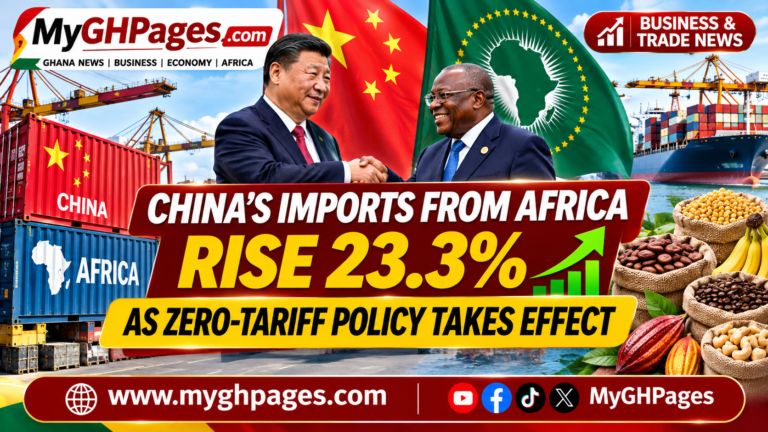
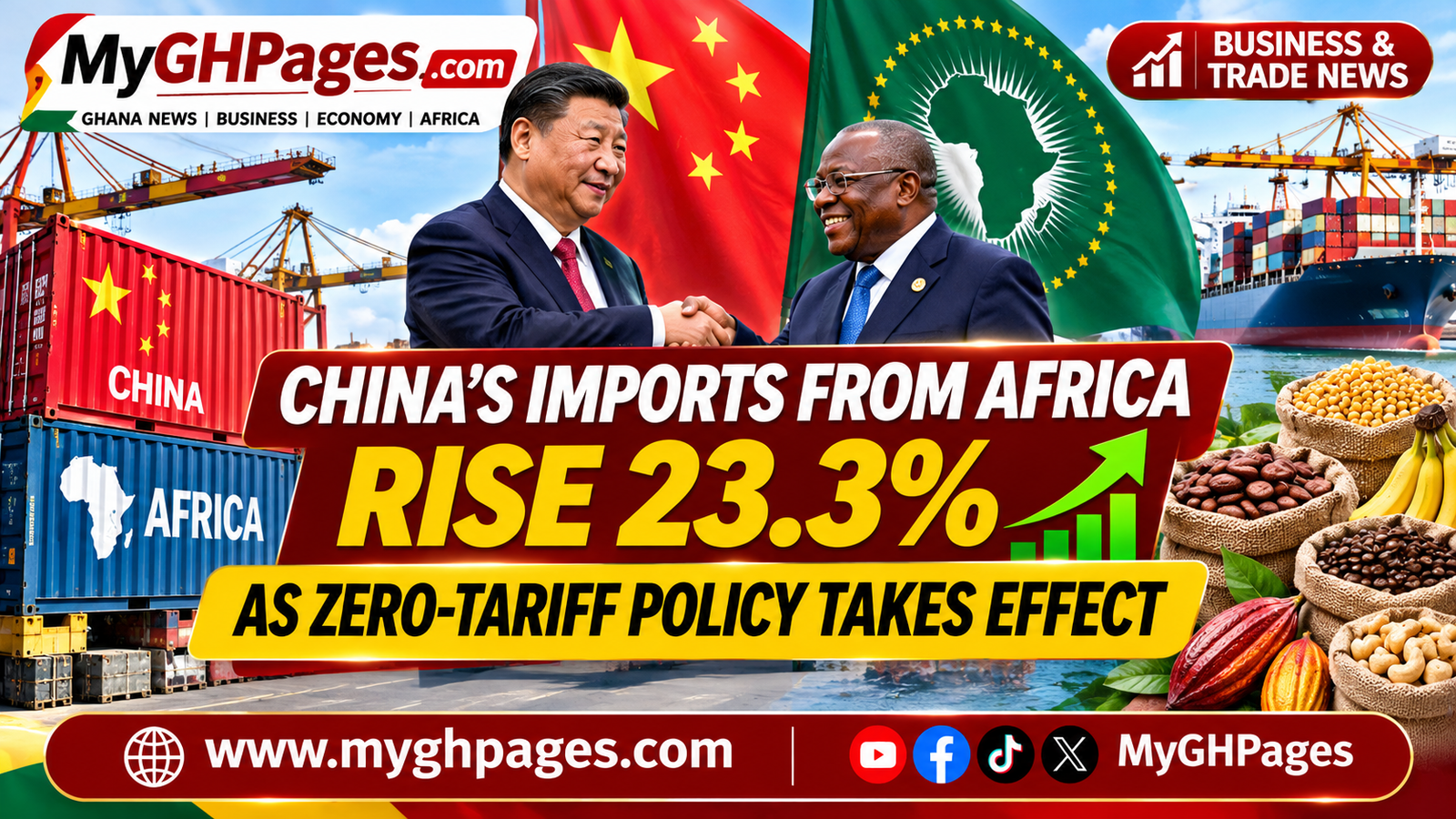
Increased Chinese imports from Africa could create opportunities for exporters that meet market requirements.
China’s Imports from Africa Rise 23.3% as Zero-Tariff Policy Creates New Trade Opportunities
Trade between China and African countries is attracting renewed attention following a reported 23.3 per cent year-on-year increase in China’s imports from Africa by the end of September 2026.
The development comes as China’s zero-tariff policy for eligible imports from African countries takes effect, creating fresh interest in the potential for African businesses to expand their access to the Chinese market.
The Ghana News Agency reported the increase on November 4, 2026, as part of its coverage of trade and economic developments between China and Africa.
Why the increase matters
China is an important trading partner for many African economies. Increased demand for African products can create opportunities for exporters, farmers, manufacturers and businesses involved in international trade.
For countries such as Ghana, stronger access to overseas markets can support businesses that produce agricultural goods, processed products and other exportable commodities.
However, an increase in imports from Africa does not automatically mean that every African country or business benefits equally. Export performance depends on the products being sold, production capacity, quality standards, logistics and the ability to meet buyers’ requirements.
What a zero-tariff policy could mean
Tariffs are taxes imposed on goods when they enter a country. Reducing or removing eligible tariffs can lower the cost of accessing a market, potentially making products more competitive.
For African exporters, the policy could improve the commercial attractiveness of eligible products in China. It may also encourage businesses to examine opportunities that were previously less profitable because of trade costs.
However, exporters should not assume that every product automatically qualifies. Businesses must check the applicable product categories, origin requirements, documentation and customs procedures before shipping goods.
Opportunities for Ghanaian businesses
Ghana has a range of products and industries that could explore opportunities in international markets. Agricultural production, food processing, manufacturing and value-added products are areas where businesses may seek to expand.
Small and medium-sized enterprises could benefit if they are able to organise production, maintain consistent quality and meet international requirements.
For example, a business selling processed agricultural products may need to demonstrate product safety, packaging quality, labelling compliance and reliable supply capacity before securing long-term export contracts.
The potential opportunity therefore goes beyond simply finding a buyer. Exporters must prepare their businesses to meet the expectations of international customers.
The importance of value addition
African countries have often faced the challenge of exporting raw commodities while importing finished products. Greater value addition can help businesses retain more economic activity locally.
Processing agricultural products, improving packaging, developing brands and strengthening manufacturing capacity can increase the value of goods before they leave the country.
Ghanaian businesses seeking to benefit from stronger trade opportunities should consider how local processing and product development can improve competitiveness.
Challenges exporters must address
International trade involves costs and requirements that can be difficult for smaller businesses. These may include shipping, insurance, product certification, foreign exchange arrangements, customs documentation and meeting buyer specifications.
Businesses should also conduct due diligence before entering export agreements. Verifying buyers, confirming payment arrangements and understanding delivery obligations can help reduce commercial risks.
Government agencies and business support organisations can play an important role by providing export information, market guidance and assistance with compliance.
What businesses should do next
Ghanaian companies interested in the Chinese market should begin by identifying eligible products, checking current trade requirements and assessing whether their production capacity can meet international demand.
They should also compare logistics costs, research potential buyers and obtain professional advice where necessary.
The reported rise in imports from Africa is encouraging, but the lasting value of the opportunity will depend on how effectively African businesses convert market access into sustainable exports, employment and local investment.
China’s changing trade relationship with Africa could create new opportunities for Ghanaian businesses seeking international markets. Exporters may benefit from improved access to Chinese buyers, but they must understand customs requirements, product standards and eligibility conditions. For Ghana, the potential opportunity extends beyond raw commodities to value-added agricultural products, manufacturing and agro-processing.
Frequently asked questions
1. Why are China’s imports from Africa reportedly increasing?
The reported increase has been linked to stronger trade activity and China’s expanded tariff-free access for eligible African products.
2. What is China’s zero-tariff policy?
It is a trade measure that removes import tariffs on eligible products from qualifying African countries, subject to the policy’s rules and product requirements.
3. How could the policy benefit Ghana?
Ghanaian exporters may gain improved access to the Chinese market for eligible products such as cocoa, agricultural goods and processed commodities.
4. Which African products could benefit?
Potential products include cocoa, coffee, cashew nuts, fruits, minerals and other eligible exports. Actual eligibility depends on the applicable tariff schedule and origin rules.
5. Does zero tariff mean all African exports enter China without restrictions?
No. Customs procedures, product standards, documentation, food-safety requirements and rules of origin may still apply.
6. What opportunities could this create for African businesses?
It could encourage export diversification, investment in processing, stronger supply chains and increased trade with Chinese buyers.
7. Where can Ghanaian exporters get trade information?
They can consult Ghana’s trade authorities, export promotion agencies and Chinese customs and trade information services.
1. Ministry of Commerce of China – Chinese trade policy and official announcements.
https://english.mofcom.gov.cn/
2. General Administration of Customs of China – Import procedures, customs rules and trade statistics.
https://english.customs.gov.cn/
3. African Union – Africa–China cooperation and continental trade developments.
https://au.int/
4. Ghana Export Promotion Authority – Ghanaian export support and market opportunities.
https://www.gepaghana.org/
5. UN Trade and Development (UNCTAD) – International trade research and statistics.
https://unctad.org/