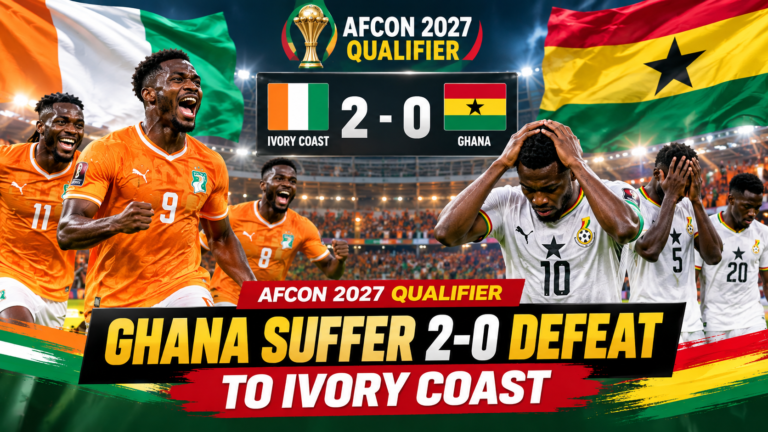
The Ghana national football team has entered another period of transition after the Ghana Football Association and Carlos Queiroz agreed to end their working relationship following a difficult opening to the 2027 Africa Cup of Nations qualifying campaign.
Ghana began its qualifying programme with a 2-0 defeat away to Côte d’Ivoire before losing 4-2 at home to The Gambia after taking a two-goal lead. The results leave the Black Stars needing a stronger response in the remaining fixtures.
What happened in the opening qualifiers?
The defeat to The Gambia was particularly significant because Ghana had established a 2-0 advantage before the visitors produced a comeback. The result followed the earlier loss to Côte d’Ivoire, meaning Ghana started the qualifying campaign without a point from its first two matches.
Reuters reported that Queiroz and the GFA subsequently ended their relationship by mutual consent. Ghana is expected to appoint a new coach before the next AFCON qualifying matches against Somalia in November.
The coaching transition
A coaching change does more than alter the person standing on the touchline. A new technical team can change training priorities, squad selection, tactical systems and the roles given to individual players. The timing also matters because international teams have limited preparation periods compared with club sides.
What the Black Stars need next
The immediate task is to restore competitive consistency. Ghana will need to use the remaining qualifying matches to collect points while improving defensive organisation and maintaining concentration when leading matches.
The team also has to balance experienced players with emerging talent. A successful rebuilding process normally requires clear roles, continuity in selection and enough training time for players to understand the manager’s tactical approach.
November becomes important
Ghana’s next AFCON qualifying assignment is scheduled for November, when the Black Stars are expected to face Somalia in back-to-back fixtures. Those matches will provide the first competitive test of the new direction.
Fans will be watching more than results
Supporters will understandably focus on points, but the performances themselves will also matter. Better defensive structure, improved game management and a clearer attacking plan would provide useful signs during the transition.
The Black Stars remain one of Ghana’s biggest sporting institutions, and the next stage will require coordination between the GFA, the coaching staff and the players.
Why the Black Stars are entering another transition
Ghana’s decision to part ways with Carlos Queiroz came after two defeats at the start of the 2027 Africa Cup of Nations qualifying campaign. Ghana lost 2-0 to Côte d’Ivoire before suffering a 4-2 home defeat to The Gambia. The results left the Black Stars without a point from their opening two Group C matches. citeturn0search3turn0search4
Queiroz and the Ghana Football Association agreed to terminate the service agreement by mutual consent. In his farewell statement, Queiroz thanked the GFA, his technical staff and the players, while asking supporters to continue backing the squad.
The challenge of changing coaches during qualifiers
International football gives a new coach less preparation time than a club manager normally receives. Players arrive from different clubs, often after demanding domestic schedules, and the national team may have only a few training sessions before an important competitive match.
The next Black Stars coach will therefore need to balance tactical changes with continuity. A complete overhaul can take time, while too little change may fail to address weaknesses identified in the opening matches. Clear priorities can help: defensive organisation, transition play, chance creation, set pieces and game management.
What the Gambia defeat highlighted
The 4-2 defeat was significant because Ghana established a 2-0 advantage before The Gambia recovered. Such a match provides several areas for technical review. Coaches can examine how the team responded after scoring, how much space appeared between defensive lines, how substitutions affected the game and whether players maintained concentration after conceding.
These observations should be treated as football analysis rather than a verdict on individual players. A match contains many variables, and a new coaching team will have access to training information that supporters cannot see.
Squad selection will be closely watched
A new coach usually reassesses the squad. Established internationals can offer experience and familiarity with international football, while younger players can provide energy and different tactical profiles. The important issue is whether selection decisions are based on clearly defined football requirements.
Players also benefit when roles are clear. Knowing when to press, when to protect possession, how to cover teammates and how to attack space can make a team more coherent even when the available preparation time is limited.
The November fixtures matter
Ghana’s next AFCON qualifying assignments are expected against Somalia in November. Those fixtures will be an early opportunity for the new technical direction to establish itself in competitive football.
Points are essential in a qualification campaign, but the matches can also reveal whether the team is improving in structure and consistency. Supporters will be able to compare the team’s performance with the opening two fixtures and assess the evidence on the pitch.
What a successful reset would require
A reset does not necessarily mean changing every player or abandoning everything previously attempted. It can mean establishing a repeatable approach. Defenders need to understand their distances, midfielders need defined responsibilities and attackers need coordinated movements. The goalkeeper and defensive unit also need a common plan for building play and responding to pressure.
Set pieces deserve attention as well. International matches can be decided by corners, free kicks and defensive restarts because teams often have limited time to create open-play patterns.
Why supporters should judge the next phase over time
One match can provide encouragement or disappointment, but a national-team project should be assessed across several competitive fixtures. The new coach will need time to evaluate players, communicate methods and establish relationships. At the same time, AFCON qualification creates an immediate competitive requirement.
Frequently asked questions
Why did Carlos Queiroz leave? Queiroz and the GFA mutually agreed to terminate their agreement following Ghana’s opening qualifying results. citeturn0search3
How did Ghana begin the 2027 AFCON qualifiers? Ghana lost to Côte d’Ivoire and The Gambia and had no points after the first two matches. citeturn0search4
When is Ghana expected to play again in the qualifiers? The next qualifying fixtures are expected in November, including matches against Somalia.
Does a new coach guarantee better results? No. The impact can only be assessed through subsequent preparation and competitive performances.
Conclusion
The Black Stars are entering a new phase at a demanding moment in the AFCON qualifying campaign. The coaching transition creates an opportunity to review tactics, squad roles and game management, but the evidence will come from the team’s preparation and performances in the remaining qualifiers.
The first two qualifiers in context
Ghana’s opening two AFCON 2027 qualifying matches produced a difficult starting position. The Black Stars lost 2-0 to Côte d’Ivoire and then suffered a 4-2 home defeat against The Gambia after taking a two-goal lead. The results left Ghana without a point from the opening two Group C fixtures. Those results are important context for understanding why the GFA and Carlos Queiroz ended their agreement and why the next appointment will receive immediate attention.
International football is different from club football because national teams have limited time together. Players arrive from different clubs, tactical systems and competitive schedules. A new coach therefore has to identify priorities quickly and communicate them in a small number of training sessions. That makes the period before the next qualifiers especially important.
What the next coach will need to establish
The incoming technical team will need to define how Ghana wants to defend, build attacks, press opponents and manage matches when leading or trailing. These are not isolated decisions. A pressing system affects the distance between the defensive and midfield lines; an attacking approach affects how many players are available to protect against counterattacks.
Clear roles can also reduce uncertainty. Players need to know their responsibilities when Ghana has possession, when possession is lost and when the team is defending a lead. Set pieces should be part of the preparation as well because corners, free kicks and defensive restarts can be decisive in international matches.
Lessons from the Gambia match
The 4-2 defeat provides an obvious area for technical review because Ghana moved into a two-goal lead before the result changed. Coaches can examine how the team responded after scoring, how the defensive shape changed, how midfield protection worked and how substitutions affected the balance of the match.
That analysis should be evidence-based rather than focused on blaming individual players. Football matches involve decisions made by an entire team, and the coaching staff also has access to training information and player-management details that are not visible to supporters. A useful review identifies repeatable problems and then tests solutions in training and subsequent matches.
Squad selection and player development
A coaching change can lead to changes in squad selection, but continuity also has value. Experienced internationals can provide familiarity with high-pressure matches, while younger players can bring energy and different tactical qualities. The key is to select players according to clearly defined football requirements.
Player development should also be considered beyond the next match. National teams do not train together every week, so the technical staff must use camps efficiently. Clear instructions, video analysis, set-piece preparation and consistent terminology can help players adapt quickly when they meet for international duty.
Why November matters
The next AFCON qualifying fixtures expected in November will be an early test of the new direction, including matches against Somalia. The importance of those games is both competitive and developmental. Ghana needs points in its qualifying campaign, while the technical team also needs evidence that its tactical ideas are being understood.
Supporters will naturally look at the scoreline, but other indicators can provide context: defensive organisation, chances created, possession used effectively, transitions after losing the ball and the team’s response to setbacks. Comparing those details across several matches is more informative than judging a new coach from one result.
What the GFA will have to manage
The coaching appointment is only one part of the process. The Ghana Football Association also has to provide an environment in which the technical team can prepare properly. That includes timely communication, coordination with clubs, player availability, medical and fitness planning, travel arrangements and clear administrative responsibilities.
Consistency between the technical staff and the association can reduce distractions around the team. Players are better positioned to focus on football when selection criteria, expectations and communication channels are clear.
What supporters can reasonably monitor
Supporters can follow the next phase by looking for concrete changes rather than relying only on headlines. Is the team protecting leads more effectively? Is the midfield maintaining better distances? Are attacking movements more coordinated? Does Ghana respond better after conceding? Are set pieces improving? These are observable football questions that can be assessed over time.
The same approach can help when evaluating individual players. A player may perform differently depending on tactical instructions, teammates and opposition. Looking at several matches provides more useful information than drawing a conclusion from one moment.
Frequently asked questions about the Black Stars transition
Why did Carlos Queiroz leave? The Ghana Football Association and Queiroz agreed to end their relationship by mutual consent after Ghana’s difficult opening to the AFCON 2027 qualifying campaign.
How did Ghana start the qualifiers? Ghana lost to Côte d’Ivoire and The Gambia and had no points after the first two matches.
When is Ghana expected to play next? The next qualifying fixtures are expected in November, including matches against Somalia.
Will a new coach automatically solve the team’s problems? No. A coaching change creates a new technical direction, but its effectiveness has to be demonstrated through preparation and competitive performances.
Why the transition deserves careful coverage
National-team stories can move quickly, especially after a coaching change. Reliable coverage should distinguish confirmed decisions from speculation about possible appointments, player selections or tactical changes. Until the GFA officially announces a new coach and squad decisions, those details should not be presented as settled facts.
For Ghanaian football supporters, the most useful coverage will therefore combine official announcements, match evidence and clear explanations of what each development means. That gives readers information they can use without turning rumours into news.
Conclusion
The Black Stars have entered a new coaching phase after a difficult opening to the AFCON 2027 qualifiers. The immediate challenge is competitive, but the transition also provides an opportunity to improve tactical clarity, squad roles and match management. The evidence will come from the team’s preparation and performances in the remaining qualifying fixtures.
Sources: Ghana News Agency and Graphic Online reporting on the Queiroz departure and Ghana’s opening AFCON qualifying results.