
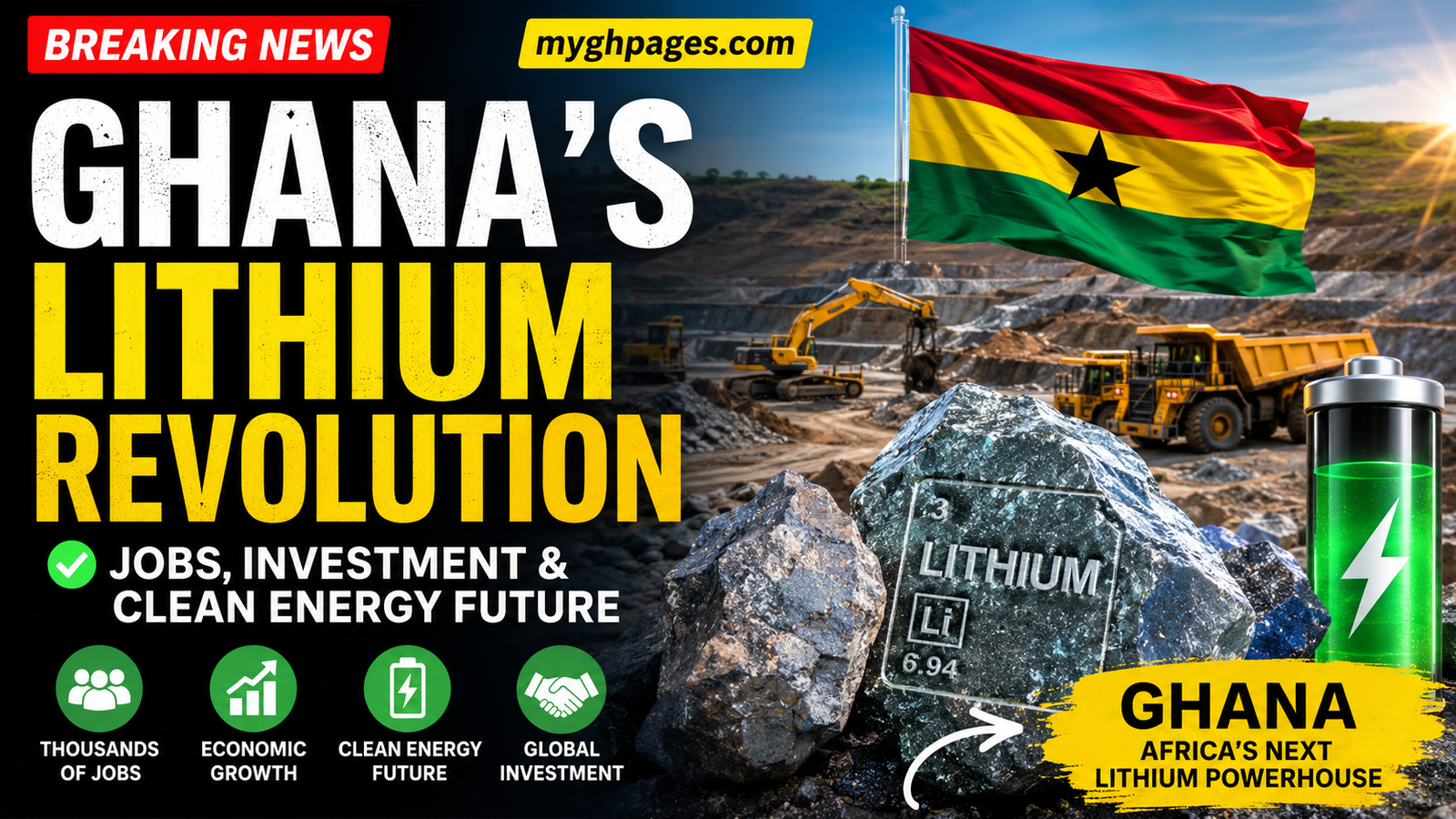
Ghana Lithium Project continues attracting global investment as demand for electric vehicle battery minerals rises worldwide.
Experts believe the Ghana Lithium Project could transform Ghana’s mining industry by creating jobs, increasing export revenue, attracting foreign investment, and strengthening the country’s role in the global clean energy economy. The Ghana Lithium Project has already gained attention from Chinese firms and international mining companies looking for reliable lithium supplies for battery manufacturing and electric vehicle production.
One major reason the Ghana Lithium Project is important is the global transition toward electric vehicles and renewable energy systems. Lithium-ion batteries used in electric cars, smartphones, laptops, solar energy storage systems, and modern electronics all depend heavily on lithium minerals. Because of this growing demand, the Ghana Lithium Project is now viewed as one of the most valuable future mining opportunities in Africa.
Economic analysts believe the Ghana Lithium Project could help Ghana diversify its mining sector beyond gold production. The Ghana Lithium Project may generate billions of dollars in export earnings while creating employment opportunities for engineers, machine operators, drivers, construction workers, environmental experts, and local businesses connected to mining operations.
Chinese companies continue showing strong interest in the Ghana Lithium Project because China remains one of the world’s largest producers of electric vehicle batteries and renewable energy technology. Access to lithium resources linked to the Ghana Lithium Project could support future industrial growth and battery production worldwide.
Environmental experts are also monitoring the Ghana Lithium Project closely because mining operations may affect land, forests, and water resources if environmental standards are not properly enforced. Government authorities are encouraging responsible development of the Ghana Lithium Project to ensure long-term sustainability, community development, and environmental protection.
Many investors believe the Ghana Lithium Project could position Ghana as one of Africa’s leading suppliers of battery minerals in the future. The Ghana Lithium Project may also encourage infrastructure development, industrial expansion, and increased foreign direct investment across the country.
Global demand for clean energy minerals continues rising rapidly, and the Ghana Lithium Project is expected to remain an important part of international mining discussions for years to come. According to Reuters Africa Business, the Ghana Lithium Project continues attracting strong international attention as electric vehicle battery demand and clean energy investments increase worldwide in 2026.
Why Ghana’s Lithium Project Is Attracting Global Attention
The Ghana Lithium Project is attracting massive international attention as global demand for lithium, electric vehicle batteries, and clean energy technology continues rising in 2026. The Ghana Lithium Project has become one of the most discussed mining developments in Africa because lithium is now considered one of the world’s most valuable minerals for the future energy economy.
Many international investors and mining companies are closely monitoring the Ghana Lithium Project because lithium is used in rechargeable batteries for electric vehicles, smartphones, laptops, solar energy systems, and modern technology products. Experts believe the Ghana Lithium Project could help position Ghana as one of Africa’s leading lithium-producing countries in the coming years.
Chinese companies are also showing strong interest in the Ghana Lithium Project because China remains one of the world’s biggest electric vehicle battery manufacturers. The growing clean energy industry has increased global competition for lithium resources, making the Ghana Lithium Project strategically important for future industrial growth and battery production worldwide.
Economic analysts believe the Ghana Lithium Project could generate billions of dollars in foreign investment, create thousands of jobs, improve infrastructure, and strengthen Ghana’s export industry. Mining communities may also benefit from increased economic activity linked to transportation, construction, processing, and industrial services connected to the Ghana Lithium Project.
Government authorities are encouraging responsible development of the Ghana Lithium Project to ensure environmental protection, local community support, and long-term economic sustainability. Experts believe local processing and value addition connected to the Ghana Lithium Project could also help Ghana increase industrial development and reduce dependence on raw mineral exports.
According to Reuters Africa Business, the Ghana Lithium Project continues attracting global attention as demand for electric vehicle battery minerals and clean energy resources rises rapidly in 2026.
How Ghana’s Lithium Project Could Boost the Economy
Ghana’s lithium project could become a major economic opportunity for the country as global demand for lithium continues increasing because of electric vehicles, renewable energy systems, and battery technology industries. Mining experts and financial analysts believe the project could generate billions of dollars in investment, increase export earnings, create jobs, and strengthen Ghana’s position within the global mining sector.
One of the biggest economic benefits of Ghana’s lithium project is the potential increase in foreign exchange revenue. Lithium has become one of the world’s most valuable minerals because it is used in rechargeable batteries for electric cars, smartphones, laptops, and solar energy storage systems. As international demand for lithium grows, Ghana could earn significant export revenue from lithium production and international trade.
The project could also create thousands of employment opportunities for Ghanaians. Mining activities often require engineers, machine operators, transport workers, construction companies, environmental experts, security personnel, and administrative staff. Local businesses such as food vendors, transport services, accommodation providers, and equipment suppliers may also benefit from increased economic activity around mining communities.
Foreign direct investment is another major advantage linked to Ghana’s lithium industry. International mining companies and investors are already showing interest in the Ewoyaa lithium project because Ghana is viewed as a stable and attractive investment destination in Africa. Increased foreign investment may help improve infrastructure, roads, electricity supply, and industrial development within mining regions.
Government officials are also focusing on local value addition instead of exporting only raw lithium materials. Authorities are encouraging processing industries and battery-related manufacturing opportunities that could help Ghana earn more revenue and create additional jobs for young people.
The project may also strengthen Ghana’s reputation as a major mining destination beyond gold production. Ghana is already one of Africa’s leading gold producers, and successful lithium mining could diversify the country’s mineral export sector and improve long-term economic growth.
According to Reuters Africa Business, Ghana’s lithium project continues attracting international interest as global demand for battery minerals and clean energy resources rises in 2026.
Why Chinese Companies Are Interested in Ghana’s Lithium Industry
Chinese companies are showing strong interest in Ghana’s lithium industry because lithium has become one of the world’s most valuable minerals for electric vehicle batteries, renewable energy storage systems, and advanced technology manufacturing. China remains one of the global leaders in electric vehicle production and battery technology, making access to lithium resources strategically important for long-term industrial growth and global market dominance.
One major reason Chinese firms are targeting Ghana’s lithium project is the rapid global shift toward clean energy and electric transportation. Governments and automobile companies worldwide are investing heavily in electric vehicles to reduce carbon emissions and dependence on fossil fuels. Lithium-ion batteries are essential components used in electric cars, smartphones, laptops, and renewable energy storage systems, increasing the demand for lithium globally.
China already controls a significant portion of the global battery manufacturing industry and processes large quantities of lithium for international markets. By investing in Ghana’s lithium sector, Chinese companies can strengthen supply chains and secure long-term access to important battery minerals needed for future technology production.
Ghana’s mining environment is also attracting foreign investors because the country is considered politically stable with a strong mining history. Ghana is already one of Africa’s leading gold producers, and international companies see the country as an attractive destination for mining investment and resource development.
The Ewoyaa lithium project has gained international attention because experts believe it could become one of Africa’s major lithium production sites. Chinese companies are interested not only in mining operations but also in possible partnerships involving processing, exports, infrastructure development, and technology investment.
Economic analysts believe Chinese investment could help Ghana increase foreign direct investment, create employment opportunities, improve infrastructure, and boost export earnings. However, some experts also believe Ghana must carefully manage agreements to ensure local communities and the national economy benefit from lithium development projects.
Environmental concerns are also part of discussions surrounding foreign mining investments. Authorities are being encouraged to enforce strong environmental protection policies and ensure sustainable mining practices within lithium-producing communities.
According to Reuters Africa Business, Chinese firms continue showing strong interest in Ghana’s lithium industry as global competition for battery minerals increases in 2026.
How Lithium Mining Could Create Jobs in Ghana
Lithium mining could create thousands of employment opportunities in Ghana as the country expands its mining industry and attracts international investment into the Ewoyaa lithium project. Experts believe the growing global demand for lithium used in electric vehicle batteries, renewable energy systems, and modern technology could turn Ghana into one of Africa’s important lithium-producing nations in the coming years.
One of the biggest benefits of lithium mining is direct job creation within mining operations. Large-scale mining projects require engineers, geologists, machine operators, electricians, safety officers, environmental experts, transport workers, and administrative staff. Construction companies and local contractors may also benefit during the development of mining facilities and supporting infrastructure.
Mining activities could also create indirect jobs within nearby communities. Local businesses such as food vendors, transport services, accommodation providers, security companies, and equipment suppliers may experience increased demand because of mining operations. This could improve economic activity in towns and rural areas surrounding lithium mining projects.
The transportation and logistics sectors may also grow as lithium exports increase. Drivers, warehouse operators, shipping companies, and export service providers may benefit from the movement of lithium products from mining sites to international markets. Government officials believe the project could stimulate broader industrial growth beyond the mining sector itself.
Lithium processing and manufacturing opportunities could create even more jobs if Ghana develops local industries connected to battery production and mineral processing. Authorities are encouraging value addition instead of exporting only raw lithium materials. Processing lithium locally could create technical and industrial jobs for young people and skilled workers across the country.
Training and skills development may also become important as lithium mining expands. Mining companies are expected to train workers in modern mining technology, environmental management, safety standards, and industrial operations. This could help improve workforce skills and increase employment opportunities for Ghanaian youth.
Economic analysts believe responsible lithium mining could support long-term economic development if environmental protection and community benefits are properly managed. According to Reuters Africa Business, Ghana’s lithium industry continues attracting global attention as international demand for battery minerals rises in 2026.
Environmental Concerns Surrounding Ghana’s Lithium Project
Environmental concerns surrounding Ghana’s lithium project are becoming an important topic as mining activities continue attracting global attention and foreign investment. While lithium mining could bring major economic benefits to Ghana through exports, jobs, and infrastructure development, environmental experts and local communities are also discussing the possible impact of mining operations on land, water sources, forests, and surrounding ecosystems.
One major concern is land degradation caused by mining activities. Large-scale lithium mining often requires excavation, road construction, and clearing of vegetation, which can affect farmland and natural habitats. Some environmental groups are worried that mining operations could reduce agricultural land available for local farmers and affect food production in nearby communities.
Water pollution is another issue being discussed in relation to lithium mining. Mining activities can sometimes release chemicals, dust, and waste materials into rivers and groundwater sources if environmental regulations are not properly enforced. Communities that depend on local water bodies for drinking, fishing, and farming may face challenges if water quality is affected by mining operations.
Deforestation and biodiversity loss are also concerns linked to mining projects. Forest areas near mining sites may experience vegetation clearing and disruption of wildlife habitats. Environmental advocates are encouraging authorities and mining companies to adopt sustainable mining practices that minimise ecological damage and protect natural resources.
Local communities are also requesting stronger environmental protection policies and fair compensation systems for affected landowners. Many residents want assurance that mining companies will support community development projects, restore affected lands, and provide long-term economic benefits for local populations.
Government agencies and mining regulators are expected to monitor environmental standards closely as Ghana’s lithium sector develops. Authorities are encouraging responsible mining practices, environmental impact assessments, and land restoration measures to ensure sustainable development within the mining industry.
Despite environmental concerns, many experts believe lithium remains important for global clean energy goals because lithium-ion batteries support electric vehicles and renewable energy storage systems. According to Reuters Africa Business, Ghana’s lithium project continues attracting international attention as competition for battery minerals grows in 2026.
How Ghana’s Lithium Industry Could Transform the Mining Sector
Ghana’s lithium industry could transform the country’s mining sector by introducing a new era of mineral exports, industrial growth, and international investment beyond traditional gold mining. Ghana is already recognised globally as one of Africa’s leading gold producers, but the discovery and development of lithium resources could diversify the country’s mining economy and create new opportunities for long-term economic growth.
Lithium has become one of the world’s most valuable minerals because it is used in rechargeable batteries for electric vehicles, smartphones, laptops, renewable energy systems, and advanced technology products. As the global clean energy transition accelerates, countries with lithium resources are becoming increasingly important within the international mining industry.
The Ewoyaa lithium project is expected to position Ghana as one of Africa’s emerging lithium-producing countries. Mining experts believe successful lithium production could attract additional foreign direct investment into the country’s mining sector and encourage exploration for other valuable minerals connected to clean energy technologies.
One major advantage of Ghana’s lithium industry is the potential to reduce dependence on gold exports alone. Diversifying the mining sector could help Ghana create multiple sources of export revenue and improve economic stability. Lithium exports may generate billions of dollars in foreign exchange earnings while creating employment opportunities across mining communities.
The growth of the lithium sector may also encourage industrial development and local value addition. Government authorities are promoting local processing industries instead of relying only on raw mineral exports. Processing lithium locally could support battery manufacturing, mineral refining, and technology-related industries in the future.
Mining infrastructure development is another important benefit linked to Ghana’s lithium industry. Roads, electricity supply, water systems, transport networks, and industrial facilities may improve as mining investments increase in lithium-producing regions. Local businesses may also benefit from increased economic activity surrounding mining operations.
Financial analysts believe Ghana’s lithium industry could strengthen the country’s global mining reputation if investments are managed responsibly and environmental standards are maintained. According to Reuters Africa Business, Ghana’s lithium project continues attracting international attention as global demand for battery minerals and clean energy resources increases in 2026.
The Importance of Lithium in Electric Vehicle Battery Production
Lithium has become one of the most important minerals in the world because it plays a major role in electric vehicle battery production and clean energy technology. As global demand for electric cars continues rising, countries with lithium resources such as Ghana are attracting significant international attention from mining companies, investors, and technology manufacturers.
Electric vehicles rely heavily on lithium-ion batteries because these batteries can store large amounts of energy, recharge quickly, and operate efficiently for long periods. Major automobile companies including Tesla, BYD, BMW, Mercedes-Benz, Toyota, and other global manufacturers are investing billions of dollars into electric vehicle production as governments push for cleaner transportation systems.
The global shift away from fossil fuels and gasoline-powered vehicles is one of the biggest reasons lithium demand is increasing rapidly. Many countries are introducing environmental policies aimed at reducing carbon emissions and promoting renewable energy. Electric vehicles are viewed as an important solution for reducing air pollution and combating climate change.
Lithium-ion batteries are not only used in electric cars but also in smartphones, laptops, solar energy systems, power banks, and energy storage technologies. This broad industrial demand has made lithium one of the world’s fastest-growing strategic minerals within the global economy.
Ghana’s lithium project has attracted international interest because experts believe the country could become an important supplier of battery minerals for the global clean energy market. Mining analysts believe the Ewoyaa lithium project may help Ghana benefit from the growing electric vehicle revolution and increasing battery production worldwide.
Chinese companies and international investors are particularly interested in lithium because China remains one of the world’s largest producers of electric vehicle batteries and renewable energy technologies. Securing access to lithium resources is considered critical for supporting future industrial growth and global battery supply chains.
Economic experts believe Ghana’s lithium sector could generate export revenue, create jobs, attract foreign investment, and strengthen the country’s mining industry if developed responsibly. According to Reuters Africa Business, Ghana’s lithium project continues attracting global attention as international demand for electric vehicle battery minerals rises in 2026.
How Ghana Could Benefit from the Global Clean Energy Boom
Ghana could benefit significantly from the global clean energy boom as demand for lithium, renewable energy minerals, and battery technology continues increasing worldwide. The transition toward clean energy has become one of the biggest economic and industrial changes in modern history, creating new opportunities for countries with valuable natural resources such as lithium, cobalt, nickel, and rare earth minerals.
One of the biggest opportunities for Ghana is the growing demand for lithium used in electric vehicle batteries and renewable energy storage systems. As international automobile companies continue expanding electric vehicle production, countries with lithium resources are becoming increasingly important within the global supply chain. Ghana’s Ewoyaa lithium project has already attracted attention from international mining companies and investors seeking long-term access to battery minerals.
The clean energy boom could help Ghana increase export revenue and foreign direct investment. Lithium exports may generate billions of dollars for the economy while improving Ghana’s position in the international mining industry. Increased investment could also support infrastructure development, industrial growth, and job creation in mining communities.
The renewable energy sector may also create opportunities for local manufacturing and industrial development. Government officials are encouraging value addition and local processing instead of relying only on raw mineral exports. Processing lithium locally could help Ghana build battery-related industries and technology manufacturing sectors over time.
Employment opportunities are another major advantage linked to the clean energy transition. Mining operations, transportation services, construction projects, environmental management, and processing industries may create thousands of jobs for Ghanaians as lithium production expands.
The global clean energy movement may also encourage improvements in Ghana’s own energy sector. Increased investment in solar energy, battery storage systems, and renewable energy infrastructure could help improve electricity access and reduce dependence on fossil fuels within the country.
Economic experts believe Ghana has the potential to become one of Africa’s important suppliers of battery minerals if investments are managed responsibly and environmental standards are maintained. According to Reuters Africa Business, Ghana’s lithium project continues attracting global attention as demand for clean energy minerals and electric vehicle batteries increases in 2026.
Challenges Ghana Could Face in Developing the Lithium Industry
Despite the huge economic opportunities linked to lithium mining, Ghana could face several important challenges as the country develops its growing lithium industry. Mining experts, environmental groups, and economic analysts believe careful planning and strong regulations will be necessary to ensure the lithium sector benefits the country while protecting communities and natural resources.
One major challenge is environmental protection. Large-scale lithium mining can affect forests, water bodies, farmland, and wildlife habitats if mining activities are not properly regulated. Communities near mining areas may face concerns related to land degradation, water pollution, dust, and noise pollution. Environmental experts are encouraging the government to enforce strong environmental laws and require responsible mining practices from companies operating in the sector.
Another challenge involves ensuring local communities benefit fairly from lithium mining projects. Residents living near mining sites often expect employment opportunities, infrastructure development, healthcare support, schools, and fair compensation for affected lands. Authorities may face pressure to ensure mining revenue contributes directly to community development and poverty reduction.
Illegal mining activities could also become a challenge if proper regulations are not enforced. Ghana has already experienced environmental damage from illegal gold mining operations known as ‘galamsey’. Experts believe authorities must prevent illegal lithium mining activities that could threaten environmental sustainability and public safety.
Infrastructure development is another issue Ghana may need to address as lithium production expands. Mining projects require good road networks, electricity supply, water systems, transportation infrastructure, and export facilities. Significant investments may be necessary to support large-scale lithium operations and industrial growth.
Global lithium price fluctuations could also affect Ghana’s mining industry. Although lithium demand is currently strong because of electric vehicle production and clean energy growth, international mineral prices can change due to global economic conditions, technology shifts, and supply chain developments. Ghana may need long-term strategies to manage market risks and maintain stable mining investments.
Economic experts believe transparency and responsible resource management will be important for Ghana’s lithium industry success. According to Reuters Africa Business, Ghana’s lithium project continues attracting international attention as competition for battery minerals and clean energy resources increases in 2026.
What the Future Holds for Ghana’s Lithium Industry
The future of Ghana’s lithium industry appears promising as global demand for battery minerals, electric vehicles, and renewable energy technology continues increasing rapidly. Mining experts, investors, and economic analysts believe Ghana has the potential to become one of Africa’s important lithium-producing countries if the industry is developed responsibly and supported by strong government policies.
The Ewoyaa lithium project has already attracted international attention from mining companies and investors because lithium is considered one of the world’s most valuable minerals for the future clean energy economy. Electric vehicle manufacturers, battery producers, and technology companies around the world are searching for reliable lithium supplies to support long-term industrial growth and energy transition goals.
One major opportunity for Ghana is the possibility of increasing export revenue and foreign direct investment through lithium mining. Successful development of the lithium sector could generate billions of dollars for the economy, strengthen foreign exchange earnings, and create thousands of employment opportunities for citizens in mining, transportation, construction, processing, and industrial services.
Government authorities are also focusing on local value addition within the mining sector. Instead of exporting only raw lithium materials, Ghana is encouraging local processing and industrial development that could support battery manufacturing and other technology-related industries in the future. This strategy may help the country generate higher economic value from its natural resources.
Infrastructure development may also improve as mining investments increase. Roads, electricity systems, industrial facilities, and transportation networks may expand within mining communities and surrounding regions. Local businesses could benefit from increased economic activity linked to mining operations and export services.
Environmental sustainability is expected to remain an important issue as the industry grows. Authorities and environmental experts continue emphasising the need for responsible mining practices, land restoration programmes, and strong environmental regulations to protect communities and natural resources.
Economic analysts believe Ghana’s lithium industry could transform the country’s mining sector and strengthen its role within the global clean energy economy if investments are managed effectively. According to Reuters Africa Business, Ghana’s lithium project continues attracting strong international interest as demand for electric vehicle battery minerals rises in 2026.
Read also from here:
- Reuters Africa Mining News
- Bloomberg Energy News
- BBC Business News
- CNBC Markets and Energy
- Financial Times Energy Sector
- World Bank Ghana Overview
- International Energy Agency
- Investopedia Lithium Guide
- Mining Technology News
- S&P Global Mining News
- Forbes Energy News
- The Economist Energy and Environment
- Statista Electric Vehicle Data
- Trading Economics Ghana Data
- African Development Bank Ghana
- World Economic Forum Energy Transition
- Yahoo Finance Commodity News
- MarketWatch Energy Markets
- UN Sustainable Development Goals
- OECD Economic Outlook
FAQ
What is the Ghana Lithium Project?
The Ghana Lithium Project is a major mining development focused on lithium production for electric vehicle batteries and clean energy technology.
Why is the Ghana Lithium Project attracting attention?
The project is attracting global attention because lithium is highly valuable for electric vehicles, battery storage systems, and renewable energy industries.
Why are Chinese companies interested in Ghana’s lithium industry?
Chinese companies are interested because China is one of the world’s largest battery and electric vehicle producers, which require lithium supplies.
How could the Ghana Lithium Project help the economy?
The project could create jobs, increase export revenue, attract foreign investment, and improve Ghana’s mining industry.
What are the environmental concerns about lithium mining?
Environmental concerns include land degradation, water pollution, deforestation, and the need for responsible mining practices.