
September 2026 brought developments affecting Ghanaian commuters, businesses, students and digital-service users. This roundup summarises documented announcements and distinguishes proposals from completed outcomes.
Transport fares
Road transport unions announced an 8% fare adjustment effective 26 September 2026, covering shared taxis, intra-city tro-tros, intercity long-distance services and haulage. Operators cited fuel, spare parts, maintenance and other operating costs. Passengers should check the approved fare for their specific route. Source: Information Services Department announcement.
ICT and fintech financing
Development Bank Ghana convened an ICT and fintech financing roundtable in Accra on 10 September. Discussions focused on financing barriers for technology businesses and possible tools such as patient capital, blended finance, guarantees and credit enhancement. These discussions do not mean every business qualifies for funding; owners should check actual eligibility and terms with providers. Sources: Ministry of Communication, Digital Technology and Innovations and Development Bank Ghana.
AI and digital-skills training for TVET
On 23 September, the Ghana TVET Service announced a partnership with UNESCO, KPMG and Microsoft under the AI EmpowerED initiative, with a stated target of training at least 100,000 TVET facilitators in AI and digital skills. The target is an announced ambition, not evidence that all training has already been completed. Source: Ghana News Agency.
5G spectrum licensing
The National Communications Authority published qualified applicants in the spectrum licensing process for the 700 MHz, 2.3 GHz and 3 GHz bands. Qualification is a stage in the process; it is not the same as a completed licence award or immediate 5G coverage everywhere. Follow formal notices through the NCA’s 2026 updates.
Connectivity and cyber safety
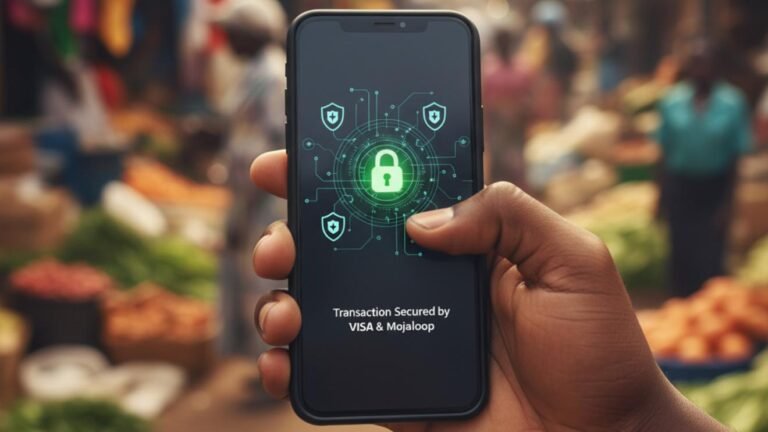
On 9 September, the U.S. Trade and Development Agency announced support for a feasibility study on open-access fibre infrastructure in northern Ghana with CSquared Ghana. A feasibility study is an early project stage, not proof that the network is already built. Ghana’s Cyber Security Authority also launched its 2026 National Cyber Security Awareness Month campaign focused on trust and resilience in digital finance. Consumers should never share mobile-money PINs or one-time codes and should verify transactions through official apps or accounts. Sources: USTDA and Cyber Security Authority.
What readers should do
- Commuters: check current approved fares for the route they use.
- Small businesses: verify financing eligibility and prepare realistic budgets and cash-flow records before applying.
- Educators: follow the Ghana TVET Service for confirmed training arrangements.
- Mobile and online payment users: protect PINs, verify recipients and report suspicious activity through official provider channels.
What to watch next
Look for official route-level fare schedules, actual financing products and eligibility rules, implementation details for TVET training, further NCA licensing decisions, and updates on connectivity projects. This roundup uses the linked institutional announcements; proposals, targets and feasibility studies are not presented as completed outcomes.