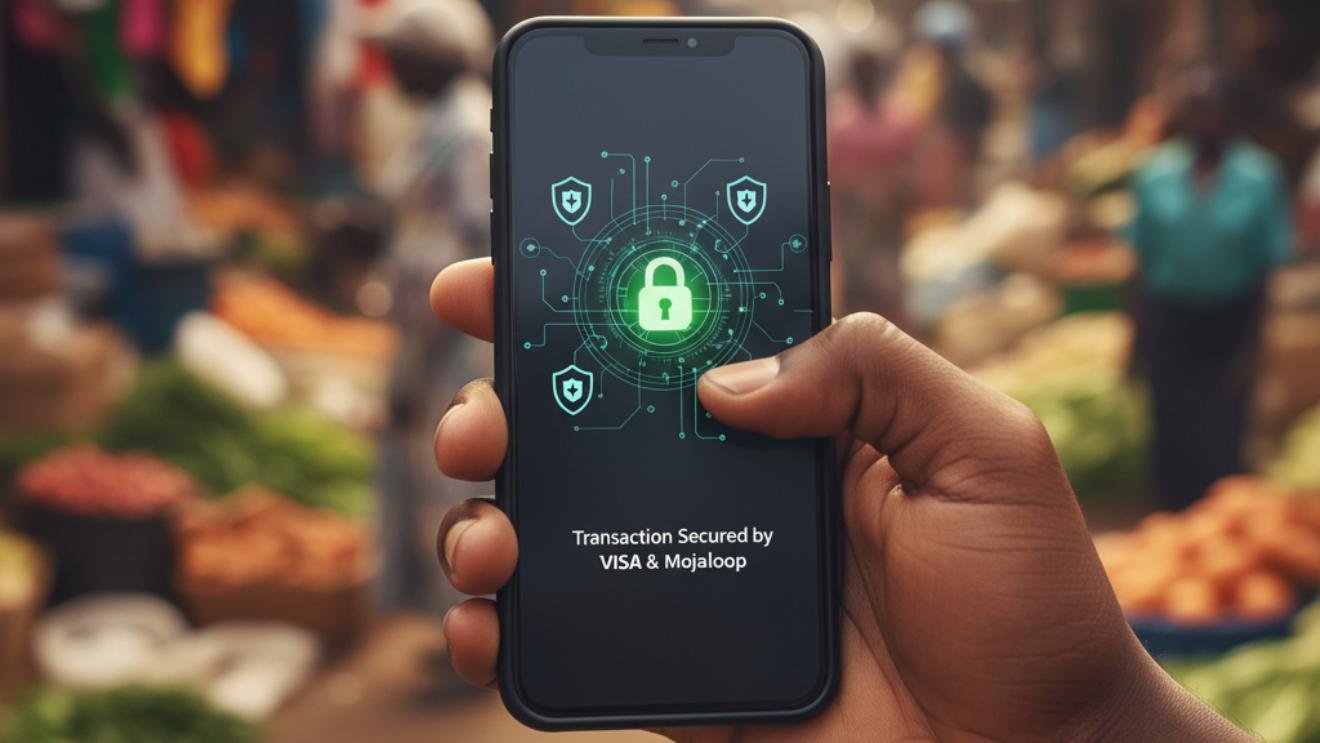
Protect your mobile money PIN, personal information and digital accounts against online fraud.
Ghana’s Cybersecurity Warning: Practical Steps to Protect Mobile Money and Personal Data
By MyGHPages Editorial Team
Ghana’s Cybersecurity Warning: Mobile money has become an essential part of everyday life in Ghana. From market traders and transport operators to online businesses, students and households, millions of people depend on digital financial services to send money, receive payments and manage everyday transactions.
However, the growing use of mobile money, internet banking, social media and online shopping has also created opportunities for cybercriminals.
Ghana’s Cyber Security Authority (CSA) and Bank of Ghana (BoG) have repeatedly warned the public about digital financial fraud, identity theft, impersonation and other online threats. Their warnings highlight an important reality: protecting money and personal information requires more than having a secure mobile phone. Users must understand how scams operate and know what to do when something goes wrong.
According to figures presented by the CSA during the launch of the 2026 National Cyber Security Awareness Month, Ghana recorded 3,876 cybersecurity incidents between January and July 2026. Of these, 1,818 involved online fraud, representing approximately 47 per cent of reported incidents.
The figures demonstrate why cybersecurity awareness must become part of everyday financial behaviour in Ghana.
Ghana Records Thousands of Cybersecurity Incidents
The scale of reported cyber incidents provides important context for the growing concern about digital financial safety.
The CSA disclosed that nearly half of the cybersecurity incidents recorded during the first seven months of 2026 involved online fraud.
The Bank of Ghana’s 2025 Fraud Report also recorded 24,778 fraud cases across banks, specialised deposit-taking institutions and payment service providers, compared with 16,733 cases in 2024. This represented an increase of approximately 48 per cent.
The value at risk was reported at GH¢101 million. Within the payment service provider sector, electronic fraud incidents increased by 54 per cent, while the value at risk rose from GH¢19 million to GH¢37 million.
These figures cover different categories of financial and cybersecurity incidents. They should not be interpreted as mobile money fraud cases alone.
Nevertheless, they demonstrate the importance of strengthening customer awareness, institutional security systems and fraud-reporting procedures.
For ordinary Ghanaians, the message is straightforward: every digital transaction deserves attention, and unexpected requests for confidential information should never be treated casually.
How Mobile Money Fraudsters Target Ghanaians
Mobile money fraud often depends on manipulating people’s trust rather than breaking into sophisticated computer systems.
Fraudsters may pretend to be mobile money agents, telecommunications employees, bank officials, government representatives or even friends and relatives.
Their objective is usually to persuade victims to disclose confidential information or approve transactions that transfer money into accounts controlled by criminals.
Some common methods include:
1. Fake mobile money reversal requests
A fraudster may claim to have accidentally sent money to your wallet and request an immediate refund.
In some cases, the criminal may send a misleading notification or display a manipulated transaction message to make the victim believe money has arrived.
Before returning any money, check your actual account balance and transaction history through your provider’s official application or service.
If a genuine mistaken transfer has occurred, contact your provider through its official customer-service channel for guidance.
Do not send money to a different number simply because a caller demands it.
2. Fake customer-care representatives
Another common method involves callers pretending to represent MTN, Telecel, AT or a financial institution.
They may claim that your SIM card needs registration, your mobile money wallet requires an upgrade or your account will be blocked unless you complete a verification process.
The caller may request your PIN, Ghana Card details, account information or one-time password.
The Bank of Ghana has explicitly warned that legitimate banks, mobile money operators, payment service providers and financial institutions will not request customers’ confidential PINs, passwords or OTPs through calls, text messages, emails or social media.
Never disclose these details to someone who contacts you unexpectedly.
3. WhatsApp impersonation and malicious attachments
WhatsApp is widely used in Ghana for personal communication and business transactions, making it an attractive platform for criminals.
The Cyber Security Authority has previously warned about a WhatsApp Web-based malware campaign targeting Windows users.
According to the warning published on January 27, 2026, criminals circulated malicious ZIP files disguised as legitimate documents, invoices and shared files.
The malware, identified as Astaroth, could steal banking credentials, one-time passwords, browser cookies and other sensitive information.
The malicious software could also use compromised WhatsApp accounts to distribute similar messages to the victim’s contacts.
This means a message appearing to come from someone you know is not automatically safe.
Avoid downloading unexpected attachments, especially compressed files, even when they appear to come from a trusted contact. Confirm with the sender through another communication channel before opening suspicious documents.
4. Fake investment opportunities
Some criminals advertise online investment schemes promising unusually high returns within a short period.
They may use impressive graphics, fabricated testimonials, fake payment confirmations and impersonated business personalities to convince people to invest.
Others promise that a small payment will produce guaranteed profits or that an individual can double their money within days.
The Bank of Ghana has specifically cautioned the public against double-your-money schemes, online Ponzi schemes and suspicious digital investment platforms.
Before sending money to an investment platform, verify the organisation and check the relevant regulatory authorisation. Never make an investment decision simply because someone on WhatsApp or Facebook claims to have received impressive returns.
Seven Practical Ways to Protect Your Mobile Money Account
Protecting a mobile money wallet starts with simple habits that should become part of every transaction.
1. Keep your PIN private.
Never disclose your mobile money PIN to callers, friends, strangers or people claiming to offer technical assistance. Avoid predictable combinations such as birthdays and simple number sequences.
2. Check transaction details before approval.
Always verify the recipient’s name, number and transaction amount before confirming a transfer. A small mistake can result in money being sent to the wrong person.
3. Verify incoming payments independently.
Do not rely on screenshots, forwarded messages or notifications shown by another person. Open your official financial application or check your account transaction history to confirm that the money has actually arrived.
4. Activate available security features.
Use screen locks, biometric verification, transaction alerts and two-factor authentication where available. These features can help reduce unauthorised access.
5. Avoid suspicious links.
Do not enter financial information through unfamiliar links received by SMS, WhatsApp, email or social media. Instead, access your provider’s official website or application directly.
6. Protect your SIM card.
If your phone suddenly loses network service unexpectedly, particularly when you receive unusual account notifications, contact your mobile network operator through its official channel. An unauthorised SIM replacement or SIM swap can expose financial accounts to additional risks.
7. Monitor your transactions.
Review your mobile money notifications and transaction history regularly. Report unfamiliar payments immediately rather than waiting until several transactions have occurred.
How to Protect Your Ghana Card and Other Personal Information
Mobile money fraud is not limited to stealing money directly from a wallet.
Personal information can also be used to impersonate individuals, gain access to financial services or carry out fraudulent transactions.
Your Ghana Card details, phone number, bank account information, passwords and email address should therefore be treated as sensitive information.
The Cyber Security Authority has warned about fraudsters impersonating bank representatives and requesting Ghana Card details, debit or credit card information, card verification values and OTPs under the pretext of linking accounts.
Once criminals obtain such information, they may attempt unauthorised transactions.
To reduce these risks:
- Do not send photographs of your identification documents to unknown individuals.
- Avoid publishing personal financial information on social media.
- Use strong, unique passwords for important accounts.
- Activate additional account security wherever possible.
- Do not save financial passwords on shared computers.
- Review the permissions granted to mobile applications.
- Delete applications you no longer need.
- Keep your phone’s operating system and applications updated.
- Secure the email account used to recover your financial and social media accounts.
Remember that protecting your email is particularly important because criminals may use access to an email account to reset passwords for other services.
Artificial Intelligence Is Creating New Impersonation Risks
Cybersecurity threats are also becoming more sophisticated as criminals adopt newer digital tools.
Artificial intelligence can be misused to imitate voices, create convincing images and produce messages that appear to come from trusted individuals.
For example, someone may receive a voice message that sounds like a relative asking for emergency financial assistance.
A business owner may receive a message appearing to come from a supplier requesting that a payment be redirected to a new account.
In these situations, recognising a familiar voice or name is not enough to establish that the request is genuine.
Before sending money, independently contact the person using a telephone number or communication channel you already know.
For businesses, any change to payment instructions should be confirmed through an established verification procedure.
The most important rule is to verify unexpected financial requests before taking action.
Small Businesses Must Strengthen Their Digital Payment Security
Cybersecurity is not only a concern for individuals. Ghanaian small businesses, online sellers, market traders and service providers also face financial risks.
Many businesses now accept mobile money and bank transfers as part of their daily operations.
Without proper controls, one compromised phone or fraudulent payment notification can create significant financial problems.
Business owners should introduce practical security procedures.
Separate personal and business transactions: Maintain clear records of payments received and expenses paid. Where practical, use dedicated business accounts and devices.
Verify payments before releasing goods: Staff should confirm transactions using the official account balance or transaction history instead of relying on screenshots.
Restrict account access: Only authorised employees should handle business payment devices and confidential account information.
Confirm changes to payment details: Any request to change a supplier’s bank account or mobile money number should be independently verified using previously established contact details.
Keep transaction records: Maintain receipts, reference numbers, customer records and daily reconciliation reports.
Train employees: Workers should understand how to recognise impersonation, phishing messages and suspicious payment requests.
For additional guidance, MyGHPages has also published a practical resource on digital payments for Ghanaian small businesses.
What to Do Immediately If You Become a Mobile Money Fraud Victim
If you suspect that your wallet, bank account or personal information has been compromised, act quickly.
Delaying a report may give criminals additional time to move funds or compromise other accounts.
Follow these steps:
Step 1: Contact your financial service provider.
Immediately contact your bank or mobile money operator through its official customer-care channel. Explain what happened and request assistance with securing the affected account, wallet or SIM.
Step 2: Secure your accounts.
If your PIN, password or login credentials may have been exposed, follow your provider’s official recovery procedure. Change compromised passwords and secure linked email accounts.
Step 3: Report the incident to the Cyber Security Authority.
Ghana’s CSA operates a 24-hour cybersecurity and cybercrime incident reporting point of contact.
Members of the public can report suspicious activity through:
- Call: 292
- SMS: 292
- WhatsApp: 0501603111
- Email: report@csa.gov.gh
You can also visit the official Cyber Security Authority website for advisories and further assistance.
Step 4: Preserve evidence.
Keep transaction reference numbers, suspicious phone numbers, messages, screenshots, emails and other relevant records.
Do not delete evidence that may assist investigations.
Step 5: Report financial complaints through the appropriate channels.
Where a financial service complaint requires further attention, contact the provider’s official complaints department. The Bank of Ghana also provides a complaints office.
Its October 7, 2026 press release lists the following contact details:
- Telephone: 0593974486
- Email: complaints.office@bog.gov.gh
Reporting does not guarantee that lost funds will be recovered. However, prompt reporting gives the relevant institutions an opportunity to investigate and take appropriate action.
What Ghana’s Financial Regulators Expect From Service Providers
Cybersecurity cannot depend entirely on customers protecting themselves.
Financial institutions and electronic money issuers also have responsibilities to protect users.
In its October 7, 2026 advisory titled Digital Fraud and the Cost of Ignorance, the Bank of Ghana reminded the public that financial institutions and electronic money issuers have obligations under the Payment Systems and Services Act, 2019 (Act 987).
These include maintaining fraud-monitoring systems, cybersecurity controls and customer protection mechanisms.
The central bank also highlighted the importance of clear complaint-resolution procedures.
This is important because customers need reliable ways to report unauthorised transactions, understand disputed payments and receive guidance when their accounts are compromised.
Financial service providers, telecommunications operators and regulators must continue strengthening security systems as digital transactions become more widespread.
Consumers should also understand their responsibilities and use available security features.
Frequently Asked Questions About Mobile Money Fraud in Ghana
Can a mobile money agent legitimately ask for my PIN?
You should never disclose your secret mobile money PIN to an agent or caller. Keep it private and use only the official transaction process.
What should I do if someone sends money to my wallet by mistake?
Check your actual transaction history and contact your provider through its official customer-service channel. Do not send money to a different number simply because someone demands an immediate refund.
What is Ghana’s cybersecurity reporting number?
The Cyber Security Authority’s 24-hour reporting contact is 292. Reports can also be sent through WhatsApp on 0501603111 or email at report@csa.gov.gh.
Can I recover money lost through mobile money fraud?
Recovery depends on the circumstances, the timing of the report and the investigation. Contact your provider immediately. Recovery is not guaranteed, particularly if funds have already been withdrawn or transferred.
Is it safe to open documents received through WhatsApp?
Only open files you were expecting and can verify. Suspicious ZIP files and other unexpected attachments can contain malware. Confirm unusual files with the sender before opening them.
Should I share my Ghana Card details online?
Only provide identification information when necessary and through verified, appropriate channels. Never disclose sensitive identification and financial details to an unsolicited caller or suspicious social media account.
Conclusion: Digital Financial Safety Must Become a Daily Habit
Ghana’s growing digital economy is creating opportunities for households, businesses and financial institutions. Mobile money, online banking and electronic payments have made many everyday transactions more convenient.
However, these benefits must be accompanied by stronger cybersecurity awareness and responsible digital behaviour.
The figures released by Ghana’s Cyber Security Authority show that online fraud remains a major part of the country’s cybersecurity challenge. The Bank of Ghana’s fraud statistics also demonstrate the importance of stronger institutional protection and informed financial consumers.
Every mobile money user has a role to play.
Protect your PIN, verify unexpected requests, avoid suspicious links, secure your personal information and report suspected fraud immediately.
For businesses, establishing proper payment verification procedures and protecting customer information should be treated as essential operating requirements.
A safer digital Ghana requires cooperation among citizens, telecommunications operators, financial institutions, regulators and law-enforcement agencies.
MyGHPages encourages every Ghanaian to take digital security seriously. Protect your money, protect your identity and think carefully before sharing personal information online.
Visit MyGHPages.com for more Ghanaian business, technology, financial and public-interest updates.
Official Sources and Further Reading
- Bank of Ghana – Digital Fraud and the Cost of Ignorance, October 7, 2026
- Cyber Security Authority – Online Fraudulent Activities Targeting Customers of Banks
- Cyber Security Authority – 2026 National Cyber Security Awareness Month
- Ghana News Agency – Online Fraud Accounts for 47% of Ghana’s Cyber Incidents
- Public Services Commission – CSA Warning About WhatsApp Web Banking Malware
Editorial note: The fraud figures refer to reported incidents and cases in the stated periods and categories. They should not be interpreted as a count of all mobile money fraud victims or all financial losses in Ghana.