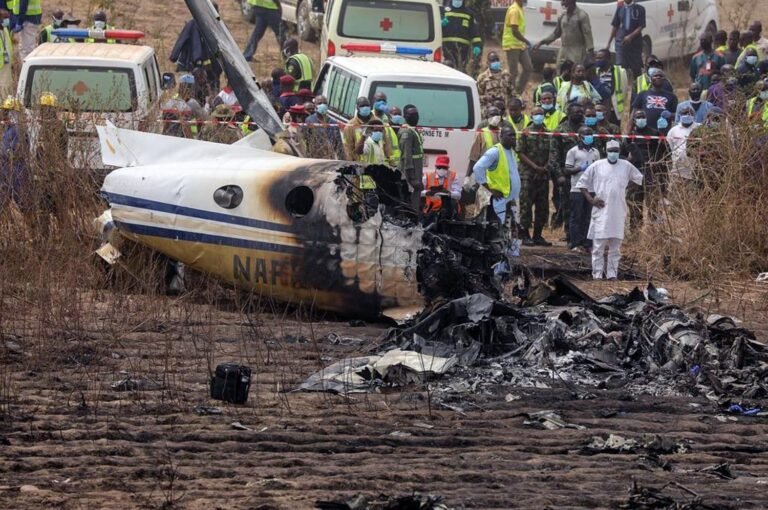
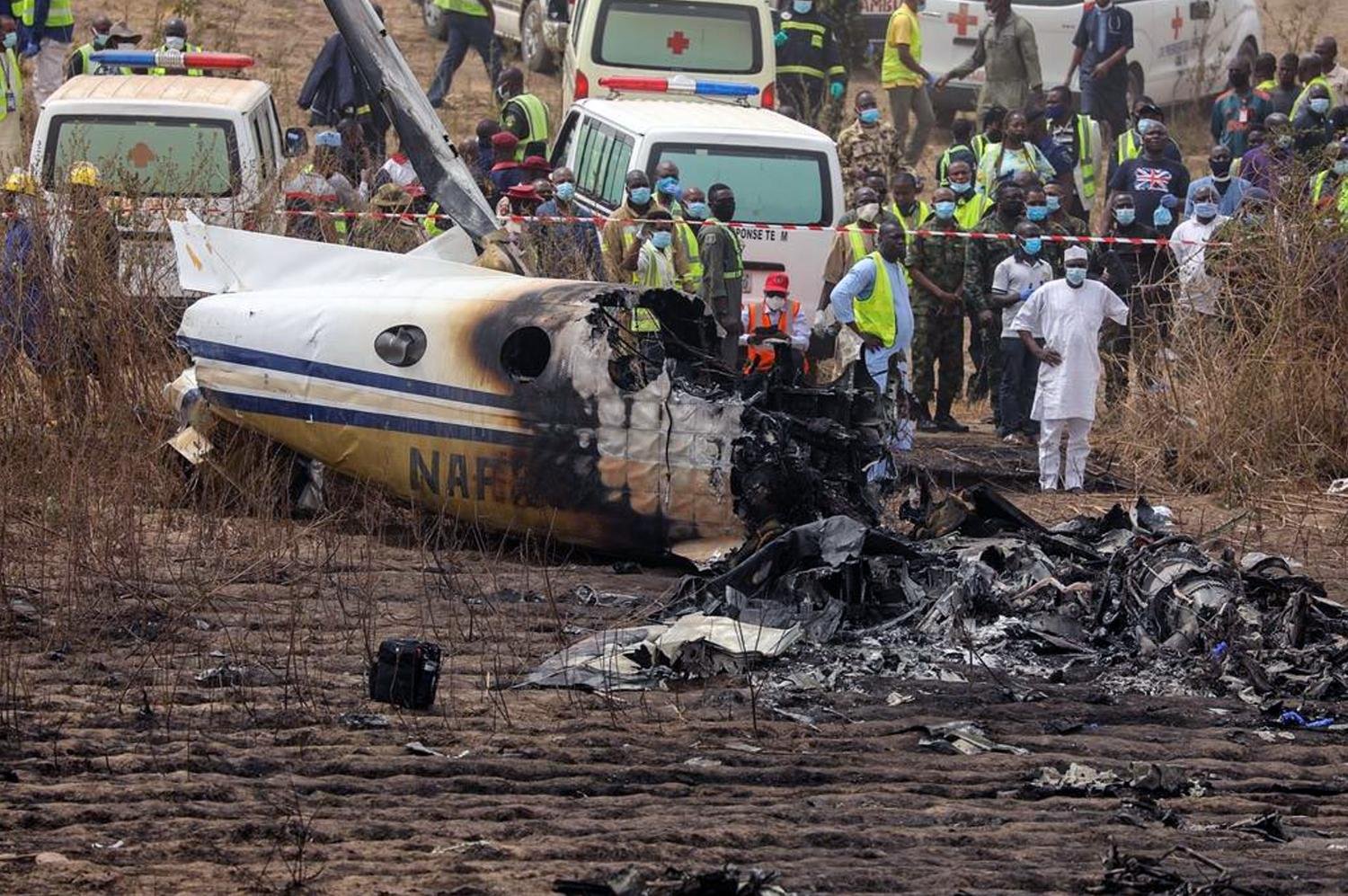
Recovery operations continue at the site of the NAF 931 crash in Igbokoda, Ondo State.
Ondo State, Nigeria — Nigeria’s Defence Headquarters has commenced a formal investigation into the Nigerian Air Force aircraft crash in Igbokoda, Ondo State, as recovery efforts continue at the difficult crash site.
The aircraft, identified as NAF 931, was an ATR-42 military aircraft operating a routine mission from Benin City in Edo State to Lagos when communication with the aircraft was lost.
The aircraft subsequently crashed in the Igbokoda area of the Ilaje Local Government Area of Ondo State, near a naval facility.
The Nigerian Air Force has confirmed that 25 people were aboard the aircraft — five crew members and 20 passengers — and that there were no survivors.
The tragedy has triggered a major response involving the Nigerian Air Force, Defence Headquarters, police, emergency personnel and other relevant authorities.
Defence Headquarters begins investigation
The latest significant development is the formal commencement of an investigation into the accident.
The Defence Headquarters is expected to examine the circumstances surrounding the flight, the aircraft’s final moments, communications with air traffic controllers and other available evidence as investigators attempt to establish what caused the aircraft to go down.
The investigation is particularly important because authorities have not yet publicly identified a definitive cause.
At this stage, there is no official confirmation that mechanical failure, engine problems, bad weather, pilot error, sabotage or any other specific factor caused the crash.
Officials have urged the public to avoid relying on speculation while the investigation is underway.
The findings of the investigation are expected to provide a clearer picture of what happened before the aircraft lost contact and crashed.
25 people confirmed dead.
The Nigerian Air Force has confirmed that 25 people were aboard NAF 931 when the aircraft crashed.
The official figure comprises:
- Five crew members
- 20 passengers
The Air Force has also released the identities of the people who died in the accident after notifying their families.
The confirmation brought an end to uncertainty surrounding the number of people aboard the aircraft following conflicting figures that circulated shortly after the crash.
Initial reports had suggested that as many as 32 people could have been aboard. However, the Nigerian Air Force subsequently clarified the manifest and confirmed the final figure of 25.
The Air Force has said that all 25 people on board died.
Search and recovery operations
Recovery efforts have continued at the crash site in Igbokoda.
The location has presented significant challenges to rescue and recovery teams because of the surrounding swampy and mangrove terrain.
The aircraft came down in a difficult-to-access area, making it harder for emergency personnel and security agencies to reach and recover the wreckage.
Authorities have been working to secure the area while specialist teams continue operations.
Human remains and parts of the aircraft have been recovered from the crash location.
Officials have also indicated that heavier equipment is required to assist with the difficult recovery operation.
The recovery process is expected to continue as authorities work to retrieve additional aircraft components and ensure that evidence relevant to the investigation is preserved.
Aircraft crashed near Igbokoda.
Igbokoda is located in the Ilaje Local Government Area of Ondo State, in Nigeria’s coastal region.
The surrounding environment includes waterways, wetlands and mangrove areas, making movement around the crash location difficult.
The aircraft was reportedly travelling from Benin City towards Lagos when contact was lost.
Air traffic controllers lost communication with the aircraft before the crash, triggering a search operation.
The aircraft was eventually located in the Igbokoda area.
The exact sequence of events between the last communication with the aircraft and the crash remains one of the key questions investigators will need to answer.
The Nigerian Air Force activates a response.
Following the loss of contact, the Nigerian Air Force activated search-and-rescue procedures.
Personnel were deployed to locate the aircraft and determine the condition of those aboard.
Once the wreckage was found, the operation shifted toward securing the crash site, recovering victims and aircraft components, and supporting the investigation.
The response has involved multiple agencies because of the location and nature of the accident.
Authorities are also expected to examine the aircraft’s operational history, maintenance records and flight information as part of the investigation.
NAF 931 was on a routine mission.
The Nigerian Air Force has described the flight as a routine mission.
The ATR-42 involved in the crash, identified as NAF 931, was operated by the Nigerian Air Force.
The aircraft type is used for military missions, including transportation and maritime-related operations.
NAF 931 was travelling from Benin City to Lagos when the accident occurred.
The purpose and operational details of the particular mission will form part of the information investigators may examine as they reconstruct the aircraft’s final flight.
No official cause has been established.
Despite several theories circulating online, authorities have not yet released a definitive explanation for why the aircraft crashed.
This is an important distinction, as investigations into aviation accidents can take time.
Investigators normally examine several possible factors before reaching a conclusion.
These can include:
- Aircraft mechanical condition
- Engine performance
- Maintenance records
- Weather conditions
- Flight-control systems
- Pilot actions
- Air traffic communications
- Flight path and altitude
- Weight and balance
- Fuel status
- Operational procedures
- Other environmental or technical factors
Until investigators complete their work, it would be premature to attribute the accident to any particular cause.
The Nigerian Air Force has specifically called on the public and media to rely on verified information.
President Tinubu orders investigation.
President Bola Ahmed Tinubu has expressed condolences following the loss of the military personnel and passengers.
The president also directed that a thorough investigation be conducted into the accident.
The Federal Government subsequently announced a period of national mourning in honour of those who died.
The President’s intervention highlights the seriousness with which the government is treating the crash.
The investigation is expected to establish what went wrong and determine whether measures are needed to prevent similar incidents in the future.
Families face devastating loss.
Behind the official casualty figures are families who have lost relatives, colleagues and loved ones.
The release of the names of those aboard the aircraft has provided families with confirmation of the fate of their relatives, while authorities continue with recovery and identification procedures.
Military aviation accidents can have a particularly wide impact because the victims may include personnel serving in different parts of the country’s security structure.
The loss of five crew members and 20 passengers represents a significant tragedy for the Nigerian Air Force and the wider country.
Messages of condolence have continued to emerge from government officials, military personnel and members of the public.
Why the investigation matters
The investigation into NAF 931 will be closely watched because its findings could have implications beyond this individual accident.
If investigators identify a technical or operational problem, authorities may need to review procedures involving similar aircraft.
If maintenance or equipment issues are identified, additional inspections could potentially be ordered.
If weather or environmental factors played a role, authorities could examine how future flights are planned and operated under similar conditions.
If human factors are involved, investigators could examine training, procedures, workload and decision-making.
However, none of these possibilities should be treated as established facts until investigators release their findings.
Recovery remains a priority.
While investigators begin examining the circumstances of the accident, recovery teams remain focused on the crash site.
The difficult terrain means the operation cannot simply be completed in a single effort.
Authorities must recover remains respectfully while also preserving important evidence that could help investigators understand what happened.
Aircraft components recovered from the site may provide valuable information.
Investigators may also examine the aircraft’s systems, flight data and other available records.
The recovery operation and investigation will therefore proceed alongside one another.
Authorities warn against misinformation.
The crash has generated significant public interest, with information spreading rapidly across social media.
However, conflicting casualty figures and unverified claims circulated during the early stages of the incident.
Authorities have urged Nigerians to rely on official statements rather than social media speculation.
This is particularly important in an aviation investigation, where premature claims about the cause of an accident can create confusion and potentially interfere with the proper investigation process.
The Nigerian Air Force has said it will continue to provide verified information as the investigation progresses.
What happens next?
The immediate priority remains the completion of recovery operations and the preservation of the crash site.
Investigators will then continue gathering evidence relating to the aircraft and its final flight.
The investigation could involve examination of:
- The aircraft wreckage.
- Maintenance and servicing records.
- Flight and operational records.
- Air traffic control communications.
- Weather conditions at the time of the flight.
- Statements from relevant personnel.
- Available flight data and technical information.
- The aircraft’s operational history.
The eventual findings should help authorities determine the circumstances that led to the crash.
It is also possible that preliminary information could emerge before a final investigation report is completed.
A painful moment for Nigeria
The Igbokoda crash has left the Nigerian Air Force and the country mourning the loss of 25 people.
The accident has also highlighted the risks associated with military aviation and the difficult environments in which Nigerian security personnel operate.
For the families of those who died, the investigation may provide important answers about how the tragedy occurred.
For the Nigerian Air Force, the findings could help identify lessons that may improve aviation safety and prevent similar accidents.
For now, however, the central facts remain clear.
NAF 931, an ATR-42 aircraft operated by the Nigerian Air Force, crashed in the Igbokoda area of Ondo State while travelling from Benin City to Lagos. Twenty-five people were aboard, comprising five crew members and 20 passengers. All 25 died. Recovery operations are continuing, and the Defence Headquarters has commenced a formal investigation into the accident.
The cause of the crash has not yet been officially determined.
As investigators continue their work and recovery teams operate at the crash site, Nigerians and the families of the victims will await further verified information from the authorities.
This report will be updated as the Nigerian Air Force, Defence Headquarters and other authorised agencies release new information.
FAQ
1. What happened to NAF 931?
NAF 931, a Nigerian Air Force ATR-42 aircraft, crashed in the Igbokoda area of Ilaje Local Government Area in Ondo State while travelling from Benin City to Lagos.
2. How many people died in the NAF 931 crash?
The Nigerian Air Force confirmed that 25 people died, comprising five crew members and 20 passengers.
3. Were there any survivors?
No. The Nigerian Air Force confirmed that there were no survivors among the 25 people aboard the aircraft.
4. Where did the NAF 931 aircraft crash?
The aircraft crashed near Igbokoda in Ilaje Local Government Area of Ondo State, Nigeria.
5. Has the cause of the NAF 931 crash been confirmed?
No. Authorities have commenced an investigation, but no official cause has yet been established.
6. Who is investigating the Ondo aircraft crash?
Nigeria’s Defence Headquarters and the Nigerian Air Force are involved in investigating the circumstances surrounding the crash.
7. Is the recovery operation complete?
Recovery operations have continued because the crash site is located in difficult swampy and mangrove terrain.
8. What aircraft was involved in the crash?
The aircraft was identified as an ATR-42 operated by the Nigerian Air Force, designated NAF 931.
9. Where was NAF 931 travelling from and to?
The aircraft was travelling from Benin City to Lagos when contact was lost.
10. Will there be an official report on the crash?
Authorities are conducting an investigation to establish what happened and determine the cause of the accident. Further official findings are expected as the investigation progresses.